Mini Split Installation in Baltimore, MD
A new system here will heat from October through April and cool from June through September every year. Tell us about the house, and a licensed contractor who covers Baltimore will get in touch.
Tell us about the job
It takes about a minute.

What a mini-split in Baltimore has to handle
Baltimore asks a mini-split to work most of the year. Winter nights average 28°F from December through February, and the unit has to hold heat from October through April, seven months running. Summer afternoons average 87°F, and it has to carry cooling from June through September. Eleven months out of the year, the system is doing real work, not idling.
Any new mini-split installed now has to meet the federal minimum for split-system heat pumps, 14.3 SEER2 for cooling and 7.5 HSPF2 for heating. That's the floor every unit is built to clear, whether it's replacing an old one or going into a room that never had one.
- 7 months
- October through April, your system heats
- 4 months
- June through September, it cools
- 28°F
- the average winter night it heats against
- 87°F
- the average summer afternoon it cools against
NOAA nClimDiv, 1991–2020 normals
Maryland requires HVAC contractors to hold a state license.
The Maryland Board of Heating, Ventilation, Air Conditioning, and Refrigeration Contractors licenses the contractor, not the job. The state tested this contractor before granting that license, and the board keeps a record of who holds one. That covers the person or company you hire. It does not mean a state inspector reviews your mini-split once it is installed.
That check happens locally instead. In most cities and counties, installing a mini-split needs a permit from the local building office, and the finished work gets inspected before it is signed off. The Maryland license tells you the contractor was tested and is on record with the state. The permit and inspection are what confirms this particular installation was done right.
Sources: Maryland General Assembly · Maryland Department of Labor
- Is a mini split worth it?
- For the right room, yes. A mini split heats and cools a space without ductwork, so it works well for an addition, a converted garage, or a room that never gets even air from the main system. Baltimore homes need heat from October through April and cooling from June through September, so the unit runs most of the year and gets used. Whether it makes sense for your house depends on what you're trying to solve, and a contractor can walk through that with you.
- How many rooms can a mini split cover?
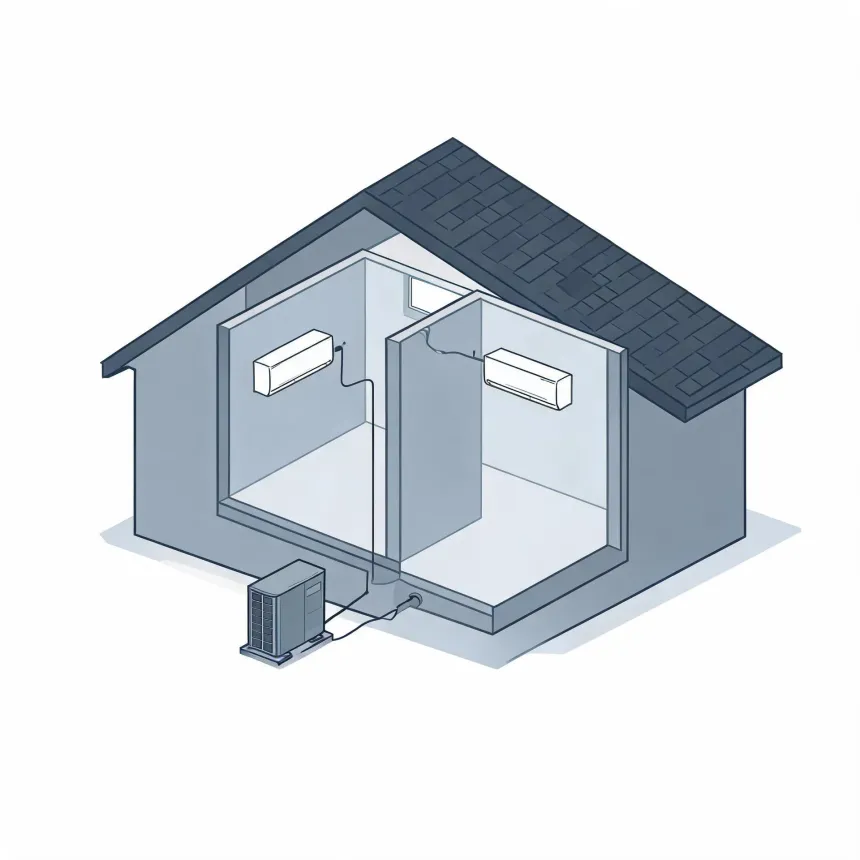
- One indoor head covers one room or open area well. If you need more rooms covered, a multi-zone system lets one outdoor unit run several indoor heads, each with its own thermostat, so you can cover a whole floor or several rooms without ducts. How many zones one outdoor unit can run depends on the equipment, so a contractor sizing the job will tell you what fits your house.
- Can a mini split heat a whole house?
- It can, with enough indoor heads placed where the house needs them. A multi-zone mini split system can cover every room the same way a furnace does, and in Baltimore's winters, with lows averaging 28°F from December through February, a mini split rated for cold climates will keep up. Whether that beats keeping or replacing existing gas heat, which 62.1% of homes here use, is a sizing and layout question a contractor needs to look at room by room.