Mini Split Installation in Denton, MD
A new system here will heat from October through April and cool from June through September every year. Tell us about the house, and a licensed contractor who covers Caroline County will get in touch.
Tell us about the job
It takes about a minute.
Eleven months of work a year in Denton
A mini-split here runs almost year round. Heat from October through April, cooling from June through September, only one real month off in between. Winter nights average 28°F, cold enough that the heat pump has to work for most of its hours, and summer afternoons average 86°F on the cooling side.
Any mini-split installed new has to meet the federal minimum for a split-system heat pump, 14.3 SEER2 for cooling and 7.5 HSPF2 for heating. With this many months of use, that efficiency rating is not a number on a sticker. It is what the unit is doing most days of the year.
- 7 months
- October through April, your system heats
- 4 months
- June through September, it cools
- 28°F
- the average winter night it heats against
- 86°F
- the average summer afternoon it cools against
NOAA nClimDiv, 1991–2020 normals
Maryland requires HVAC contractors to hold a state license.
The license is held by the contractor, not issued job by job, so the person or company doing the work has already been tested and is on record with the Maryland Board of Heating, Ventilation, Air Conditioning, and Refrigeration (HVACR) Contractors before they ever get to your house.
For a mini-split install, that license is what stands behind the work, but the local building office still has a say. In most cities and counties in Maryland, this kind of installation needs a permit and an inspection once it's done, which means someone besides the contractor checks the refrigerant lines, the electrical hookup and the mounting before the job is considered finished.
Sources: Maryland General Assembly · Maryland Department of Labor
- Is a mini split worth it?
- For the right house, yes. A mini split heats and cools without ductwork, so it works well in a room addition, a garage, or a house that never had ducts installed. Denton needs heat or cooling 11 months of the year, with winters averaging 28°F and summers averaging 86°F, so a system that handles both jobs well earns its keep. A contractor can look at your house and tell you whether it fits better than central air or another type of heat pump.
- How many rooms can a mini split cover?
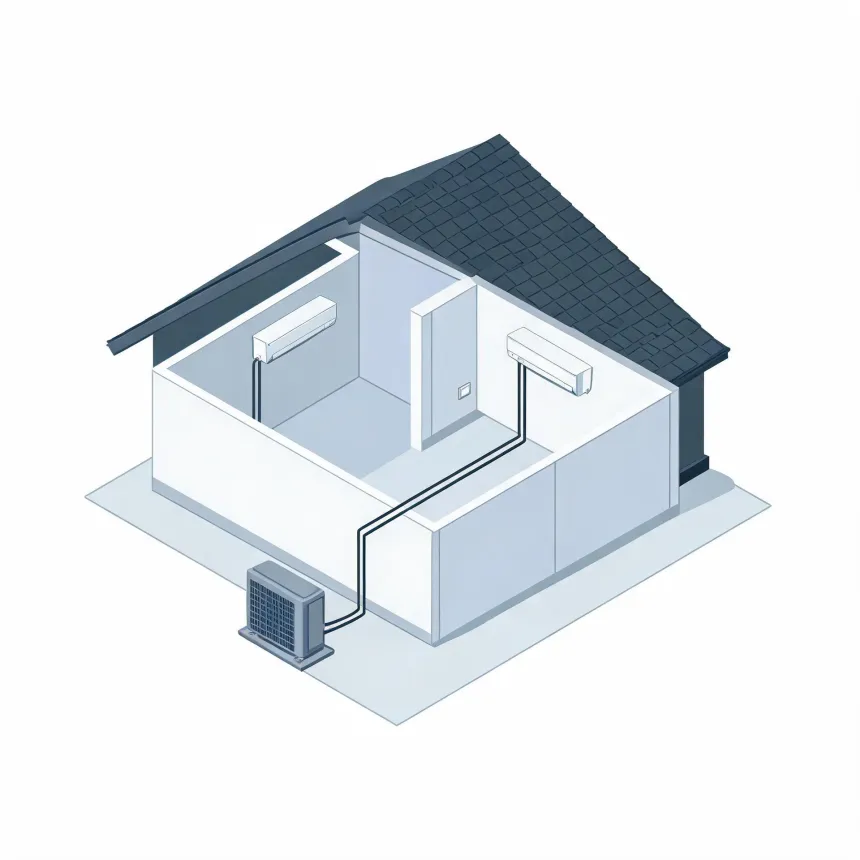
- A single indoor unit covers the room it's installed in, but multi-zone systems run several indoor units off one outdoor condenser, so one system can cover a house room by room. Each zone gets its own thermostat, so you can heat or cool only the rooms in use. How many zones your house needs depends on the layout and square footage, which a contractor sizes for your home rather than a fixed number.
- Can a mini split heat a whole house?
- It can, if it's sized and placed for that. A multi-zone mini split with enough indoor units can heat every room, and heat pumps like these work even when it's cold outside. Denton winter nights average 28°F from December through February, so the system has to be sized to keep up on the coldest nights, not just an average one. That sizing is where a contractor's load calculation for your specific house matters.