Mini Split Installation in Elkton, MD
A new system here will heat from October through April and cool from June through September every year. Tell us about the house, and a licensed contractor who covers Cecil County will get in touch.
Tell us about the job
It takes about a minute.
Elkton asks a mini-split to run eleven months a year
Winter nights here average 27°F from December through February, and homes need heat from October through April, seven months a year. Summer afternoons average 85°F, with cooling needed June through September, four more months. Between the two, a mini-split here is working most of the year, not sitting idle.
A unit installed here has to hold up on both ends, the cold nights and the hot afternoons. Any mini-split manufactured from 2023 on has to meet 14.3 SEER2 for cooling and 7.5 HSPF2 for heating, the same federal minimum that applies to any other split-system heat pump.
- 7 months
- October through April, your system heats
- 4 months
- June through September, it cools
- 27°F
- the average winter night it heats against
- 85°F
- the average summer afternoon it cools against
NOAA nClimDiv, 1991–2020 normals
Maryland requires HVAC contractors to hold a state license.
The license comes from the Maryland Board of Heating, Ventilation, Air Conditioning, and Refrigeration Contractors, and it is issued to the contractor, not to each job they take on. It means the state tested this contractor and has them on record, but it does not mean anyone signs off on this particular mini-split.
That sign-off comes from the local building office instead. Most cities and counties require a permit for a job like this, with an inspection once the work is done, and that inspection is what checks the installation itself, separate from the license.
Sources: Maryland General Assembly · Maryland Department of Labor
- Is a mini split worth it?
- For most homes it comes down to what you're heating or cooling and whether ducts make sense there. A mini split puts heat right where you need it, without losing energy through ductwork, and it handles both heating and cooling with one system. Here winters get cold enough, down to 27°F on average, that the heat pump needs to work hard for months at a time, so it's worth asking a contractor whether the unit you're considering is rated to keep up. Cooling side is easier, with summer afternoons around 85°F, well within what these systems are built for.
- How many rooms can a mini split cover?
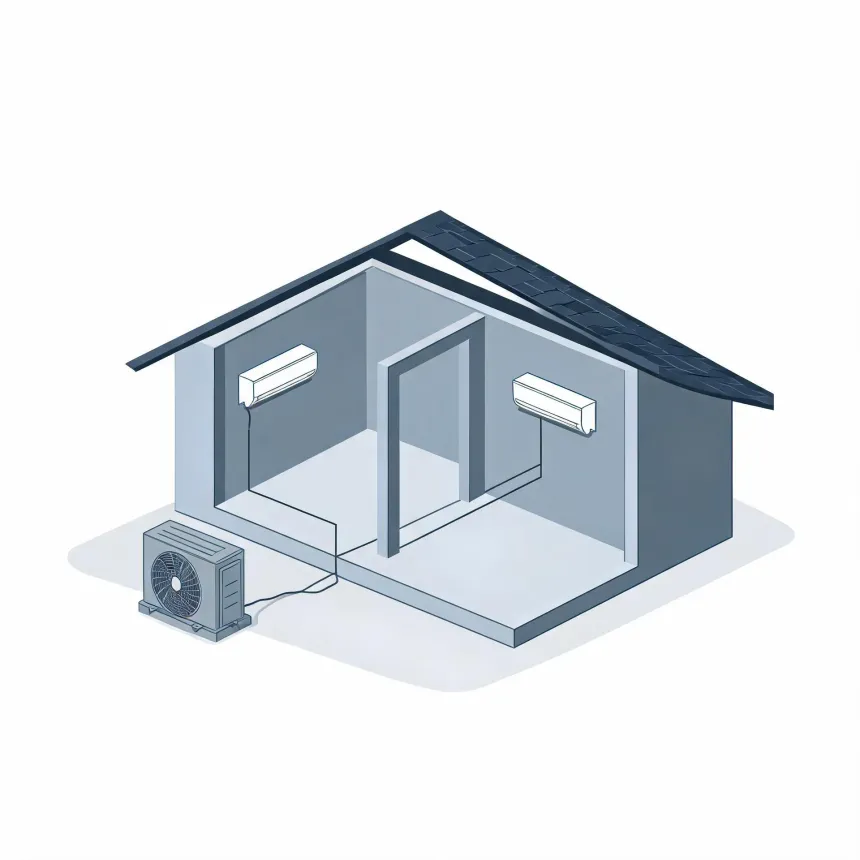
- A single outdoor unit can run one indoor head or several, depending on the system. Single-zone setups cover one room or open area well. Multi-zone systems split the output across several indoor heads, each with its own thermostat, so you can heat or cool different rooms to different temperatures at the same time. How many rooms one outdoor unit can carry depends on its capacity and how much heating or cooling each room needs, which is why a contractor sizes the system to the house rather than guessing at a number.
- Can a mini split heat a whole house?
- It can, if the system is sized and laid out for that from the start. A multi-zone mini split with enough indoor heads placed through the house can replace a central furnace. Given that homes here need heat from October through April, seven months a year, and winter nights average 27°F, the heat pump has to be rated to keep producing heat at those low temperatures, not just at mild ones. A contractor will look at the house room by room and size the outdoor unit and heads to match, rather than assume one unit covers everything.