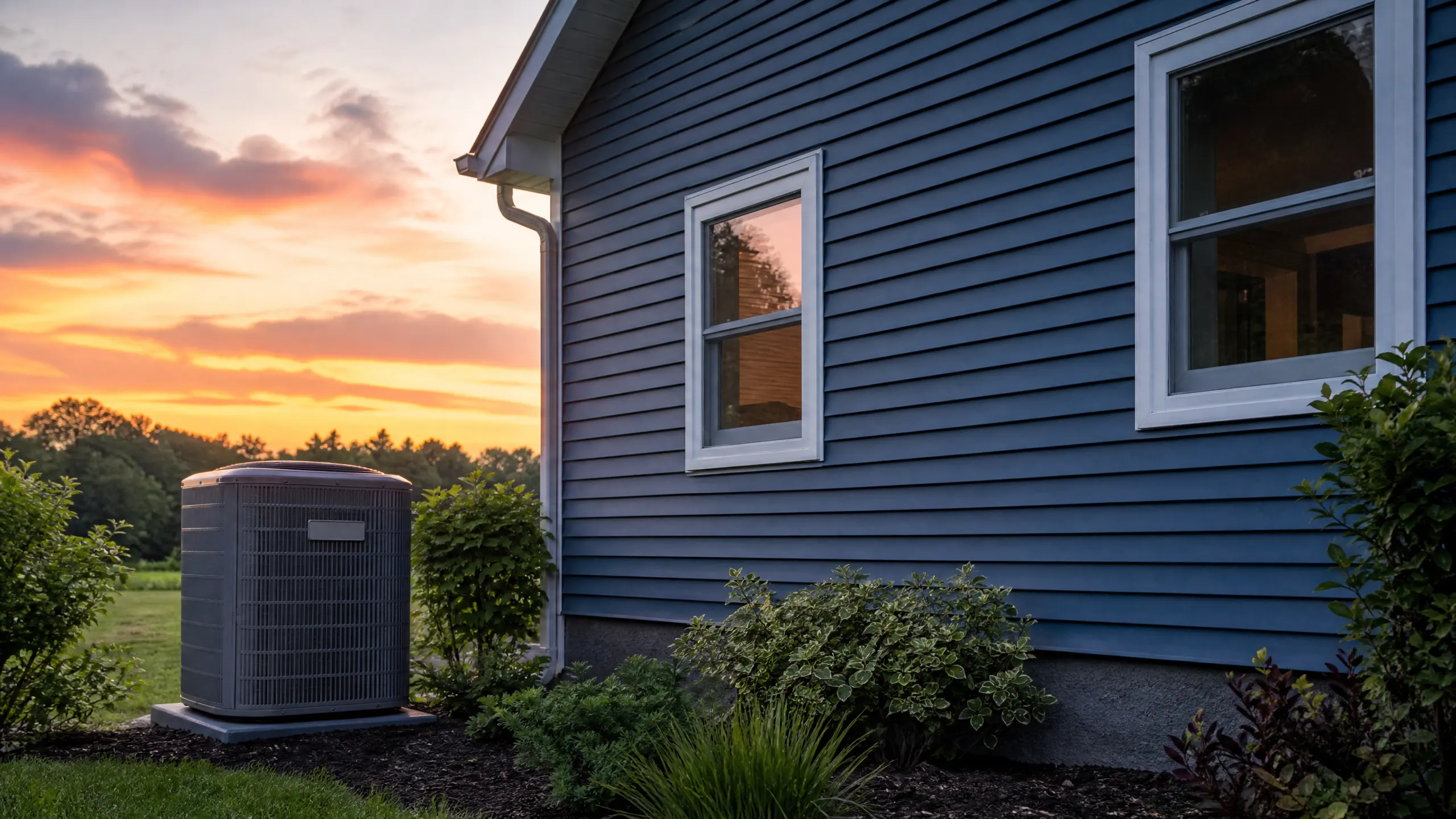
AC Repair in Bowie, MD
Air conditioners here run from June through September. If yours quits, tell us what it's doing and a licensed contractor who covers Prince George's County will get in touch.
Tell us about the job
It takes about a minute.

Four months of hard running in Bowie heat
Your air conditioner works June through September here, with summer afternoons averaging 86°F. That is a short season, but a demanding one. The compressor and condenser fan run long hours on the hot afternoons, and the system gets little rest between cooling cycles.
Bowie has also seen its share of severe weather, with 222 damaging wind events and 16 hail events over the past ten years, including hail up to 1.75 inches. A condenser sits outside through all of it. Wind-blown debris can bend the fins on the coil or damage the fan blades, and hail that size can dent the cabinet or crack a fan blade. If your air conditioner is blowing warm air or struggling to keep up after a storm, that outdoor unit is the first place to look.
- 4 months
- June through September, your air conditioner is on duty
- 86°F
- the average summer afternoon it cools against
- 16 hail events
- in ten years, and hail bends the fins on outdoor coils
- 222 wind events
- in ten years, and wind drives debris into outdoor units
NOAA nClimDiv, 1991–2020 normals

A new air conditioner would cut about $50 a year off cooling for a typical Prince George's County home.
Estimates for a typical Prince George's County home, compared with an older unit built to the previous federal minimum, from EIA household energy data, Maryland fuel prices and NOAA climate normals. Your home will differ.
Repair makes sense when a part like a capacitor or contactor has failed.
Replacement makes sense when the compressor has failed or the system uses R-22 refrigerant, which is no longer made.
Maryland requires HVAC contractors to hold a state license.
The state issues that license to the contractor, not to each job, so the same license covers this repair and every other HVAC job that contractor takes on. The Maryland Board of Heating, Ventilation, Air Conditioning, and Refrigeration Contractors is the one testing and keeping that record, so a license number is something you can trace back to a real board, not just a business name on file.
For an air conditioner repair, that license is what stands behind the person in your house. If the work opens up the refrigerant side of the system, the technician also needs EPA Section 608 certification, which every state requires because refrigerant is federally regulated no matter where you live.
Sources: Maryland General Assembly · Maryland Department of Labor
- Why is my AC not blowing cold air?
- A few common causes can lead to this, and a clogged filter is often the culprit. A dirty filter chokes airflow across the indoor coil, and once that coil gets too cold it can freeze over and blow warm or weak air until it thaws. If the outdoor unit has leaves or debris packed against it, the system cannot release heat the way it needs to. Low refrigerant is another cause, and that points to a leak somewhere. Finding and fixing a leak means opening the refrigerant side of the system, which by federal law takes a technician with EPA 608 certification.
- Why is my AC leaking water?
- Your AC makes water as it cools the air, and that water is supposed to drain outside through a condensate line. If you see water pooling near the indoor unit, that line is likely clogged or disconnected. A dirty filter can also cause this. It restricts airflow, lets the coil ice up, and floods the drain pan once the ice melts. A contractor should clear the line and check why it backed up.
- Why won't my AC turn on?
- Start with the thermostat. Check that it is set to cool, the temperature is below room temperature, and it has power. If the thermostat looks fine, check the breaker. A tripped breaker will shut the whole system down. Bowie has recorded 222 damaging wind events over the past ten years, and a power interruption during one of those can trip a breaker or a safety switch without you noticing. If the breaker is fine and the unit still will not start, it is likely an electrical or component failure inside the unit that needs a contractor to diagnose.