
Does closing vents save heat in a Maryland home
Closing vents in unused rooms does not save heat, and in a lot of Maryland homes it causes problems. Your furnace and its blower are built to move a set amount of air through the whole duct system. Close off several vents and that air has nowhere to go. Pressure builds in the ducts, and the system can start leaking warm air at the joints instead of delivering it to the rooms you still use. The furnace runs the same amount, maybe more, since the thermostat still has to satisfy the rooms you're heating. With most Maryland homes running electric heat and power rates high here, that's the opposite of what you want. If a room runs cold, the better move is to find out why, a duct that needs balancing, a return that's blocked, a vent that was never sized right for that room, rather than sealing it off and hoping.
Winter nights average 27°F statewide
27°F is a typical night here from December through February, which means your furnace is running most hours of those nights just to hold a steady temperature indoors. Closing vents to try to save money only makes it work harder against that same cold.
NOAA nClimDiv 1991-2020 county normals weighted by homes




Your furnace has one blower pushing one set volume of air, sized to the whole duct system, not to any single room. When you shut a vent, that air doesn't disappear. It has to go somewhere, and the path it finds is usually the path of least resistance: a loose joint, a gap at a boot, a seam in the attic or crawlspace where the ductwork runs. That's conditioned air you paid to heat, leaking into a space nobody's living in. Meanwhile the furnace is working against pressure it wasn't set up for, which the heat exchanger doesn't like. It needs steady airflow moving across it to carry heat away at the rate it's built for. Cut that flow and it can run hotter than it should. None of this changes the fact that the closed room still has walls and windows losing heat straight through, same as before. So the furnace keeps running to make up for that loss, just somewhere else in the house. Nothing about closing the vent reduced the actual heat being lost. It just moved where the strain shows up.
What Closing A Vent Actually Does
- Your furnace's blower pushes a fixed volume of air set by its speed tap, not by how many vents are open.
- Closing a vent raises static pressure in the duct system, and that extra pressure pushes air out through gaps at duct joints and boots.
- The air that would have gone to the closed room now finds the nearest leak, often in an unconditioned attic or crawlspace.
- A furnace built to move against a certain resistance starts working against more than it was set for once vents close.
- The heat exchanger relies on that steady airflow to shed its heat, and reduced flow can cause it to run hotter than it should.
- A room with its vent shut still loses heat through its walls and windows, so the furnace ends up running longer to cover that loss elsewhere.


Vent Open vs. Vent Closed
Vent stays open
- The room gets the heat it was designed to get, so a closed-off spare bedroom isn't draining warmth from the rest of the house through a cracked door.
- Static pressure in the duct stays close to what the system was balanced for, so the blower motor isn't straining against resistance it wasn't built to handle.
- Air returns to the furnace through the path it was designed to take, which matters for how long the heat exchanger runs each cycle.
- A room you check on once in a while, like a guest room, stays close to the rest of the house in temperature instead of drifting cold enough to stress pipes nearby.
- Any duct leaks at joints and boots stay small because the system isn't pushing extra air against them under higher pressure.
Vent closed
- The air meant for that room has to go somewhere, and it often ends up pushed out through gaps at duct joints instead of into the room.
- Static pressure rises in the duct system, and the blower motor works against that pressure every time the furnace runs.
- A closed-off room can drop well below the rest of the house, since Maryland nights in December through February stay cold enough that an unheated room won't hold warmth on its own.
- The furnace still moves the same volume of air the speed tap is set for, so closing a vent doesn't reduce what the blower has to push.
- A technician checking the system during a seasonal visit is more likely to find strained ductwork or a stressed blower if vents have been closed for a while.


A local pro for your furnace maintenance
Most Maryland homes heat with electricity, and electricity here isn't cheap, so it makes sense to look for ways to cut the bill. Closing vents isn't one of them, and running a furnace against higher static pressure for a winter of 27°F nights wears on it in ways you won't see until something fails. A heat exchanger stressed by poor airflow, a blower motor working past what it was built for, a cracked duct joint leaking the air you paid to heat. A technician who services furnaces in Maryland homes all winter knows what that strain looks like before it becomes a no-heat call, and can check your static pressure and duct connections against what your system was actually balanced for. That's a different conversation than guessing at vents. One local, licensed contractor matched to your furnace and how it's set up, not a handful of companies working off the same guess you started with.

You close a vent in a spare room.
The blower still pushes the same volume of air.
Static pressure rises across the whole duct system.
Air forces its way out through loose joints and seams.

What a closed vent costs you in your own house
Picture the spare room upstairs with the vent shut since fall. The heat that would have gone there is still being made, still being paid for, and now it's leaking out through the ductwork into the attic instead of warming anyone. You're not keeping that money in your pocket. You're paying to heat a space you'll never feel.
Shut enough vents and the strain shows up somewhere else first: a furnace that short cycles, a blower that runs longer to hold the thermostat setting, a system working against pressure it wasn't balanced for. That kind of wear is easy to miss until something fails outright, usually on a night in the 20s when you need the furnace most. A local contractor who services furnaces all winter can check your static pressure, look at which vents are actually safe to close, and catch a strained blower before it quits. One contractor, matched to your house, is enough to get a straight answer on what your system can handle.

Statewide, winter nights average 27°F, and your furnace has to answer for every degree of that gap between outdoors and the thermostat setting. Source: NOAA climate normals. On a night that cold, the blower is cycling on and off for hours, and if vents are shut and static pressure is up, the motor and the heat exchanger are working against that pressure the whole time. You might notice the furnace running longer stretches before it shuts off, or the air coming from open vents feeling weaker than it used to. That's the system straining, not saving anything.
NOAA nClimDiv 1991-2020 county normals weighted by homes


Open vents, and a furnace checked
- Closing vents doesn't lower your heating bill; it raises the static pressure your furnace has to push against all winter.
- Leaving every vent open keeps air moving the way the duct system was balanced to run from the start.
- A furnace that runs against higher pressure night after night at 27°F outside is a furnace with more to go wrong.
- Catching a strained blower or a leaking duct joint early is cheaper than waiting for the furnace to quit on a cold night.
- A local contractor who services furnaces all winter in Maryland knows which parts give out first under that kind of strain.
- Working with one licensed contractor means one visit, one diagnosis, and no string of calls from companies you didn't ask for.
Leave the vents open. That's the answer. Your furnace was set up to push air through every duct in the house, and closing registers off doesn't lower what you pay. It just makes the blower work against pressure it wasn't built to fight, night after night, all the way through a Maryland winter.
That strain has to land somewhere. A duct joint that was sealed well enough under normal pressure starts leaking under higher pressure. A blower motor that was fine for years starts working harder than it should. None of this announces itself right away. It shows up as a furnace that runs longer, a bill that creeps up with no clear cause, or a system that finally quits on one of those 27°F nights when you need it most.
This is where catching things early pays off, and it's also where who you call starts to matter. A contractor who works on furnaces all over Maryland every winter has seen what happens to a duct system run at higher pressure for years. They know which joints give out first, which blower motors wear early, what a strained system sounds like before it fails outright.
You won't get matched with a handful of companies competing for your callback. One licensed, local contractor gets your information and reaches out directly, already knowing the kind of winter your system is up against.
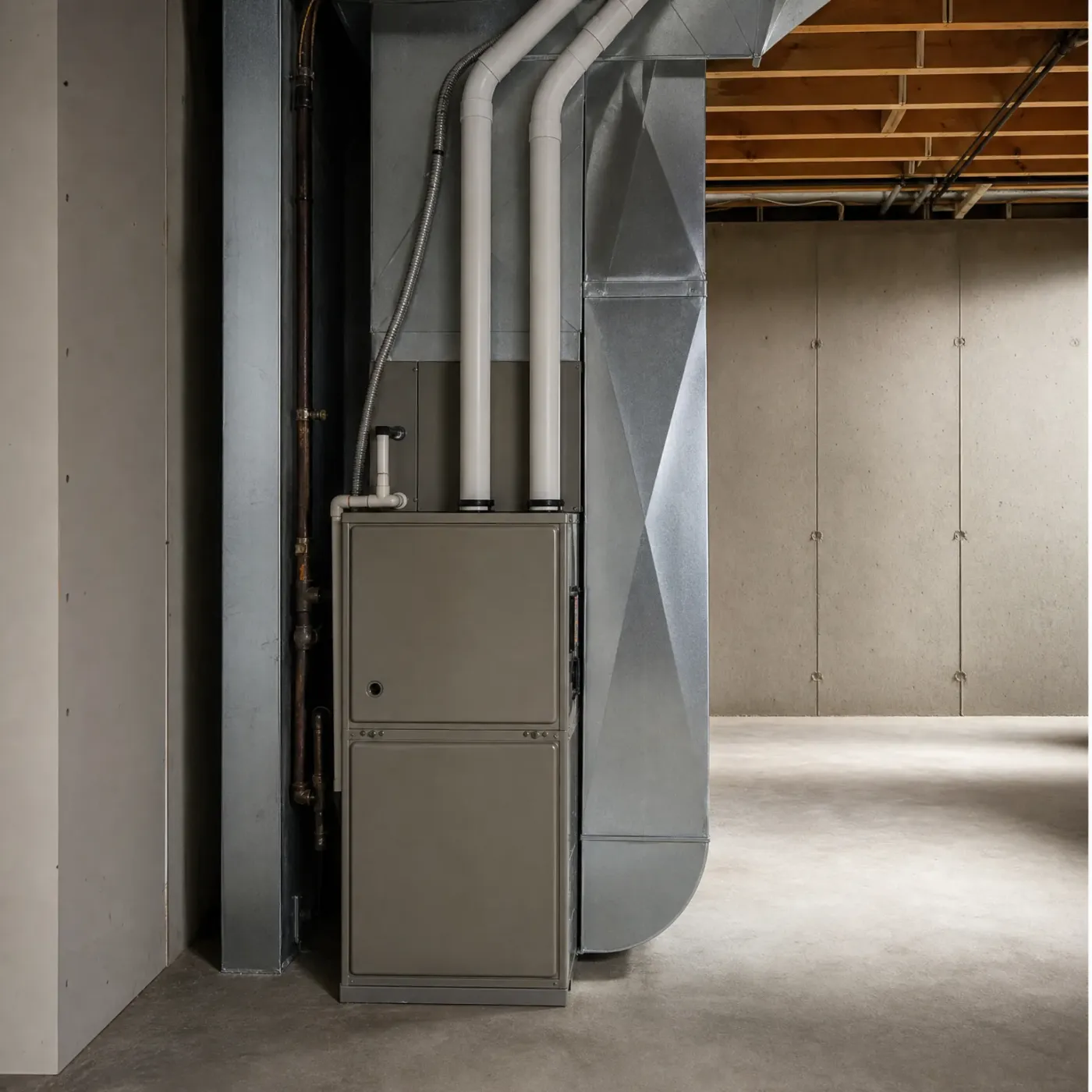
Get the right pro for your furnace
The pro who reaches out is licensed in Maryland.
You're not committing to anything by asking.