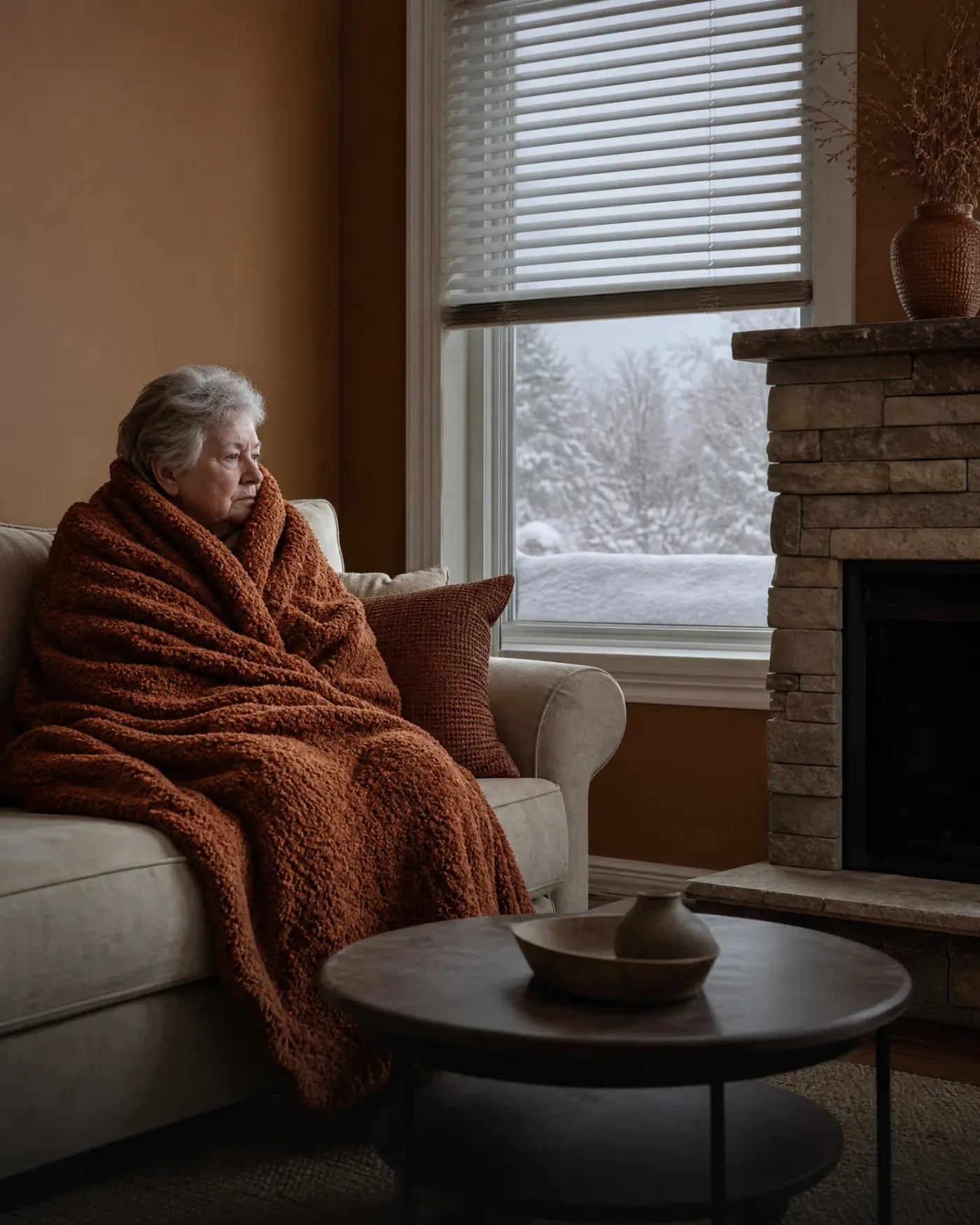
Why your heat won't reach upstairs in Maryland
Why won't heat reach the upstairs of my house in Maryland?
Winters in Maryland push a furnace hard, and if the upstairs bedrooms stay cold while the thermostat downstairs says it's warm enough, you've probably already checked the vents and maybe closed a few doors trying to force air up there. It keeps happening anyway, and with electric heat costing what it does here, you don't want to keep running the system longer just to get warm air to the second floor.
Your ductwork isn't moving enough warm air up there
Heat rises on its own, but the air that carries it has to be pushed there by the furnace and the ducts, and on the second floor that air has traveled the farthest from the furnace and lost the most heat along the way. If a duct run is too long, too narrow, or has a leak in it, the upstairs is the first place to feel it. A dirty filter or a blower working harder than it should makes this worse, since less air reaches the far end of the system. In a house that heats with electricity, a furnace that can't deliver air evenly means longer run times to get upstairs comfortable, and that shows up on the bill before anyone upstairs feels the difference.

Heat rises, your return doesn't
Warm air climbs on its own, so a second floor should get a head start. The problem is usually the return side. Most two-story houses have one return low in the house and none upstairs, so the blower pulls air from downstairs and pushes it up through supply vents with nothing pulling it back down. Without a return upstairs, that floor pressurizes, slows the airflow coming in, and stays colder even with every vent open.

One thermostat can't see both floors
A single thermostat reads the air where it hangs, usually downstairs, and tells the furnace to shut off once that spot hits the set temperature. The upstairs rooms might be five or ten degrees behind at that same moment, but the furnace has no way to know that. Electric heat already costs more per hour to run here than gas, so a furnace that cycles off early on a cold reading downstairs leaves the upstairs shortchanged and still on the same bill.
Duct Problem or Furnace Problem
Duct problem
- A duct run that was sized or routed badly won't move enough air no matter what the furnace does.
- If the upstairs ducts run through an unconditioned attic, the air loses heat before it reaches the room.
- A disconnected or crushed duct in the attic or a wall cavity can cut off a bedroom almost entirely.
- Rooms added after the house was built often got tapped into an existing run instead of their own supply.
- A contractor can check static pressure and airflow at each register to find where the air is actually going.
- Sealing or resizing a duct run is a fix the furnace itself can't make up for.
Furnace problem
- A blower motor that's lost strength can still heat the downstairs fine while starving the farthest rooms.
- If the furnace cycles off before the upstairs air has time to arrive, those rooms never catch up.
- A dirty filter restricts airflow everywhere, but the rooms farthest from the furnace feel it first.
- An undersized furnace for the house can keep up with the main floor and still fall short upstairs.
- A failing limit switch can shut the furnace down early on cold mornings, right when the upstairs needs it most.
- A technician can check static pressure, temperature rise, and blower speed to see if the furnace itself is the limit.
27°F is the average winter night across Maryland, per NOAA. That's cold enough for a furnace to run long stretches after dark, pushing hard to cover a house with ductwork that doesn't move enough warm air upstairs to begin with. The gap between floors usually shows up worst on those cold nights, when the bedrooms upstairs stay stubbornly cool no matter how long the furnace runs downstairs. Instead of tracking down and calling around to contractors yourself, explaining the cold upstairs rooms over and over to each one, you can get matched with a contractor who handles this kind of duct and airflow problem, and they'll reach out to you directly.
NOAA nClimDiv 1991-2020 county normals weighted by homes
A furnace pro near you
A furnace that runs most of the night at 27°F and still leaves the upstairs cold isn't going to fix itself, and most of the likely causes, a duct run through a cold attic, a return that can't keep up, a blower setting that's too low for a two-story house, take someone opening up the system to find. That's time you don't have to spend guessing, and money you don't want to spend twice if the first fix is the wrong one. Finding someone for that usually means searching around, calling a few places, describing the same cold bedroom three times, then sitting on quotes trying to tell them apart. With Maryland winters and electric heat both running up the bill, a furnace working harder than it should to cover half the house is worth sorting out now, before the next cold stretch pushes it further.
Where the airflow actually gets lost
- A furnace's blower runs at a fixed speed set during installation, and a setting that's too low won't push air far enough to reach a second floor.
- Most forced air systems use one trunk line that splits into branches, so the branch feeding the upstairs has to fight gravity and distance from the start.
- A damper inside the ductwork, often near where the trunk splits, can be partly closed and nobody in the house would know it.
- Static pressure builds up when ducts are undersized or have too many turns, and that pressure loss hits the farthest run hardest, which is usually upstairs.
- A dirty blower wheel loses airflow gradually, so the drop in heat upstairs can show up months before anyone notices it on the furnace itself.
- The plenum right above the furnace is where air first gets divided among all the branches, and an imbalance there affects every room downstream.
The furnace isn't the only thing deciding how much heat reaches your upstairs. A lot of that gets settled inside the ductwork itself, in places nobody thinks to check. When your furnace was installed, a contractor set the blower speed based on the ductwork at the time. If that speed was set low, or if rooms were added since, the blower may just not have enough push left for the distance upstairs. From there, the air has to travel through a trunk line that splits into branches, and the branch running up to the second floor is working against both gravity and length from the moment it leaves the furnace. Dampers inside those ducts, usually near the split, control how much air goes to each branch. One of them being partly shut cuts off part of the upstairs supply with no sign anywhere else in the house. The ducts themselves add resistance too. Undersized runs or sharp turns build up static pressure, and that pressure loss always shows up worst at the farthest point from the furnace, which in most two-story homes is upstairs. Even the blower wheel plays a part. As it collects dust, it moves less air, and that loss happens slowly enough that the upstairs goes cold months before anyone connects it to the furnace. All of this starts right above the furnace at the plenum, where the air first gets divided among the branches. Get the split wrong there and every room past it feels it.




A cold upstairs costs you more than comfort. The furnace downstairs keeps running because the thermostat there is satisfied slower than the air upstairs ever warms, so it burns gas longer than it should for the actual job of heating the house. You'll notice the bedrooms are the rooms people stop using, or the ones where someone adds a space heater, which costs more to run than the furnace itself. If the upstairs ducts run through an unconditioned attic, that gap gets worse on the coldest nights, the ones in the 20s, right when you need the heat most. A furnace that short-cycles or runs long stretches to chase a thermostat reading downstairs also wears out sooner. None of this is about one bad night. It's the same imbalance, night after night, all winter, costing you on the gas bill and the furnace's lifespan while the people upstairs sleep cold.



Furnace fires and the blower pushes air into the trunk line.
Trunk line splits into branches feeding each floor.
Air travels farthest and through the most turns to reach upstairs.
Downstairs return pulls air back before upstairs rooms finish warming.
Winter nights average 27°F statewide
27°F outside means your furnace is pushing hard most of the night just to keep the main floor at temperature. By the time that warm air fights its way up the trunk line and through the branch runs, there's less of it left to heat the rooms upstairs.
NOAA nClimDiv 1991-2020 county normals weighted by homes
You live with a cold upstairs and call it the house settling into winter. You close the vent, add a blanket, shut the door at night.
A contractor who traces the duct run and checks the return can tell you if the fix is a damper, a blower setting, or something inside the wall you can't see.



A cold upstairs has a cause, not just a season
The upstairs stays cold because of how the air moves, not because Maryland winters are hard on a furnace. A duct run through the attic, a return that can't keep up, a blower set too low for a two-story house: one of these is the reason, and it's the same reason every night it happens.
You don't have to trace the duct run yourself or guess which part is at fault. A contractor who takes calls for this kind of job can look at your furnace and your ductwork and tell you what's actually going on upstairs, then reach out to set up a time that works. No more sorting through names on a list or explaining the cold bedroom twice to two different companies. You'll know what's keeping the upstairs cold, and what it takes to fix it.

A local pro for your furnace repair
No fee to send it, and nothing to sign.
You've probably already tried closing vents downstairs or running the fan on its own, and the upstairs still doesn't warm up. A contractor who actually traces the duct run and checks the return can tell you what a thermostat never will.