Profile view of a bearded man wearing a dark green baseball cap and a dark gray T-shirt against a plain light background.

How to lower your heating bill in a Maryland winter

Tune-up, service, or cleaningFurnace or heatingMaryland
Step 1 of 2

What ZIP code is the job in?

How can I lower my heating bill this winter in Maryland?

You're watching the thermostat more than you'd like and the bill still climbs. With most homes here heating with electricity and Maryland power costing what it does, every degree matters. You want something that actually moves the number, not another tip about closing curtains.

Get your furnace serviced before the cold really sets in

A furnace that's dirty or out of adjustment burns more electricity to put out the same heat. The igniter can be weak, the blower can be pulling dirty air through a clogged filter, or the system can be short cycling, turning on and off more than it should and wasting power every time it restarts. A technician checks the burners, the airflow, and the controls, and corrects what's off. None of that shows up by looking at the thermostat. It shows up on the bill, month after month, as long as it goes uncorrected. Maryland winters run cold enough that a furnace working harder than it needs to adds up fast on an electric bill.

A basement utility area with a gray furnace, sheet-metal ductwork, pipes, plastic-covered walls, a concrete floor, and a black shelving unit holding storage bins.

Furnace running clean

A furnace that's been serviced fires on the first try and holds its burn steady. The heat exchanger is clear, the flame sensor reads true, and the blower moves air the way it's supposed to. It uses only what the cycle calls for, no more.

A gray metal furnace with louvered vent panels stands on a concrete basement floor beside galvanized ductwork, gas and plastic pipes, and foil-faced insulation along the ceiling and wall.

Furnace working against itself

Rust on the cabinet and years without a checkup mean the furnace is fighting to do the same job. A dirty flame sensor or a clogged filter makes it run longer to reach the same temperature, and longer runs show up on your electric bill every month.

Skip Maintenance or Schedule a Tune-Up

Skip maintenance

  • A dirty flame sensor will eventually make the furnace shut off mid-cycle, and it restarts cold each time, using more power to get back to temperature.
  • Dust on the blower wheel makes the motor work harder to move the same amount of air, and that shows up on the electric bill all winter.
  • A clogged filter restricts airflow across the heat exchanger, so the furnace runs longer to satisfy the thermostat.
  • Small problems like a weak igniter or a drifting thermostat sensor go unnoticed until the furnace stops heating on a cold night.
  • Without a technician checking the burn each year, you won't know if the furnace is running less efficiently than it was last winter.

Schedule a tune-up

  • A technician cleans the flame sensor and burners so the furnace lights on the first try and burns steady through the cycle.
  • Clearing dust from the blower wheel lets the motor move air without straining, which matters most on the coldest days.
  • Checking the heat exchanger and airflow means the furnace reaches its set temperature and shuts off instead of running longer than it needs to.
  • A local contractor who services furnaces all winter knows which parts tend to fail first in Maryland's cold and checks those before they do.
  • Catching a weak igniter or a drifting thermostat reading in the fall means it gets fixed before a January night when you need the heat most.
A woman in a cream sweater with her hair in a bun laughs while seated at a stone counter holding a glass of red wine, in a dimly lit interior with a sofa, houseplants and a large window at night.
A woman with long dark hair in a cream knit sweater laughs while looking off to the side, seated in front of a dimly lit kitchen with an island, stools, open shelving and a potted plant, with a glass of red wine in the foreground.
A smiling woman with long dark wavy hair in a light knit sweater sits at a marble counter with a glass of red wine, with a dimly lit living room and kitchen in the background.
A smiling woman with long wavy brown hair in a beige sweater sits at a white marble counter with a glass of red wine, with a living room, dining table and kitchen cabinets behind her.

Why does your furnace run longer and your bill still climb?

Listen for the furnace cycling on more often than it used to, or running longer before it shuts off. You might notice some rooms staying cold while the thermostat says the house is at temperature. A burning dust smell in the first few minutes of a cycle is normal, but if it lingers, the heat exchanger or burners need a look. Yellow flame instead of blue means the gas isn't burning clean. Left alone, a furnace working harder than it should will keep pulling more electricity to make the same heat, and a cracked heat exchanger or a failing blower motor can turn into a breakdown on the coldest night of the year.

  1. Technician checks the flame sensor and cleans off any buildup

  2. Burner assembly is inspected and adjusted for a steady, even flame

  3. Heat exchanger is checked for cracks or soot that block airflow

  4. Blower motor and wheel are cleaned so air moves freely

A gray furnace with white PVC vent pipes stands beside sheet-metal ductwork in a basement with a smooth concrete floor, exposed wood framing, and plastic sheeting on the walls.
A furnace that's had its yearly service keeps its flue clear and its burner flame steady, running no longer than the cycle needs.
A beige furnace with two access panels stands against a concrete basement wall, with galvanized sheet-metal ductwork, a white PVC pipe, flexible conduit and insulated ducting around it.
Rust creeping up the cabinet and a flue pipe that's seen years without a check mean the furnace works harder for the same heat.
A smiling bearded man in a navy crewneck sweater sits at a dinner table with a glass of red wine, plates and glasses in the foreground, in a dimly lit room with a lamp and framed picture behind him.
A woman in a dark gray sweater reclines on a light sofa with eyes closed and a slight smile, under a textured gray blanket with an open book resting on her lap, with a lit table lamp and plant in the background.
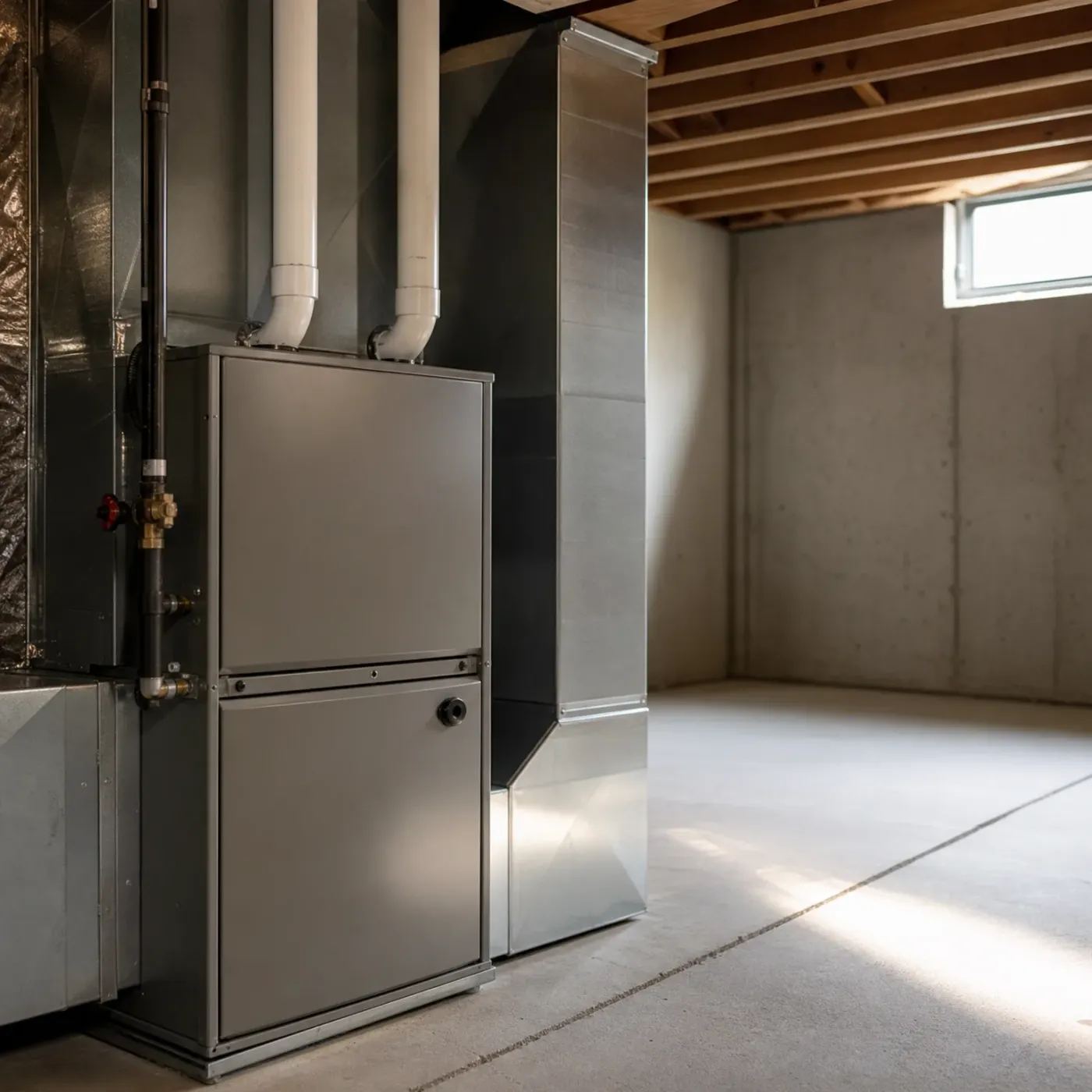
A gray high-efficiency furnace with two white PVC vent pipes stands against sheet-metal ductwork in an unfinished basement with concrete floor and walls and exposed wood joists.

Skip the search

A licensed local pro takes the request for your furnace tune-up.

Fill out one form instead of calling around for a furnace tune-up.

Fill out one form

It costs nothing to send, and you don't have to hire anyone.

A gas furnace with a louvered upper panel stands on a concrete pad in a basement, flanked by sheet-metal ductwork, white PVC and metal pipes, and insulated columns.
Before you get your furnace maintenance
A dark high-efficiency furnace on a concrete pad in a basement, connected to galvanized ductwork, white PVC vent pipes, and copper and black gas piping, with concrete walls and wood framing nearby.
After you get your furnace maintenance

One degree, about 3% off your heating bill

Turning the thermostat down even one degree adds up over a Maryland winter. A furnace running clean gets you there without the house feeling cold.

Skip the search

One visit, one technician

A local contractor who services furnaces all winter checks the parts that cause these problems, instead of you sorting through quotes from several companies.

Skip the search
A closed dark laptop and a ceramic mug of coffee on a wooden dining table, with wooden chairs, a dark kitchen cabinet with cutting boards and a potted plant, and a leafy plant by a window in the background.

What a winter like this does to your house

A furnace that's falling behind shows up room by room. The bedroom over the garage stays a few degrees cooler no matter where you set the thermostat, so you close the vent, turn up the heat, and pay for air that never reaches where you wanted it. You start keeping a sweater on the back of the kitchen chair instead of calling anyone, because calling anyone means finding a contractor, explaining the cold room and the longer cycles, waiting on a quote, then doing it again with a second company to see if the number sounds right.

The part that's easy to miss is what it does to the rest of the furnace. A blower working harder for the same heat wears sooner than one that isn't. A flue that's gone unchecked a few winters running carries more risk than one looked at every year. None of that announces itself on the thermostat. It shows up as a bill that climbs a little more each January, and a furnace that's older in the ways that matter than its birth year says.

A living room corner with a beige sofa and cushion, a round wooden coffee table holding a pale ceramic vase of eucalyptus stems and a wooden bowl, and a curtained window with a potted plant above a latticed radiator cover in the background.
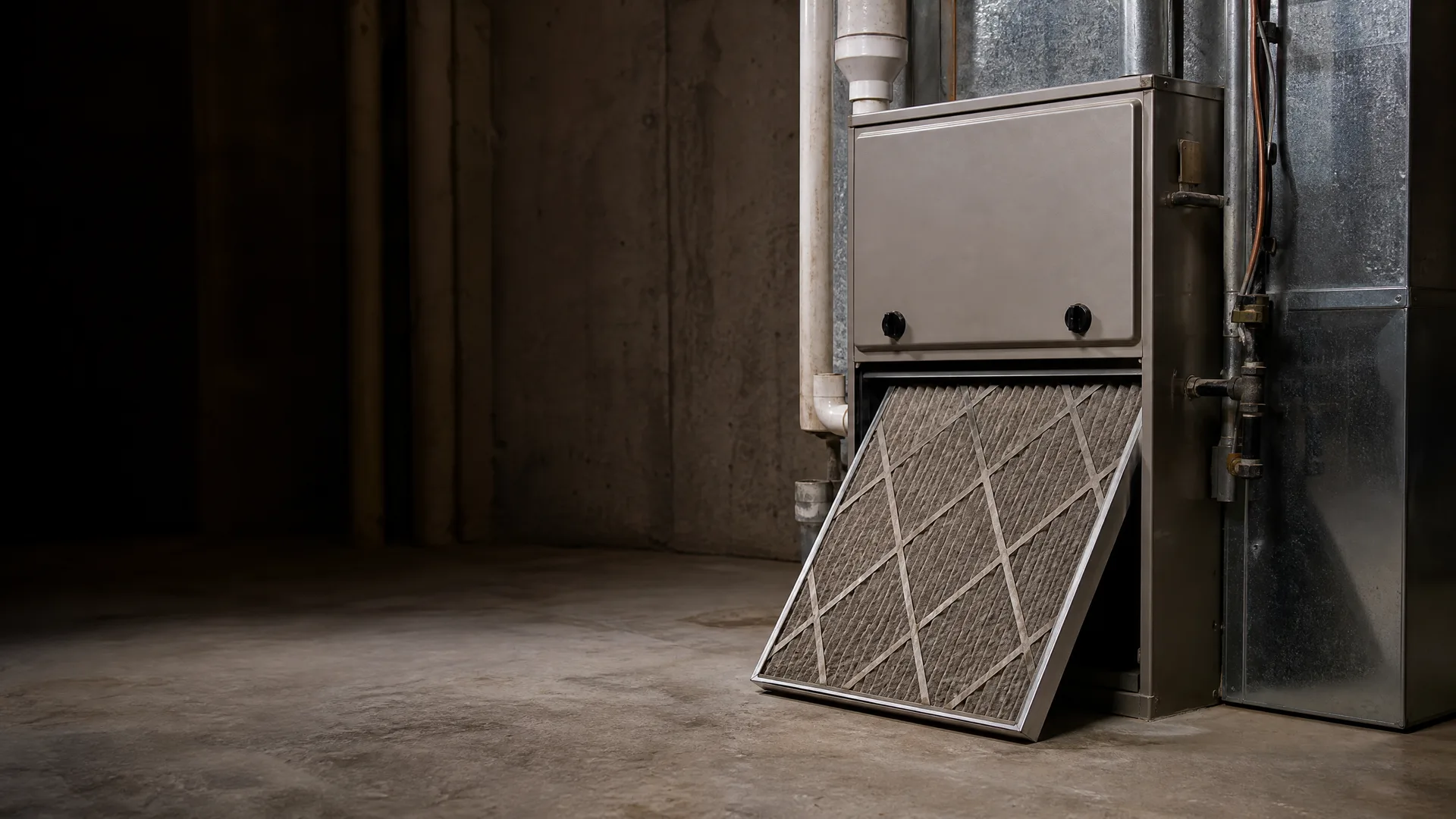
A dirty pleated air filter leans against a furnace with metal ductwork in a dim concrete basement.

You're down in the basement on a Saturday afternoon in October, the light from the small window already going gray. You pulled the filter to check it before the cold really sets in and it's worse than you expected, every pleat packed gray with a winter and summer of dust. You slide it halfway out and just look at it a second. The furnace is quiet now, waiting on the thermostat upstairs. You're thinking about the bill from last January, and about how many months this thing is about to run nonstop once Maryland settles into the cold for real.


Winter nights average 27°F statewide

Overnight here runs around 27°F from December through February, so your furnace is holding that gap for a good chunk of the night, every night, all winter. A system that's lost some efficiency has to work longer to close that same gap, and you feel it in the rooms that stay cold and the bill that follows.

NOAA nClimDiv 1991-2020 county normals weighted by homes

A clean furnace burns steady and shuts off when the house is warm, not before, not long after. That's the whole answer. The contractor who comes out to do the work is local and licensed, someone who services furnaces like yours all winter and knows what tends to go wrong in a Maryland house when the cold settles in for months. You'll talk to one contractor, not a handful of them calling back at once, and that one visit tells you where you stand: whether the flame sensor needed cleaning, whether the heat exchanger is sound, whether the blower was dragging. From there you know if the bill climbing was the furnace losing ground or just the cold doing what it does every December. Either way you're not guessing anymore.

A gray furnace with PVC vent pipes and sheet-metal ductwork stands against a wall in an unfinished basement with concrete floor and walls, exposed wood joists, and a small window.

Skip the calls to every shop

Reach a local pro

The pro who reaches out is licensed in Maryland.

There's no charge for the request.