Mini Split Installation in La Plata, MD
A new system here will heat from October through April and cool from June through September every year. Tell us about the house, and a licensed contractor who covers Charles County will get in touch.
Tell us about the job
It takes about a minute.
La Plata asks a mini-split to work most of the year
A mini-split here is either heating or cooling the house for 11 months out of the year. Heat runs October through April, seven months, then cooling picks up in June and holds through September. Whatever goes in has to hold up through both jobs, not just one.
Winter nights average 29°F from December through February, and summer afternoons average 86°F. A unit installed on or after January 1, 2023 has to meet 14.3 SEER2 for cooling and 7.5 HSPF2 for heating, the same federal minimum that applies to any split-system heat pump. With 55.4% of homes here heating with electricity, the heating side of that rating carries real weight.
- 7 months
- October through April, your system heats
- 4 months
- June through September, it cools
- 29°F
- the average winter night it heats against
- 86°F
- the average summer afternoon it cools against
NOAA nClimDiv, 1991–2020 normals
Maryland requires HVAC contractors to hold a state license.
Maryland issues the license to the contractor, not to the job, so what the state tested and put on record is the business and the people running it. It does not mean a state inspector looks at this mini-split once it is mounted on the wall.
That check comes from Charles County. In most cities and counties, installing a mini-split needs a permit from the local building office, with an inspection once the work is done. The state license tells you the contractor met Maryland's standard. The county permit and inspection tell you this installation was checked.
Sources: Maryland General Assembly · Maryland Department of Labor
- Is a mini split worth it?
- For most homes, yes, especially if you're heating or cooling a room that isn't well served by your main system. A mini split runs on its own outdoor unit and indoor head, so it can handle a bonus room, a garage conversion, or an addition without extending ductwork. Winters here average 29°F at night from December through February, so if it's going to be the main heat source for that space, it needs to be rated for that kind of cold. A contractor can tell you whether a mini split fits what you're trying to heat or cool, or whether your situation calls for something else.
- How many rooms can a mini split cover?
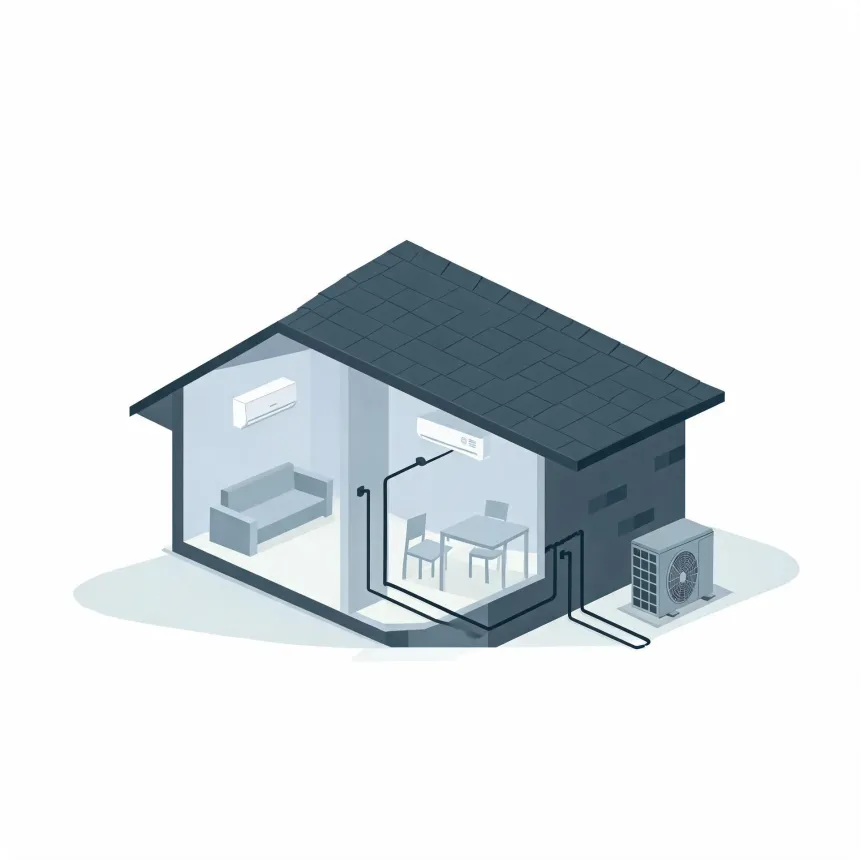
- That depends on whether you install a single-zone or multi-zone system. A single-zone system has one indoor head and covers one room or open area well. A multi-zone system runs several indoor heads off one outdoor unit, each with its own thermostat, but the more zones you add, the more the outdoor unit's capacity gets split between them. A contractor can size the system to the rooms you actually want covered.
- Can a mini split heat a whole house?
- It can, but it takes the right number of indoor heads placed in the right rooms, sized for the house. A single indoor unit heats the room it's in and whatever space is open to it, not the rooms down the hall. Homes here need heat from October through April, and winter nights average 29°F from December through February, so whichever setup you choose has to keep up on the coldest nights. A contractor can work out how many zones your house needs and whether the outdoor unit can carry all of them at once.