
Furnace Repair in La Plata, MD
Furnaces here run from October through April. If yours quits, tell us what it's doing and a licensed contractor who covers Charles County will get in touch.
Tell us about the job
It takes about a minute.
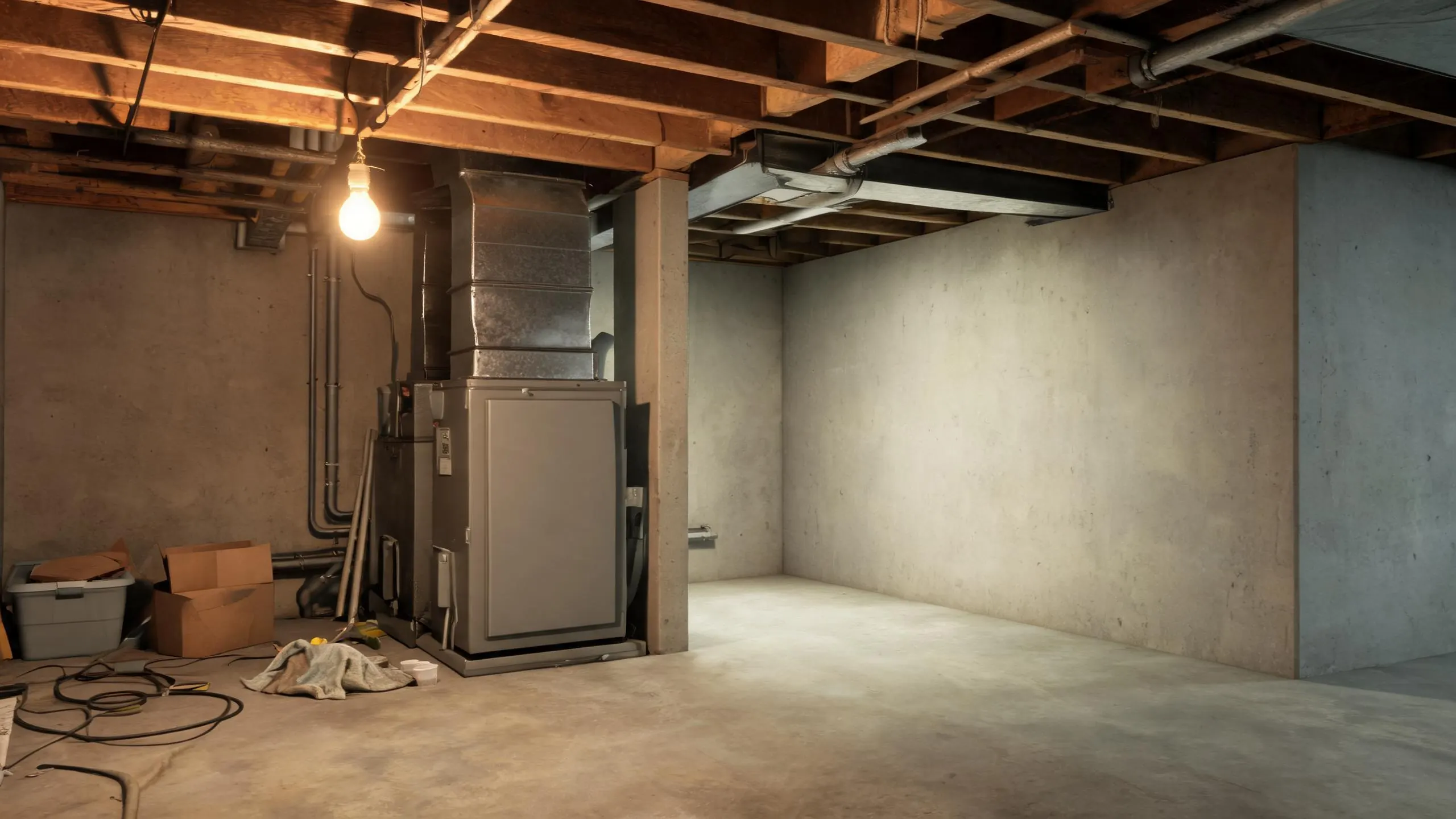
Seven months of work, most of it on cold nights
Your furnace runs October through April here, seven months out of the year. On winter nights that average 29°F, it cycles on and off for hours at a stretch to hold the house steady. Every one of those starts puts a load on the igniter and the flame sensor, and over enough cold nights that wear catches up with them.
55.4% of homes in this area heat with electricity, so when the power goes out, the furnace stops with it. Charles County has seen 11 winter storms and 188 damaging wind events over the past ten years, and 11% of Maryland households went at least 24 hours without power in 2024. Most furnaces restart on their own once power is back, but if a part was already worn thin before the outage, that is often the moment it gives out for good.
- 7 months
- October through April, your furnace is on duty
- 29°F
- the average winter night it heats against
- 11 winter storms
- in ten years, the nights a failure hurts most
NOAA nClimDiv, 1991–2020 normals
Maryland requires HVAC contractors to hold a state license.
Maryland licenses HVAC contractors through the Board of Heating, Ventilation, Air Conditioning, and Refrigeration Contractors. That license belongs to the contractor, not to any single job, so the same license that covers a furnace repair today covers whatever other work that contractor takes on next.
For a furnace repair, that license is what stands behind the person working on the gas line and burner. Opening up a gas furnace is the part of the job where a mistake matters most, and in Maryland the license is the state's check on who is allowed to do that work.
Sources: Maryland General Assembly · Maryland Department of Labor
- Why won't my furnace turn on?
- Start with the thermostat. Check that it's set to heat and the set temperature is above room temperature, and check the batteries if it has them. If that's not it, check the breaker and the furnace switch, which looks like a regular light switch near the unit or on the wall close by. A furnace that still won't start after that usually has an ignition problem or a safety switch holding it off, and that needs a contractor to look at it.
- Why is my furnace blowing cold air?
- If the air has been cold since the furnace started up, it's most likely still in its startup cycle, where the blower runs briefly before the burners fire. Give it a few minutes. If the air stays cold or comes and goes lukewarm, the igniter or flame sensor may be failing, or the gas valve may not be opening. A furnace that runs the blower but never lights the burners needs a contractor to find out why.
- Why won't my furnace pilot light stay lit?
- A pilot light that won't stay lit is usually a sign the thermocouple has worn out. That's the small sensor that sits in the pilot flame and tells the gas valve it's safe to keep the gas flowing. When it wears out, it can't hold that signal, so the valve shuts the gas off and the pilot goes out. It's a common part to fail and a contractor can replace it.