Mini Split Installation in Salisbury, MD
A new system here will heat from October through April and cool from June through September every year. Tell us about the house, and a licensed contractor who covers Wicomico County will get in touch.
Tell us about the job
It takes about a minute.
Eleven months of work for one system
In Salisbury a mini-split runs almost year round. Heat from October through April, cooling from June through September, only one month off. Winter nights average 29°F, mild for a heat pump, and summer afternoons average 86°F, so the same unit has to switch modes and keep working through most of the calendar.
Any mini-split installed new has to meet the federal minimum for a split-system heat pump, 14.3 SEER2 for cooling and 7.5 HSPF2 for heating. That is the floor, not a special ductless rule. With most homes here on electric heat and power outages not rare, a mini-split that starts back up on its own after the power drops is worth asking about before it goes in.
- 7 months
- October through April, your system heats
- 4 months
- June through September, it cools
- 29°F
- the average winter night it heats against
- 86°F
- the average summer afternoon it cools against
NOAA nClimDiv, 1991–2020 normals
Maryland requires HVAC contractors to hold a state license.
The license is held by the contractor, not issued job by job. Maryland's HVACR board tested and recorded that contractor before granting it, so the license tells you the person is on record with the state and had to prove they know this work.
In most cities and counties, installing a mini-split also needs a permit from the local building office, with an inspection once the work is done. That permit and inspection come from the local building office, separate from the state license.
Sources: Maryland General Assembly · Maryland Department of Labor
- Is a mini split worth it?
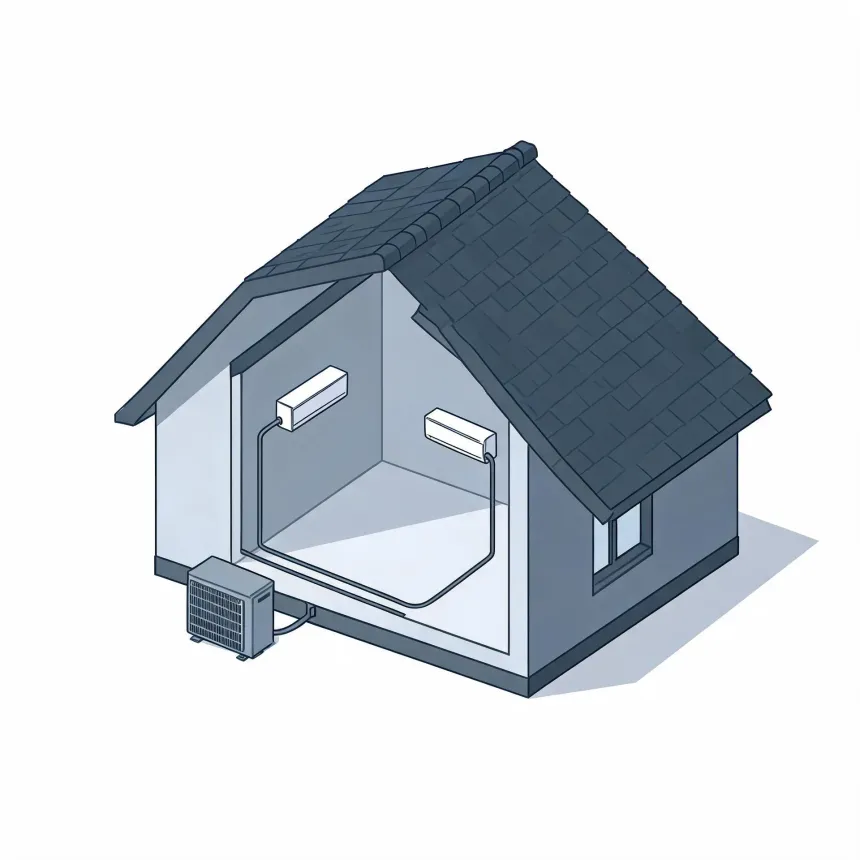
- For most homes it comes down to what part of the house needs help. A mini split handles a room or a small addition without extending ductwork, and it heats down into cold weather the way older heat pumps could not. Here winters average 29°F at night, so the outdoor unit and the sizing for that room matter more than the brand name on it. A contractor can look at the space and tell you whether a mini split solves the actual problem or whether something else fits better.
- How many rooms can a mini split cover?
- A single-zone mini split covers one room or one open area well. A multi-zone system runs several indoor heads off one outdoor unit, so it can cover multiple rooms, but each zone still has to be sized for the space it serves. Trying to stretch one indoor head across several closed-off rooms usually leaves some of them too warm or too cold. A contractor can size each zone against the rooms you actually want covered.
- Can a mini split heat a whole house?
- A multi-zone mini split can heat a whole house if it's designed for that from the start, with enough indoor heads placed to cover every room. It's a different job than adding one unit to a single room, since the outdoor unit has to be sized for the full heating load, not just one space. Homes here need heat from October through April, and winter nights average 29°F, so that load calculation has to hold up on the coldest nights, not just the mild ones. A contractor can work out whether whole-house coverage means a larger multi-zone system or a different kind of heat pump entirely.