
Mini Split Installation in Ocean City, MD
A new system here will heat from October through April and cool from June through September every year. Tell us about the house, and a licensed contractor who covers Worcester County will get in touch.
Tell us about the job
It takes about a minute.

Eleven months of work a year in Ocean City
Ocean City needs heat or cooling almost every month of the year. Heat runs October through April, seven months, with winter nights averaging 30°F. Cooling runs June through September, with summer afternoons averaging 85°F. A mini-split installed here spends nearly all its life doing one job or the other.
Any mini-split installed new has to meet the federal minimum for a split-system heat pump, 14.3 SEER2 for cooling and 7.5 HSPF2 for heating. Worcester County also sees its share of storms, 45 damaging wind events and 12 winter storms over the last ten years, and 11% of Maryland households lost power for at least a day in 2024. A mini-split will restart on its own once power comes back, but it is worth asking how the system handles an outage before it goes in.
- 7 months
- October through April, your system heats
- 4 months
- June through September, it cools
- 30°F
- the average winter night it heats against
- 85°F
- the average summer afternoon it cools against
NOAA nClimDiv, 1991–2020 normals
Maryland requires HVAC contractors to hold a state license.
The state license comes from the Maryland Board of Heating, Ventilation, Air Conditioning, and Refrigeration Contractors, and it covers the contractor, not each job. That means the person or company doing the work was tested and is on record with the state, but the state does not sign off on your mini-split install itself.
That job gets checked another way. In most cities and counties in Maryland, installing a mini-split needs a permit from the local building office, and an inspection once the work is done. That inspection is what confirms this particular installation, in this particular home, was done right.
Sources: Maryland General Assembly · Maryland Department of Labor
- Is a mini split worth it?
- For most homes, yes, especially in a room that never had ductwork or one where the existing system can't keep up. Homes here need cooling from June through September and heat from October through April, so the equipment runs most of the year and earns its keep. A mini split also lets you heat or cool just the rooms in use, which a ducted system can't do. Whether it makes sense for your house depends on the layout and what you're heating or cooling now, and a contractor can walk through that with you.
- How many rooms can a mini split cover?
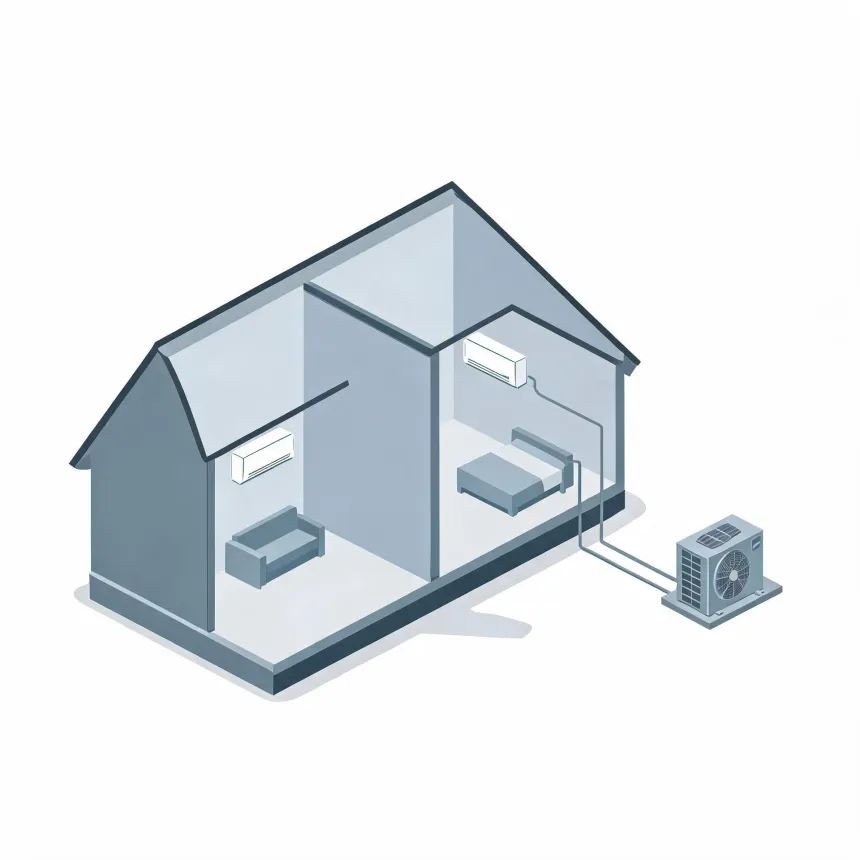
- A single outdoor unit can run one indoor head or several, depending on the system. Single-zone systems serve one room. Multi-zone systems run several indoor heads off one outdoor condenser, each with its own thermostat. The right number for your home depends on the square footage and layout of each room, which is something a contractor sizes out before installing anything.
- Can a mini split heat a whole house?
- It can, if enough zones are installed to reach every room and the system is sized for how cold it gets here. Winter nights average 30°F from December through February, so the heat pump has to be sized to keep up on the coldest nights, not just the mild ones. A multi-zone system with a head in each main room can heat a whole house this way. Whether that's the better route compared to a ducted heat pump is a house-by-house call a contractor can make after seeing the layout.