



Mold in air ducts in Dundalk, MD

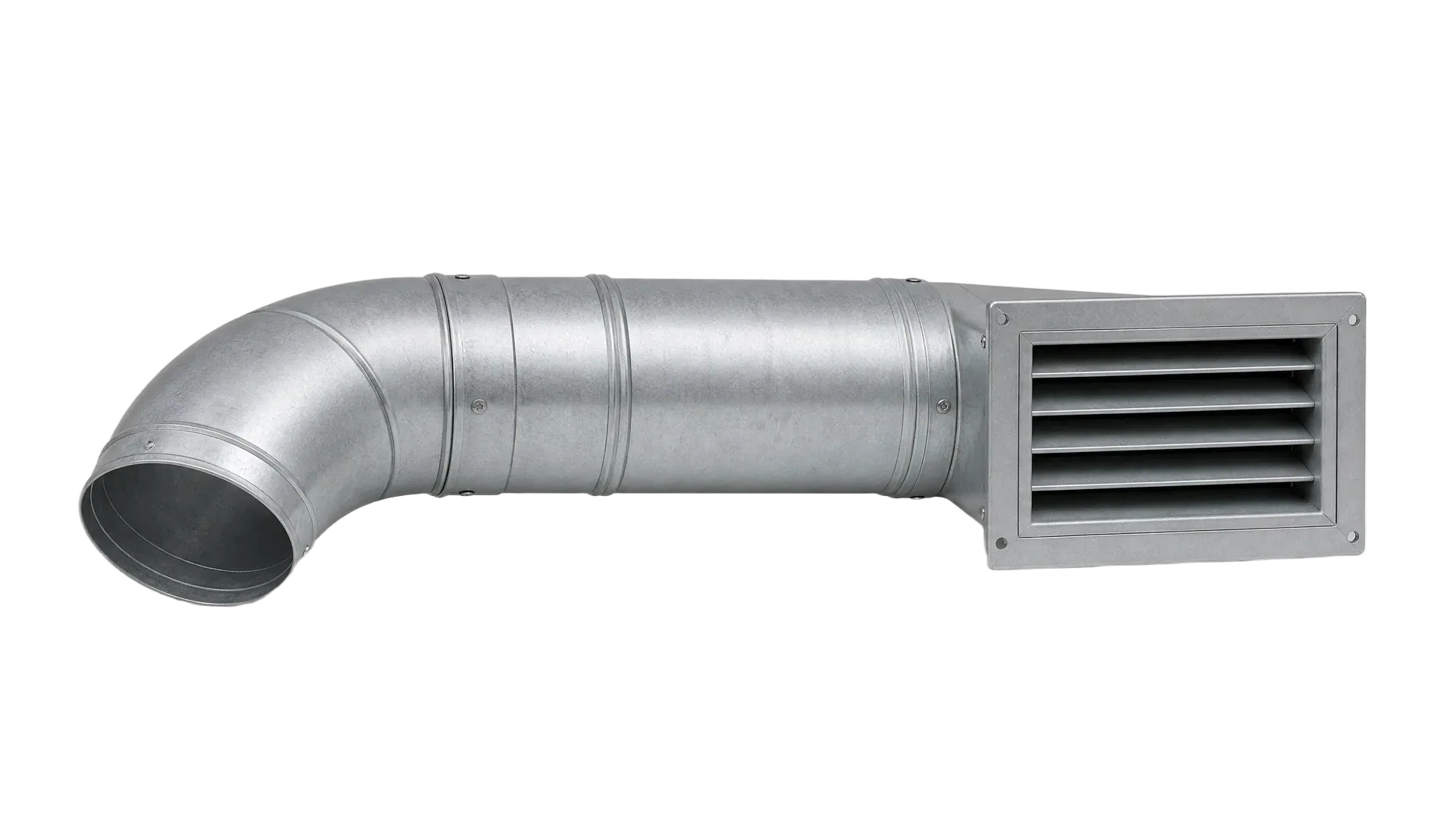
A galvanized metal round duct with a 90-degree elbow connected to a rectangular louvered vent grille, shown against a plain gray background.
Send my request

Mold in your air ducts usually shows up as a musty smell when the system kicks on, or dark spots around the vent covers themselves. It grows where there's moisture, and your ducts get damp from humidity pulled in through leaky joints, from a condensate drain that isn't clearing right, or from a cooling coil that stays wet longer than it should. Summers around Dundalk run humid for months at a stretch, so a duct system with any moisture problem has plenty of time to grow something before the air turns cold and dry. Once mold is established, every time the blower runs it can push spores and that smell into the rooms you spend time in. It won't go away on its own, and painting over the vents or running the fan more does not reach the inside of the ductwork. Getting it cleaned out, and finding what's keeping the ducts wet in the first place, is the only way it actually stops coming back.

Empty unfinished basement with bare concrete walls and floor, showing exposed wooden joists, galvanized sheet-metal ductwork, pipes, and a white vent grille overhead.
Before you get your ductwork cleaning
Unfinished basement with concrete floor and walls, exposed wood joists, galvanized sheet-metal ductwork, a furnace unit, a steel support column, and a small window.
After you get your ductwork cleaning

Why does mold keep coming back in your ducts?

  • Half the homes here were built by 1973

    Half the homes in Baltimore County were built in 1973 or earlier, and ductwork that old has had decades to develop the gaps and seams that let in the moisture mold needs.

  • Heat runs October through April

    Heat runs October through April here, and every one of those months your furnace is pushing air through ducts that may already be holding damp and spores from summer.

  • Cooling runs June through September

    Cooling runs June through September, and that's the stretch when humidity gets pulled into the system and gives mold the moisture it needs to grow.

ACS 2020-2024 · NOAA nClimDiv 1991-2020

Basement interior showing a furnace with sheet-metal ductwork, a round flue pipe and copper lines running beneath exposed wooden floor joists next to a plain light-colored wall.

Why the smell comes back fast

Mold spores that survive a cleaning only need a damp surface to start over. Your ducts don't dry out on their own between visits, especially in a Dundalk summer when the air outside is already heavy with moisture. A cleaning pulls out what's growing now. It doesn't seal the gaps that let humidity back in, so the same spot can carry a new colony within weeks if the leak feeding it never gets fixed.

Interior corner of a building with a large blank white wall beside an unfinished ceiling showing wood joists, galvanized sheet-metal ductwork, and white and copper pipes.

What the air handler can't filter

Your furnace filter catches dust moving through the ducts. It does nothing for mold sitting on the duct walls themselves, because that mold isn't airborne until the system stirs it loose. Every time the blower kicks on, whatever has grown since the last cleaning gets pushed into the rooms you're sitting in. That's why the smell tends to show up right when the heat or the AC starts running, not before.

DIY Duct Cleaning or Call a Contractor

Clean the ducts yourself

  • A shop vac and a brush reach the first few feet past the vent cover, not the runs further back where moisture sits.
  • Spraying bleach or a mold killer into the vent can leave residue in the duct and doesn't stop moisture from getting in again.
  • Without knowing where the duct is damp, you're cleaning the parts you can see and leaving the source untouched.
  • If the moisture is coming from a condensate line or a leaky joint, no amount of scrubbing at the register fixes that.
  • You can swap the filter and wipe down the vent covers, which helps the smell but doesn't touch what's growing inside the duct run.

Have a contractor clean them

  • A contractor who works on ductwork in Baltimore County every season knows where moisture collects in homes built here, from old joints to condensate lines.
  • Proper equipment reaches the full length of the duct run, not just the section behind the vent cover.
  • A contractor can find and point out the leak or gap that's letting moisture in, so the mold has less reason to come back.
  • Licensed local contractors know the duct layouts common to this area, including older homes from the 1973 or earlier construction wave.
  • One contractor means one visit and one set of answers, rather than piecing together guesses from a few different products.
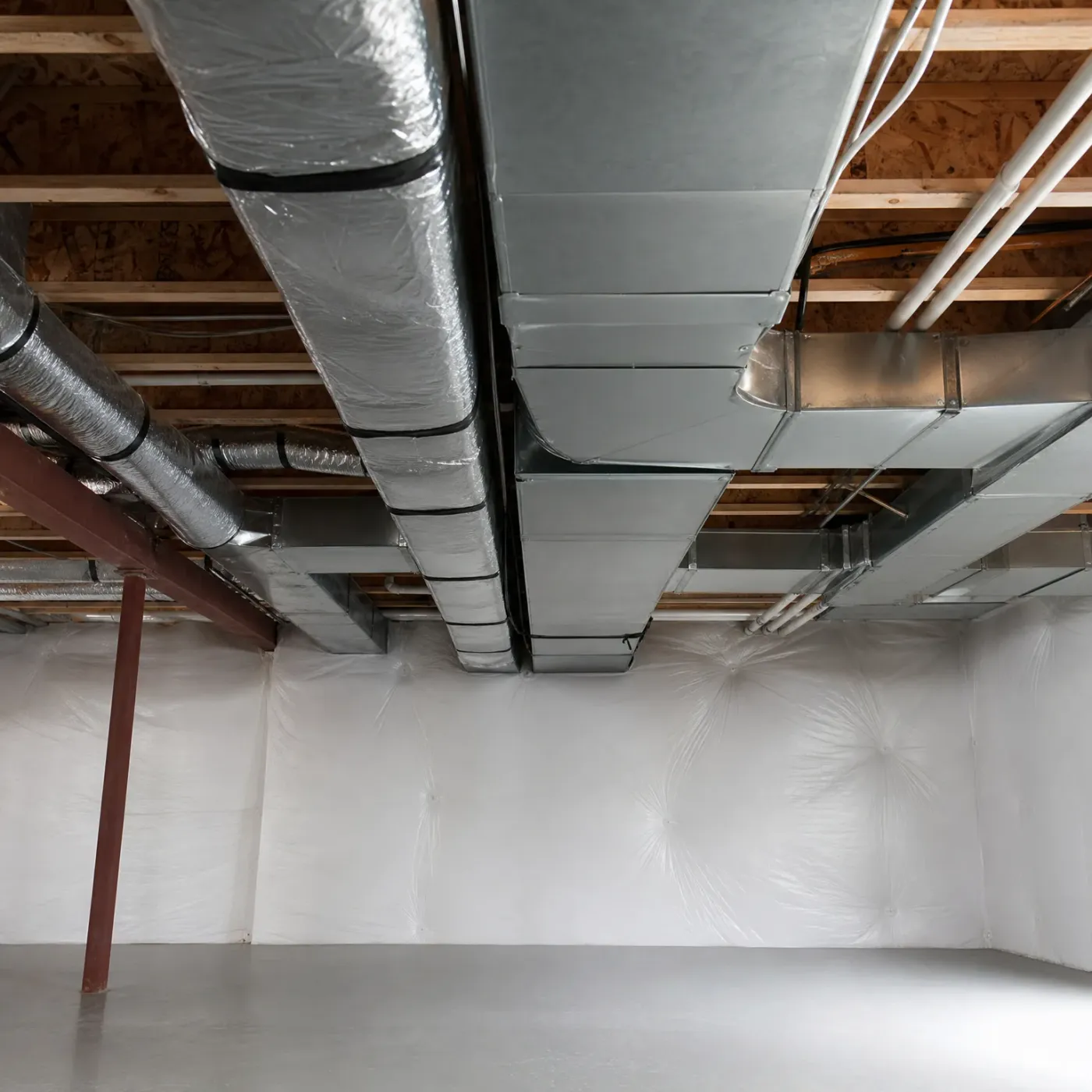
Empty unfinished basement with bare concrete floor and wall, wood-framed stud walls, exposed joists, galvanized HVAC ducts and pipes overhead, a steel beam and red support column, and a single bare bulb light.

Ductwork running clean

This is what dry ducts look like, metal runs overhead with nothing on the outside to tell you anything's wrong. Air moves through without picking up spores or that musty smell. The joints stay sealed and the metal stays dry, so mold has nowhere to start.
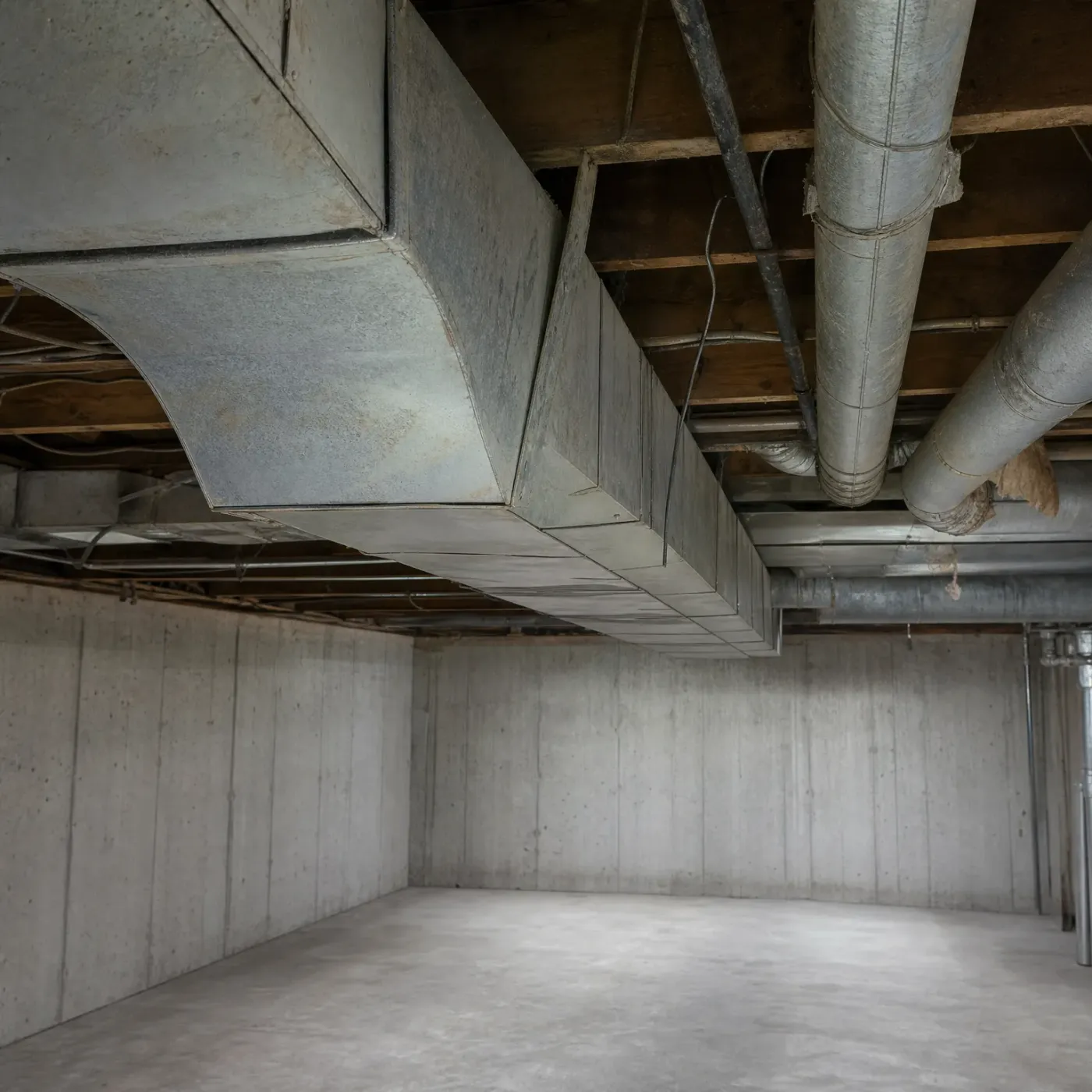

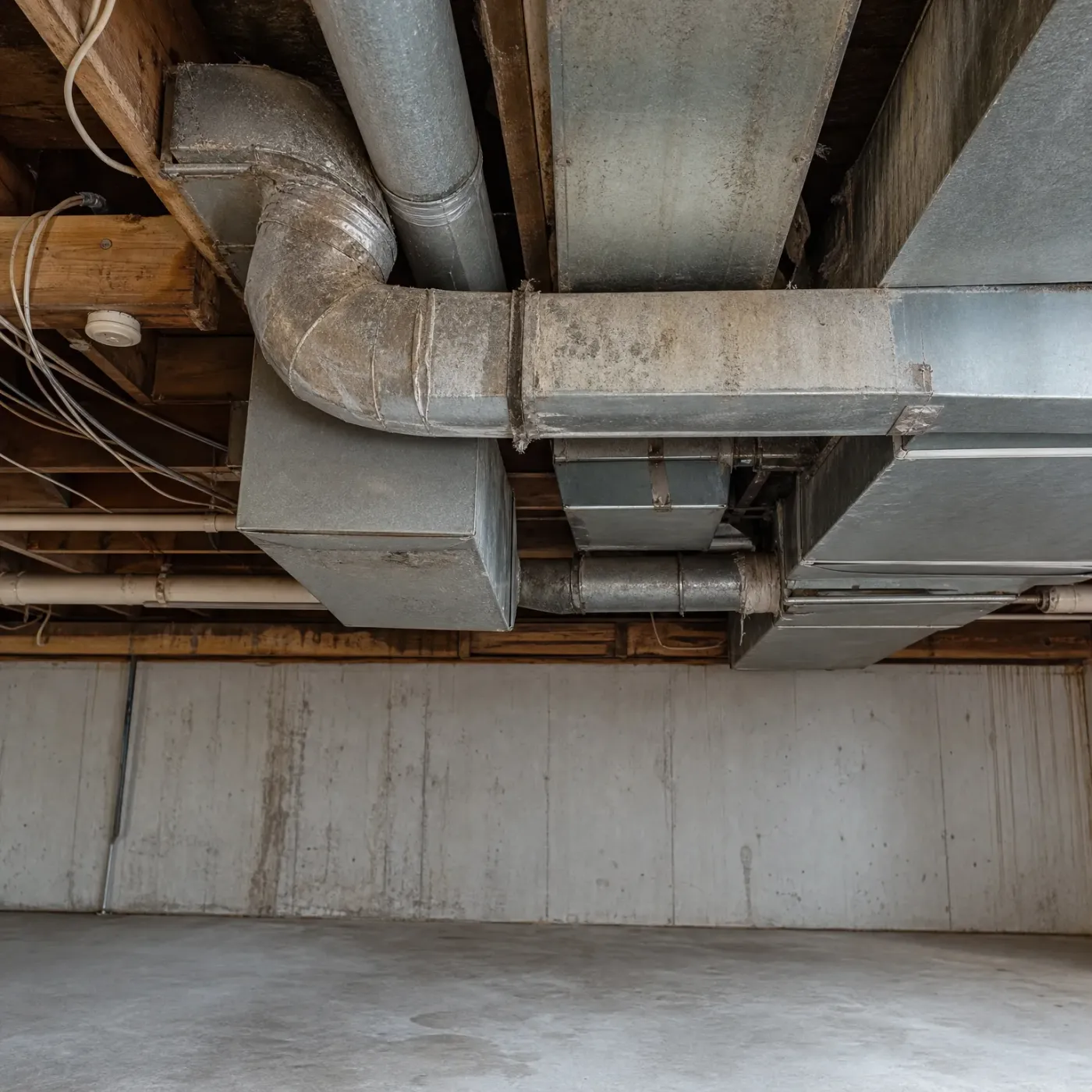
Empty concrete-walled basement with bare floor, showing large galvanized sheet-metal HVAC ducts, insulated pipes, wiring and wooden floor joists overhead.

Ductwork holding moisture

Same basement, same runs, but moisture has gotten into the seams along these joists. You won't always see it from the floor. It shows up as a smell when the air kicks on, or as streaking near a seam if you look close enough at the metal.

A smiling bearded man in a dark blue henley shirt sits leaning back on a light grey sofa in a living room, with a bowl of popcorn on a wooden coffee table and a large window behind him.
A bearded man in a dark quarter-zip sweater sits smiling on a brown sofa in a dimly lit living room, with a bowl of popcorn and a mug on a table in the foreground and a potted plant near a window behind him.
A smiling man with graying dark hair and a beard, wearing an olive sweater, sits on a sofa in a living room beside a bowl of popcorn on a wooden table.
A smiling man in a dark green henley shirt sits on a gray sofa in a living room with a lit table lamp, wooden shelving unit, and a bowl of popcorn in the foreground.

Send one request and you're done looking

A Dundalk summer keeps your ducts damp, and damp ducts grow mold back faster than most people expect after a cleaning. Figuring out who actually gets rid of it, and not just masks the smell for a month, usually means calling around to a few companies and comparing what they tell you. Sending this request skips that part. It goes to one contractor, local to the Dundalk area, who works on ductwork in homes like yours all year and knows how this county's older gaps and seams let moisture back in after the heat kicks on. You won't get calls from five different companies trying to win the job. You get one, and then the ducts are someone else's problem to solve instead of yours to research. That's worth doing before the smell comes back with the next muggy stretch.

  1. A technician inspects every duct run with a camera first.

  2. Vents are sealed off one by one to contain loose spores.

  3. A negative air machine pulls the system under vacuum.

  4. A rotating brush knocks mold and debris loose from the metal.

Does mold in the ducts actually make you sick?

Does mold in the ducts actually make you sick?

It depends on what kind and how exposed you are

Most people notice sinus trouble, a cough that won't quit, or eyes that itch more at home than anywhere else, especially once the furnace or AC has been running a while. Kids, older adults, and anyone with asthma or allergies tend to feel it first and worst. Someone with no history of allergies might not notice anything at all. What matters more than the species of mold is how long the spores have been circulating and how often the system runs, which in Baltimore County is most of the year between the heat from October through April and the muggy summer stretch. A duct system that's sealed and dry stops feeding the problem new moisture to grow on.

Unfinished basement with exposed wood joists, sheet metal and insulated flexible ductwork, white pipes, a steel support post, plastic-covered walls, and a bare concrete floor.
Sheet metal and flex duct running between the joists here, sealed up tight with nothing growing on the outside.
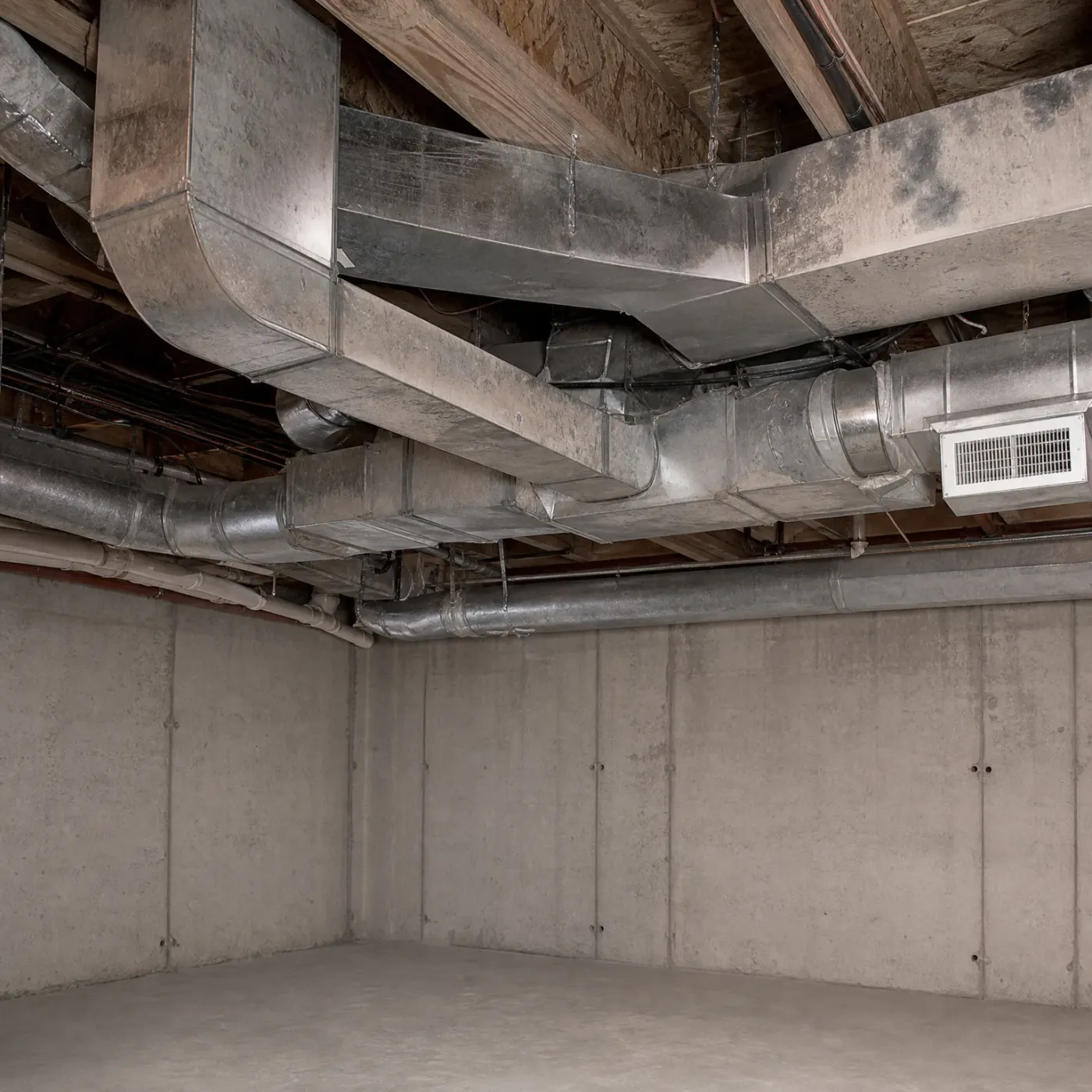
Galvanized sheet-metal ductwork and round pipes run beneath wooden floor joists in a basement with concrete walls and floor.
Galvanized trunk lines like these hold moisture at every seam, and a seam you can't see is one you can't check.

Power here costs 20.22 cents per kilowatt-hour

At 20.22 cents per kilowatt-hour, running the blower longer than it needs to costs you. Mold-clogged ducts make the system push harder and run longer to move the same air through your house, and that extra runtime shows up on the bill before you've even noticed the smell getting worse.

EIA-861 2025

Every vent in the house pulls from the same ducts, so mold sitting in one run gets carried to the bedrooms, the living room, wherever that air comes out.

You can't section off a bedroom from a duct system. Whatever's growing in the trunk line reaches every room the blower feeds.

A woman with dark hair in a bun sits on a beige sofa under a knit blanket with her eyes closed and an open book in front of her, with a lit lamp and houseplant in the background.
A smiling bearded man in a dark sweater sits at a dinner table with lit candles, a glass of red wine, and bowls of food, in a dimly lit room with a lamp and houseplant behind him.

What a proper cleaning gets you

  • A musty smell when the system kicks on, or dark spots near the vent covers, points to mold growing in the ducts.
  • Moisture gets in through leaky joints and a condensate drain that doesn't clear, and mold needs that moisture to grow back.
  • A shop vac and bleach spray reach the first few feet of duct and leave the rest of the run untouched.
  • A proper cleaning seals off vents, pulls the system under vacuum, and brushes mold loose from the metal before it spreads further.
  • One licensed contractor who works on ductwork in Dundalk every summer knows where these systems trap moisture and where mold tends to start.
  • Sending one request means one technician looking at your ducts, not a string of callbacks from companies competing for the job.

Mold in your ducts isn't a mystery once you know what to look for. The smell gives it away, or the spots around the vent cover, and both point back to moisture that got into the system somewhere and never dried out. A shop vac won't reach it. Bleach won't stop it from coming back. What gets rid of it is someone going through every run with a camera, sealing the vents, pulling the system under vacuum, and brushing the metal clean before any of it gets loose into the house.

That part matters more here than the brush and the vacuum. Dundalk summers keep the air heavy, and heavy air keeps your ducts damp long after a cleaning crew packs up and leaves. A contractor who works on this equipment every season in this county has already seen where the joints tend to open up and where a condensate line backs up and sits wet. That's not something a general cleaning outfit picks up on their first job in your attic.

Sending one request gets you one contractor looking at your actual ducts, not three or four companies working the phone to win the job. You get someone who already knows what a Baltimore County duct system does in July, and who shows up looking for the specific thing that's letting moisture back in, not just running a brush through the lines and calling it done.

Unfinished basement with poured concrete walls, exposed wooden joists, and galvanized sheet-metal supply ducts and round pipes running along the ceiling to a furnace unit at right.

Finding a pro stops being your job

A licensed pro who works in Baltimore County gets your request.

Duct and vent cleaningDucts or ventsBaltimore County, MD
Step 1 of 2

What ZIP code is the job in?