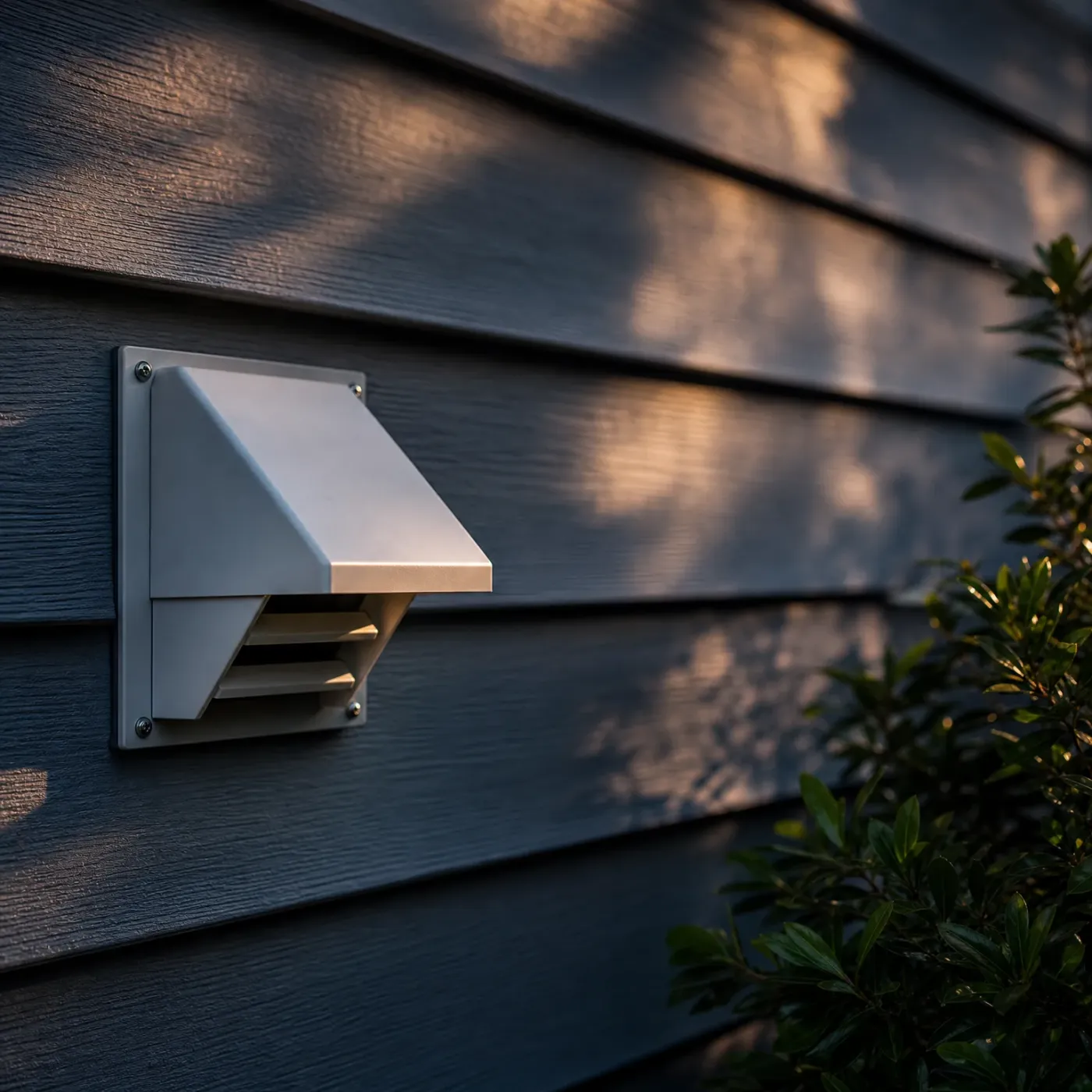
The vent hood as it should look
The louver hangs loose and swings open on its hinge. No lint sits in the opening or on the siding around it. Air from the dryer pushes it open and it falls shut on its own when the cycle ends.
Skip calling around
A clogged dryer vent shows up as longer drying times, a dryer that runs hot to the touch, or that burnt-dust smell when it's running. In Maryland's sticky summers, a blocked vent also pushes all that heat and moisture back into the house. This page covers what to look for and what it means. Finding someone to clear the vent usually means searching around, calling a few places, explaining the same thing more than once, then sorting through quotes. Below, you're matched with one licensed local contractor who deals with vents like yours all the time.
Skip the callsThe clearest sign is a dryer that takes two cycles to do one load's worth of clothes. Check the outside vent hood while the dryer runs. Air should push the flap open with some force. If it barely moves, or you feel only a weak trickle of air, lint has built up somewhere between the drum and the outside wall. Clothes coming out hotter than normal, or still damp at the end of a cycle, point the same way. So does a musty smell, especially with Maryland's humid summers pushing moisture back through a blocked vent instead of letting it escape outside. Check the lint trap too. If it's clean but lint still shows up around the door seal or in the vent hood outside, the blockage is further down the line, past where you can reach it by hand. A dryer working harder than it should also runs longer on electric heat, and that shows up on the bill.

Lint catches wherever the vent run turns, not just at the hood. A dryer vented through an attic or around a corner has more spots for lint to snag on the way out. Each bend slows the airflow a little more, so a long or winding run clogs faster than a short straight one. If your dryer sits on an interior wall, ask what the vent run looks like between the machine and the outside wall.

A dryer that's hot to the touch on top or on the front panel is working against trapped exhaust. The heating element keeps firing because the moisture sensor still reads the load as damp, since the wet air has nowhere to go. That extra run time on an electric dryer adds up on a power bill that's already high here. A dryer that runs cooler and shuts off sooner is pushing air the way it should.
Clothes come out hotter than they should, sometimes too hot to fold right away. The top of the dryer feels warm to the touch, or the room itself heats up faster than it used to. Buttons and zippers get hot enough to notice. You might catch the smell of hot dust, especially partway through a cycle. Lint gathers around the lint trap door or the back of the dryer even after you clean the trap every time. Some households notice the electric bill creeping up, since the dryer is working harder and running longer to finish the same loads. Left alone, the lint that's choking the vent is also what can catch fire, since it's dry and sitting right next to a heat source.

The louver hangs loose and swings open on its hinge. No lint sits in the opening or on the siding around it. Air from the dryer pushes it open and it falls shut on its own when the cycle ends.

Lint pokes out past the louver and sits matted across the opening. The flap can't close all the way, so it hangs open or catches on the buildup. This is what stops air from leaving the house at all.


Finding someone to clean a dryer vent usually means searching, calling a few places, explaining the same symptoms over and over, then sitting with quotes trying to guess who actually knows vent work instead of just duct cleaning. That's the part you can skip here. This connects you with one local contractor who deals with Maryland vent runs all the time, the attic turns, the long runs through finished basements, the spots where lint actually catches, so you're not explaining the basics from scratch. You get one call, not five companies working you at once. With electric heat and summer humidity already putting a load on your house, a vent that's choking airflow is adding heat and moisture it doesn't need to. Worth getting someone out to look at it rather than running another two-cycle load.

The louvers swing freely and the screws sit flush against the siding. No lint around the opening, none on the foundation below it. Air from the dryer pushes the flap open on its own and it falls shut once the cycle ends.

Gray lint fibers cake the opening and cover the cover itself. The louvers can't swing shut all the way, so they sit propped open by the buildup behind them. Air that should be pushing outside is finding its way back through the duct instead.


A yearly cleaning keeps the vent run clear so lint never gets the chance to build up at the bends. Drying times stay short and the dryer runs the way it did when it was new.
Lint keeps collecting at every bend in the run. Drying times stretch, the dryer runs hotter, and with Maryland's humid summers, that extra heat and moisture has nowhere to go but back into the house.
At 19.53 cents per kilowatt-hour, a dryer running two cycles instead of one shows up fast on your bill. A clogged vent makes the heating element work longer to push air through a blocked path, and in Maryland you're paying for every extra minute of that.
EIA-861 2025 statewide residential average





A weak push of air at the hood, a dryer that runs hot, clothes that need a second cycle to finish, lint sitting at every bend in the run. Any one of those points to the same thing. The vent is blocked somewhere between the drum and the outside wall, and the dryer is working harder than it should to push air through it.
You could spend an evening searching for someone to clear it, calling a few places, explaining the same thing each time, then sitting with quotes trying to tell who actually does vent work and who just cleans ducts. Or you could put in your address once and hear back from a local contractor who works on vents like yours all season and knows which bend in the run is usually the problem.


One form, no calling around



