Water Heater Installation in Cambridge, MD
Tell us about the house, and a licensed contractor who covers Dorchester County will get in touch.
Tell us about the job
It takes about a minute.

What a Cambridge winter asks of a new water heater
Cambridge homes run the heat from October through April, seven months of the year, and winter nights average 29°F through the coldest stretch. Whatever water heater goes in has to work through that same cold season, year after year.
Dorchester County has logged 12 winter storms and 58 damaging wind events over the past ten years, and 11% of Maryland households went at least a day without power last year. A gas unit with a standing pilot will keep making hot water through an outage that would stop an electric one cold. Whatever size and type you choose, it has to meet the federal minimum efficiency set for that tank size, since the standard is a formula that changes with the tank's rated volume, not one number for every unit.
- 29°F
- the average winter night, and colder incoming water means longer heating
- 7 months
- October through April, the months homes here need heat
- 11%
- of Maryland households lost power for a day or more in 2024, and a heater with an electric element or electric ignition stops without it
NOAA nClimDiv, 1991–2020 normals

A heat pump water heater would save about $370 a year to run in Maryland compared with an electric water heater.
Estimates for a typical Maryland home, from EIA household energy data and Maryland fuel prices. Your home will differ.
- How do I know it's time to replace my water heater?
- Age and how it is failing tell you most of what you need to know. If it is old and giving you trouble, replacing it makes more sense than repairing it again. Rusty water from the hot tap, a tank that is damp or rusted at the base, or water pooling underneath all point to the tank itself failing rather than a part inside it. A water heater that cannot keep up anymore, or that leaks, will only get worse, not better.
- Should I switch to a tankless water heater?
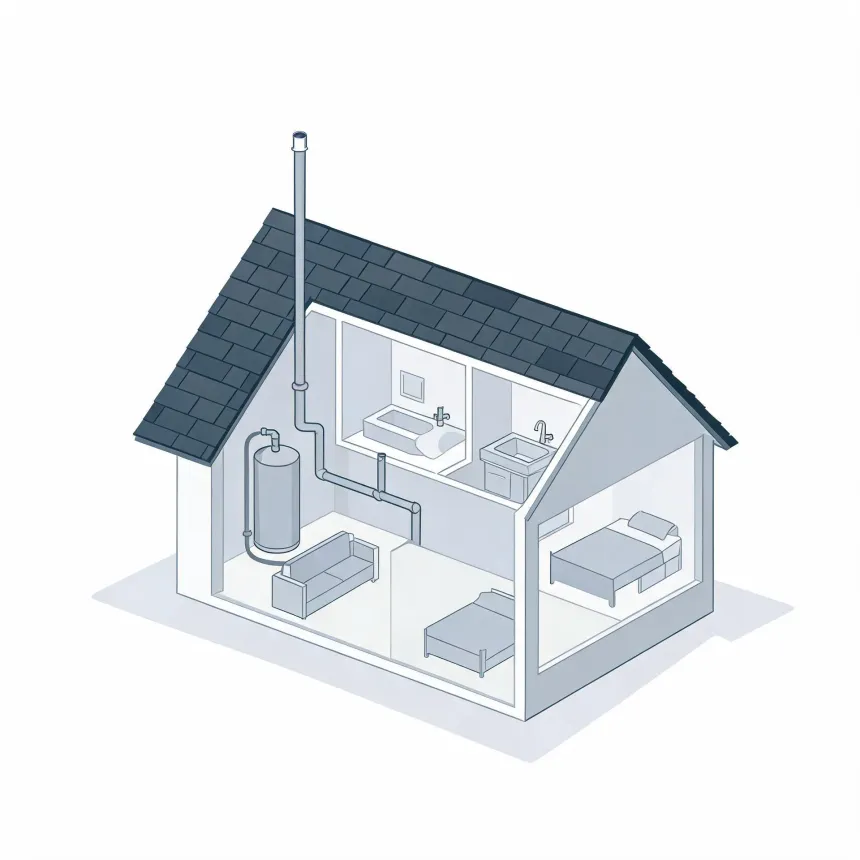
- It depends on what matters most to you, since a tankless unit and a tank both do the same job in different ways. A tankless heater has no tank to run out, so it delivers hot water continuously rather than until a tank empties. It needs venting and a gas or electric supply sized for it, so a contractor has to check whether your home can support that before installing one. Either type installed here still needs a permit and inspection from the local building office.
- What changes when you install a tankless water heater?
- The unit itself changes shape and size, and so does what feeds it. A tankless heater mounts on a wall instead of standing on the floor, which frees up the space a tank used to take. It draws more gas or electric current at the moment water is running than a tank does, so the supply line to it sometimes needs upgrading. Venting is different too, since a tankless unit vents differently than a standard tank, and a contractor will check whether the existing vent can be reused or needs to be replaced.