



Why your house is so dusty in Bowie, MD

Start one form

Dust that settles back on the shelves a day after you wipe them usually means your duct system is pushing it right back out. In a Bowie house running gas heat through the winter and AC through the muggy months, those ducts move a lot of air, and whatever is sitting inside them goes with it. Finding out why takes someone who actually looks at the ductwork, not another guess over the phone. That's usually where homeowners lose time: calling around Prince George's County, explaining the same dusty rooms to three or four companies, then sitting with quotes that don't line up because nobody saw the same thing. Answer a few questions here and that part is done. You get matched to one licensed local contractor who works on duct systems in this area and knows what tends to build up in them, no juggling multiple callbacks or sorting through bids. Tell them once what's going on in your house and let them take it from there.

Why is my house so dusty in Bowie, MD?

You dust the shelves, and by the next day there's a fine film back on them. It's not just the open windows or the dry air. Most houses in Bowie run forced air through ductwork for both the gas furnace and the AC, and that system is either helping keep dust down or it's the reason it keeps coming back.

Your ducts are recirculating dust faster than you can clean it up

A furnace and AC system pulls air through the house, across a filter, and back out through the vents, over and over, all day. If the filter is clogged or too thin to catch fine particles, dust passes right through and lands back on your furniture. Leaky ductwork makes it worse, since gaps in the duct joints pull in dust from the attic, crawlspace or wall cavities and mix it into the air stream. With gas heat running most of the winter and AC running through Bowie's muggy summers, this system is moving air through your house nearly year round, so a weak filter or leaky ducts have a lot of hours to work with.

A smiling woman with long brown hair in a dark sweater sits at a light stone kitchen counter with a glass of red wine, with a dimly lit living room in the background.
A smiling woman with dark hair pinned up, wearing a beige sweater, sits looking off to the side in a kitchen with a glass of red wine in front of her, a stainless steel refrigerator, marble counter and a potted plant behind her.
A smiling woman with dark shoulder-length hair in a navy sweater sits at a kitchen counter with a glass of red wine, with a lit living room and pendant lights behind her.
A woman in a dark gray sweater laughs while seated at a white marble counter with a glass of red wine, with a blurred living and dining room behind her.

Why does duct dust build up so fast in a Bowie house?

  • Half the homes here were built by 1977

    Half the homes in Prince George's County were built in 1977 or earlier. Older duct systems have had decades to collect dust in joints and bends that newer runs haven't.

  • Heat runs October through April

    Furnaces here run about seven months a year, October through April. That's seven months of air getting pushed through the same ducts, carrying dust into every room.

  • Cooling runs June through September

    AC runs about four months, June through September. Switch that onto the same ductwork and whatever built up all winter gets stirred up and blown out again.

ACS 2020-2024 · NOAA nClimDiv 1991-2020

Dust from the ducts themselves

Run your hand inside a supply register and feel grit. That's dust the duct system is storing and releasing, not dust from your floors or furniture. It collects in the seams, the bends, and the sheet metal joints, and every time the furnace or the AC kicks on, some of it rides the airflow back into your rooms. This kind keeps coming back no matter how often you dust or vacuum the house, because the source isn't the room. It's the metal the air is moving through before it ever reaches you.


Dust from everything else

Pet hair, skin cells, fabric fibers, and whatever blows in when a door opens all settle on surfaces the normal way. A filter catches some of it as air passes through, but filters miss fine particles and anything that settles before it gets pulled back toward the return. This kind of dust responds to a cleaner filter, more frequent vacuuming, and keeping windows shut on high-pollen days. If dusting and a better filter actually keep the shelves clean for more than a day or two, this is probably what you're dealing with, not the ducts.

A smiling man with dark wavy hair and a short beard, wearing a navy crewneck sweater, sits at a candlelit dinner table with a bowl of food, wine glass and a lamp and framed art behind him.
A woman with wavy brown hair sits on a beige couch with her eyes closed and a slight smile, a knit blanket over her lap and a closed dark-covered book resting on it, with a lit lamp and plant in the dim background.

No calling every shop in Prince George's County

The pro who gets in touch is licensed in Maryland and works in Prince George's County.

There's no charge for the request.

How dust actually moves through your ducts

  • Air moves through the return side first, so that's where loose dust and fiber get pulled into the ductwork to begin with.
  • A leaky return in an attic or crawlspace pulls in insulation fibers and dust before the air ever reaches the furnace or coil.
  • The blower runs every time the thermostat calls for heat or cooling, so dust already in the ducts gets pushed out with every cycle.
  • A clogged or poorly sealed filter housing lets some air bypass the filter entirely, carrying dust straight into the duct run.
  • Supply registers aimed into a room scatter whatever dust is riding in the airflow across furniture and floors as it exits.
  • Flex duct with sagging or crushed sections collects dust at the low points and releases it in bursts when airflow shifts.

Air comes back into your system before it ever goes out. The return side pulls air out of your rooms, through the filter, and into the furnace or air handler, and anything the filter misses rides along with it. If that return runs through an attic or crawlspace and a seam has opened up along the way, it's pulling in insulation fibers and settled dust from that space too, not just room air. From there the blower pushes everything through the supply ducts and out the registers, and it does this every single time the thermostat calls for heat or cooling, not once a day. A filter housing that doesn't seal tight against its frame lets a portion of the air skip the filter altogether, so whatever it's carrying goes straight into the duct run and out the other end. Where you aim your registers matters too. A supply blowing straight across a room throws that dust onto whatever furniture or flooring is in its path, which is why some rooms seem to collect it faster than others. Flex duct adds its own problem. Where a run sags or gets crushed against a joist, dust settles at the low point instead of moving through, and it doesn't come out steadily. It builds there until a change in airflow, like the blower kicking on at a different speed, knocks it loose and sends it out in a burst. None of this is about how clean your house is. It's about what the duct system is doing with the air every time it runs.

Galvanized sheet metal HVAC ductwork with a vent grille running along a wooden joist ceiling above a bare concrete wall.
Before you get your ductwork cleaning
A basement with a gray furnace on a concrete pad connected to large sheet-metal ducts running along an exposed wood joist ceiling, with PVC pipes and plastic sheeting on the walls.
After you get your ductwork cleaning
Unfinished basement with galvanized sheet-metal rectangular and round ductwork running along a wood-joist ceiling, two steel support columns, a small window, and a furnace unit against the far right wall.

Ductwork moving clean air

This is what a supply run looks like when the sheet metal is clear. Air moves through the trunk line and branches into each room without shedding anything extra along the way. The registers put out just air, not a layer of grit with it.

An unfinished basement with bare concrete walls and floor, showing exposed wooden floor joists, pipes, wiring, and metal HVAC ducts with a vent grille overhead.

Ductwork shedding dust into every room

The same joists, the same metal, but the joints and seams here have years of dust packed into them. Every time the furnace or AC kicks on, some of that gets carried loose and pushed out through the vents into the rooms you're dusting.

A closed silver laptop and a light ceramic mug of dark coffee sit on a wooden table, with a window showing a sunset at left and a kitchen counter with a cutting board and potted plant in the background.

The dust is coming from the ducts, and cleaning them ends it

A Bowie house with forced air pushes that air through the same metal runs every day, all year, and whatever has settled in those runs keeps going back out into your rooms. Wiping the shelves again won't change that. The ducts have to be cleared out.

Finding someone qualified for this isn't the same as finding someone to mow the lawn. You want a contractor who works on duct systems regularly, knows what decades of buildup in a Prince George's County home looks like, and can tell you honestly what they find. Instead of calling around to a handful of companies, sitting through separate estimates, and explaining the same dusty shelves story each time, you're matched with one licensed, local contractor who already knows this kind of system. One call, one answer, and you know where you stand.

Interior corner of a room with a dark upholstered sofa and textured cushion, a potted plant, sheer curtains at a multi-pane window showing blurred green and yellow trees, and a dark table holding a wooden tray with stacked coasters and a small ceramic vase.
A lit flagstone walkway bordered by low path lights and shrubs leads to the covered front entry of a light-colored clapboard house with a dark door, flanking potted plants, and a glowing porch light at dusk.

Ductwork Cleaning

No phone calls to make

Duct and vent cleaningDucts or ventsPrince George's County, MD
Step 1 of 2

What ZIP code is the job in?

  • An olive-green upholstered armchair with a cream knit throw and pillow, beside a matching ottoman holding a mug on a wooden tray and a book, with a dark wood bookshelf, candles, a large leafy plant, and a patterned rug nearby.
    • Get matched with someone who does this kind of work in Prince George's County.
    • Get matched with a Prince George's County pro who cleans ducts.
  • Two stacked hardcover books, the top one green, sit on a round dark wood table beside a ceramic mug and a potted fern, with a leather armchair, green cushion and knitted throw behind near a curtained window.
    • After this form, you can stop searching for a duct system pro.
    • One request and the search for a pro is handled.
  • Living room interior with a stone fireplace and wooden mantel holding ceramic vases and a framed artwork, a round wood coffee table with a dark vase of greenery, a shallow bowl, books and a stone cup, and a beige sofa with gray pillows and a dark throw in the foreground.
    • One form replaces the calls you'd make to find a duct system pro.
    • Skip calling around for someone who cleans ducts.
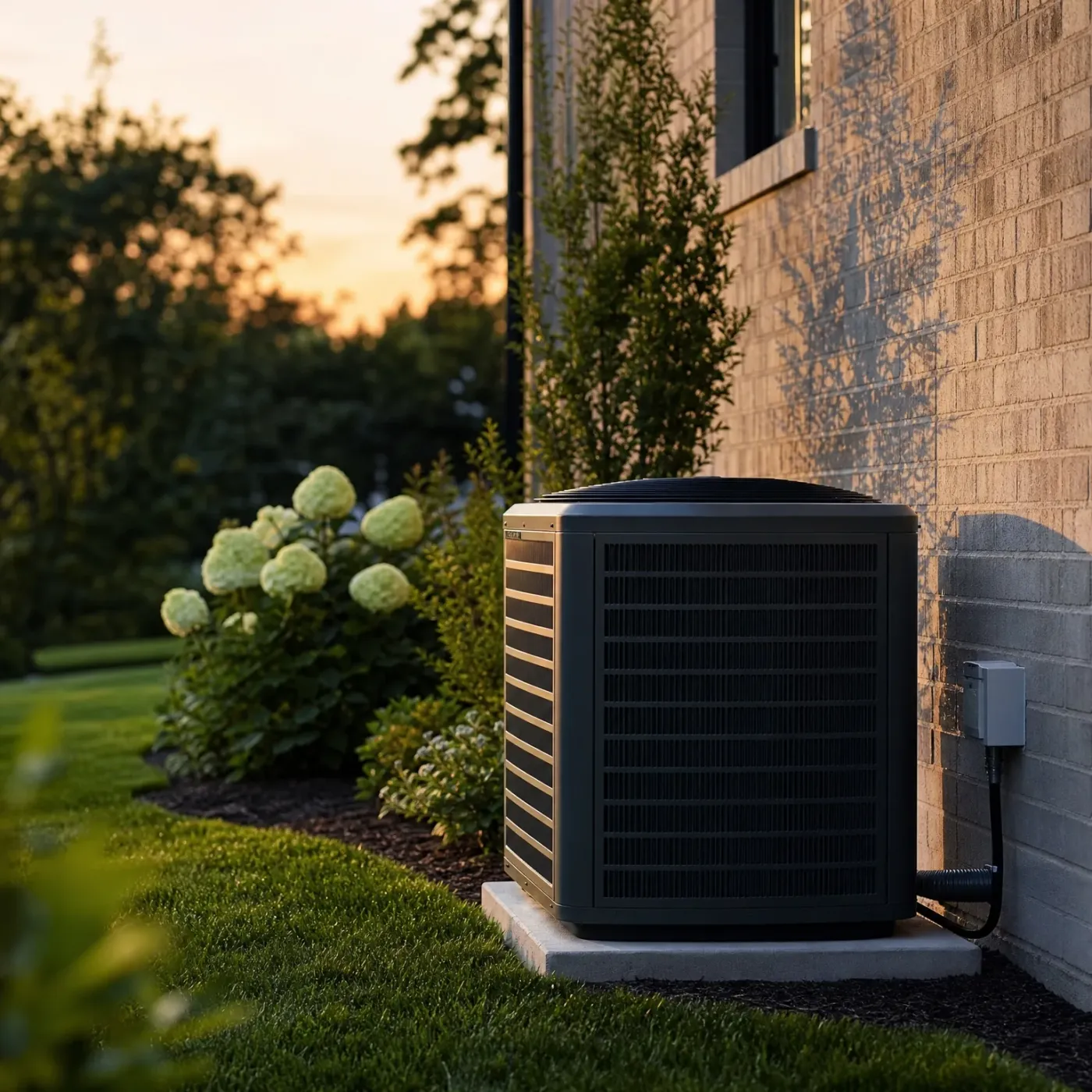
  • An outdoor air conditioning condenser unit on a concrete pad beside a brick house, with a wall-mounted disconnect box and conduit, lawn and flowering shrubs at left, and a sunset sky in the background.
    • A licensed pro who works in Prince George's County gets your request.
    • Your request stays with one local pro.