Signs your ducts need cleaning in Baltimore, MD

A galvanized steel round duct with a 90-degree elbow and a white louvered vent cover on one end, shown against a plain gray background.
Hand it over

How do I know if my ducts need cleaning?

You're not sure if what you're seeing is normal dust or something worth getting looked at. Maybe it's a layer on the vent covers, or dust that comes back fast after you clean, or someone in the house who's been sneezing more than usual. Baltimore homes run the furnace hard in winter and the AC hard in summer, and the ducts are moving a lot of air both seasons, so it helps to know which signs actually point to the ducts.

Dust that settles fast, musty air, or weak airflow at the vents

If you wipe down a vent cover and it's coated again within a week, that's dust moving through the ducts, not just the room. A musty smell when the furnace or AC kicks on often means something is sitting in the ductwork itself. Weak airflow from a vent that used to blow strong can mean a blockage further back in the line. Baltimore's gas furnaces run from October through April and the AC takes over for the muggy months after, so air is pushing through those ducts nearly all year. Anything sitting in them gets circulated into every room, over and over, instead of staying put.

Empty basement room with bare concrete walls and floor, and an exposed wood-joist ceiling carrying sheet-metal ductwork, insulated pipes, and recessed lights.

Ducts running clean

Air moves through the vents without pushing dust back into the room. The covers stay clean between cleanings and nobody's sneezing more indoors than out. Register covers near the floor or ceiling show only a light film, nothing that builds up fast.

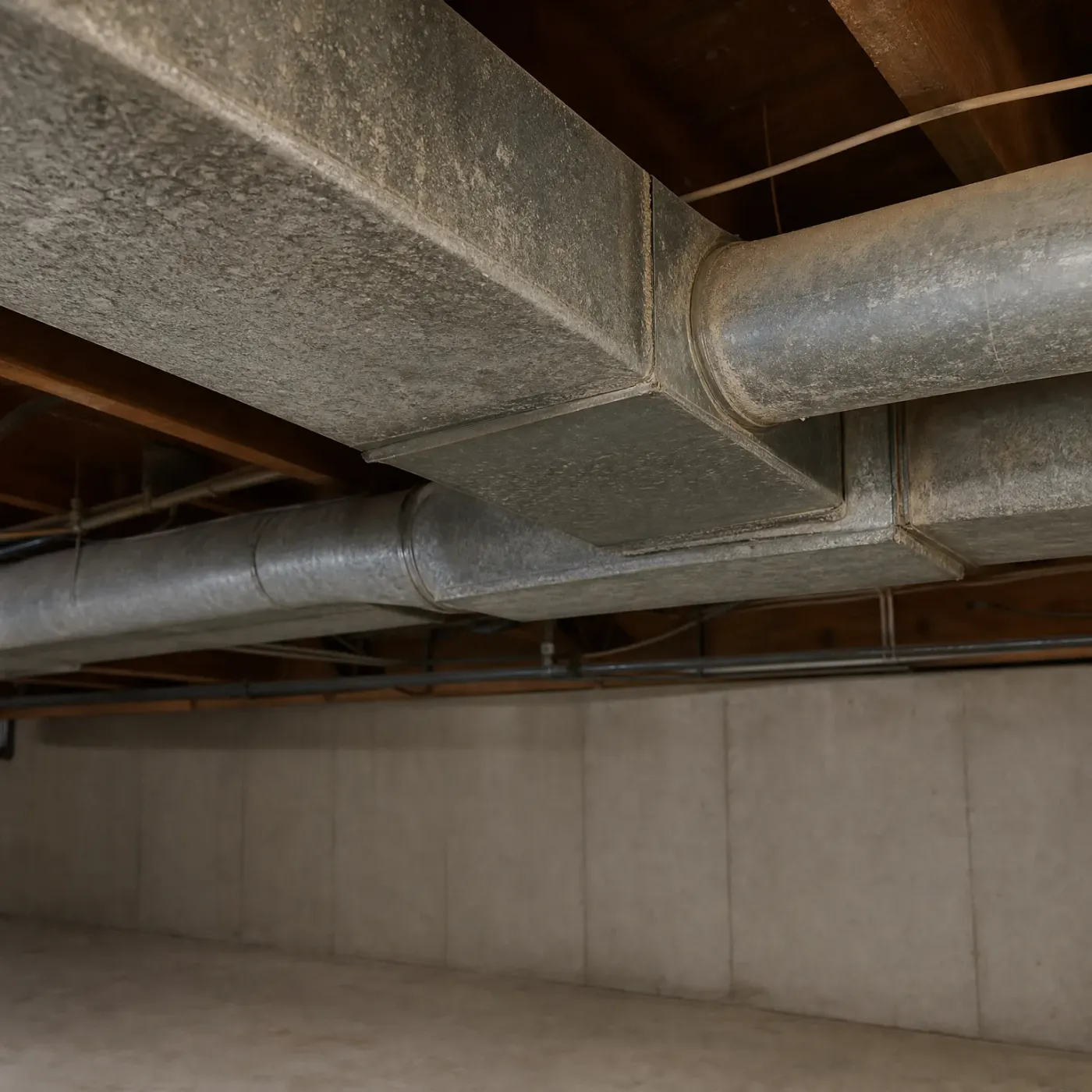
Basement ceiling with galvanized sheet metal ductwork, round pipes and rectangular plenums running between wooden joists above a bare concrete foundation wall and floor.

Ducts due for a cleaning

Dust settles on the vent covers again within days of wiping them down. You can see it collecting in the trunk lines where branches meet, sometimes with a musty smell when the system kicks on. That buildup is what's circulating through the house.

Why does Baltimore make this worse?

  • Half the homes here were built by 1947

    Half the homes in Baltimore were built in 1947 or earlier. Older duct runs and additions tend to have more joints and gaps where dust collects.

  • Heat runs October through April

    Heat runs here about seven months a year, October through April. That's seven months of air pushing through the same ducts, carrying whatever is sitting inside them.

  • Cooling runs June through September

    Cooling runs about four months, June through September. Add it to the heating months and the system is moving air through those ducts most of the year.

ACS 2020-2024 · NOAA nClimDiv 1991-2020

  1. Dust and debris settle inside the duct walls over time.

  2. A tech opens the system and checks each supply and return run.

  3. A vacuum unit connects to the ductwork to pull debris out.

  4. Agitation tools knock loose what's stuck to the duct walls.

What is this doing to my house

Dust comes back on the furniture a day or two after you wipe it down. The vent covers show a dark ring around the edges, and the air near them smells a little stale when the system kicks on. Someone in the house might be sneezing more inside than they do outside, or waking up stuffy. If you've got pets, their hair and dander get pulled into the return and settle in the runs, which adds to all of it. None of this means something's broken. But dust sitting in the ducts keeps circulating every time the furnace or AC runs, and in a house that heats most of the year, that's a lot of passes through air that isn't clean.

A smiling man in a dark green sweater sits at a wooden table with a light gray mug in a kitchen with white tile backsplash, pendant lights, and an adjoining living room visible.
A smiling man in a dark gray sweater stands indoors looking to the side, with a kitchen counter holding a ceramic mug and open wooden shelves behind him and a living area in the background.
A smiling man in a dark blue button-up shirt stands at a white kitchen island, with open shelving, a gas range, a potted plant and a window in the background.
A smiling man with dark wavy hair and a beard, wearing a dark green knit sweater, sits in an open-plan living room and kitchen with a brown sofa, large windows, and a counter holding a mug and a wooden bowl.
A wooden table with a closed laptop, a ceramic mug of dark coffee, and a glass vase of eucalyptus stems beside a window, with a dark green kitchen cabinet, wooden counter, potted herb, cutting boards and bowl blurred in the background.

What this means for your house

If the ducts are pushing dust back into the rooms, it touches everything you own. The furniture, the shelves, the floor near the vents. You end up cleaning more often and it doesn't hold. Anyone in the house with allergies or asthma feels it first, usually at night when the furnace or the AC has been running a while.

Finding someone to look at this usually means calling a few companies, explaining what you've noticed more than once, and waiting on quotes that are hard to compare. Send the form instead and that part is off your plate. A contractor who works on homes like yours in Baltimore gets in touch, and you go from wondering what's in your ducts to having someone look.

A mug and a small round vase sit on a wooden windowsill beside sheer and heavier curtains, with blurred autumn trees seen through the rain-speckled window and a sofa with cushions and a throw in the foreground.
Dim interior corner of a room with a ceiling air vent, a beige wall, a cream curtain beside a window showing bare trees, and a dark ceramic vase of flowers on a wooden side table behind a light upholstered sofa back.

It's a Saturday afternoon in April, sun coming in through the living room window. You're on the couch and you notice the ceiling vent grille above the bookshelf has gone gray around the slats. You run a finger over the end table and it comes back coated, even though you wiped the whole room down Thursday. The TV stand has the same film starting on one corner. You sit back down and think about calling someone, then think about finding the right someone, reading through reviews, explaining the same thing on the phone three or four times before anyone gives you a straight answer.


Let someone else find the pro

You've been checking the vent covers, wiping the furniture, maybe noticing someone sneezes more at home than they do anywhere else. That's enough to go on. You don't need to be sure it's the ducts before you get someone out to look. A contractor who does this work can tell in minutes whether what you're seeing is normal household dust or buildup that's been sitting in those runs for years, maybe since the place was built if the ductwork is original. Right now the only way to find out is to track down someone who does duct cleaning in Baltimore, call around, explain what you're seeing more than once, and sort through who actually answers. Send the request once and that part is handled. You go back to your day and someone who does this work gets in touch, instead of you spending an afternoon on the phone finding them first.

Why the dust keeps coming back

A duct system holds air moving in both directions, supply and return, and the return side pulls air out of every room and back through the furnace before it circulates again. If there's debris sitting in those runs, every cycle pushes some of it back out through the supply vents. Wiping the furniture doesn't fix the source because the source is upstream, inside the ducts themselves. That's why the film comes back fast after cleaning. The furnace runs more in a Baltimore winter than most places, so a duct system here moves that air, and whatever's in it, more often.

What a cleaning actually removes

A duct cleaning service runs a vacuum connected to the full system while agitation tools knock debris loose from the duct walls, supply runs and return runs alike. It's not wiping the vent covers you can reach. It pulls out what's built up in the sections you can't see, which is where dust that keeps returning usually comes from. Homes with additions or older duct runs tend to have more joints and seams where debris settles, and Baltimore has plenty of both. Once that's cleared out, the air moving through the system isn't carrying it back into the rooms anymore.

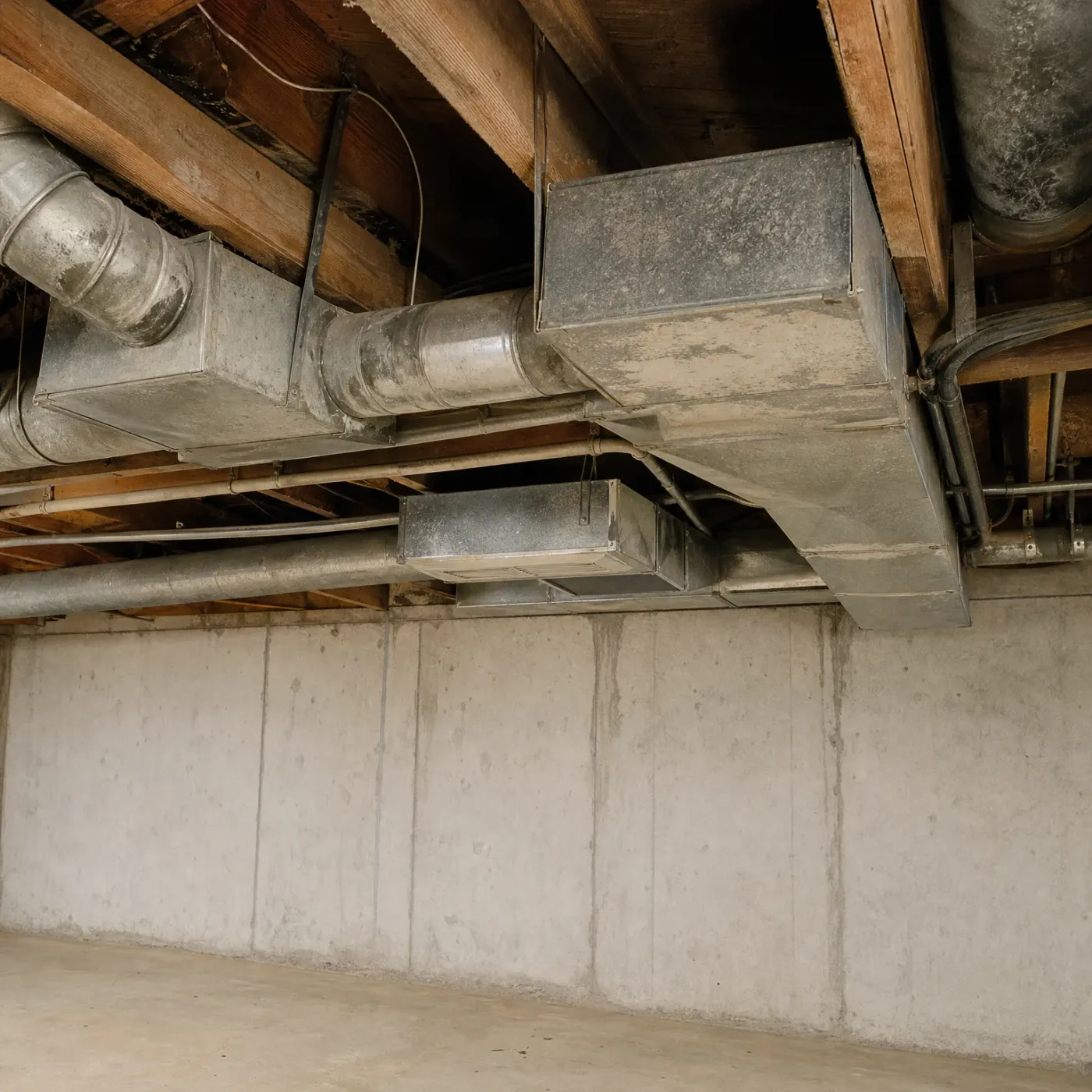
Empty basement with bare concrete walls and floor, with galvanized sheet-metal HVAC ducts, a round duct elbow, and pipes running along the wooden joists of the ceiling.
Before you get your ductwork cleaning
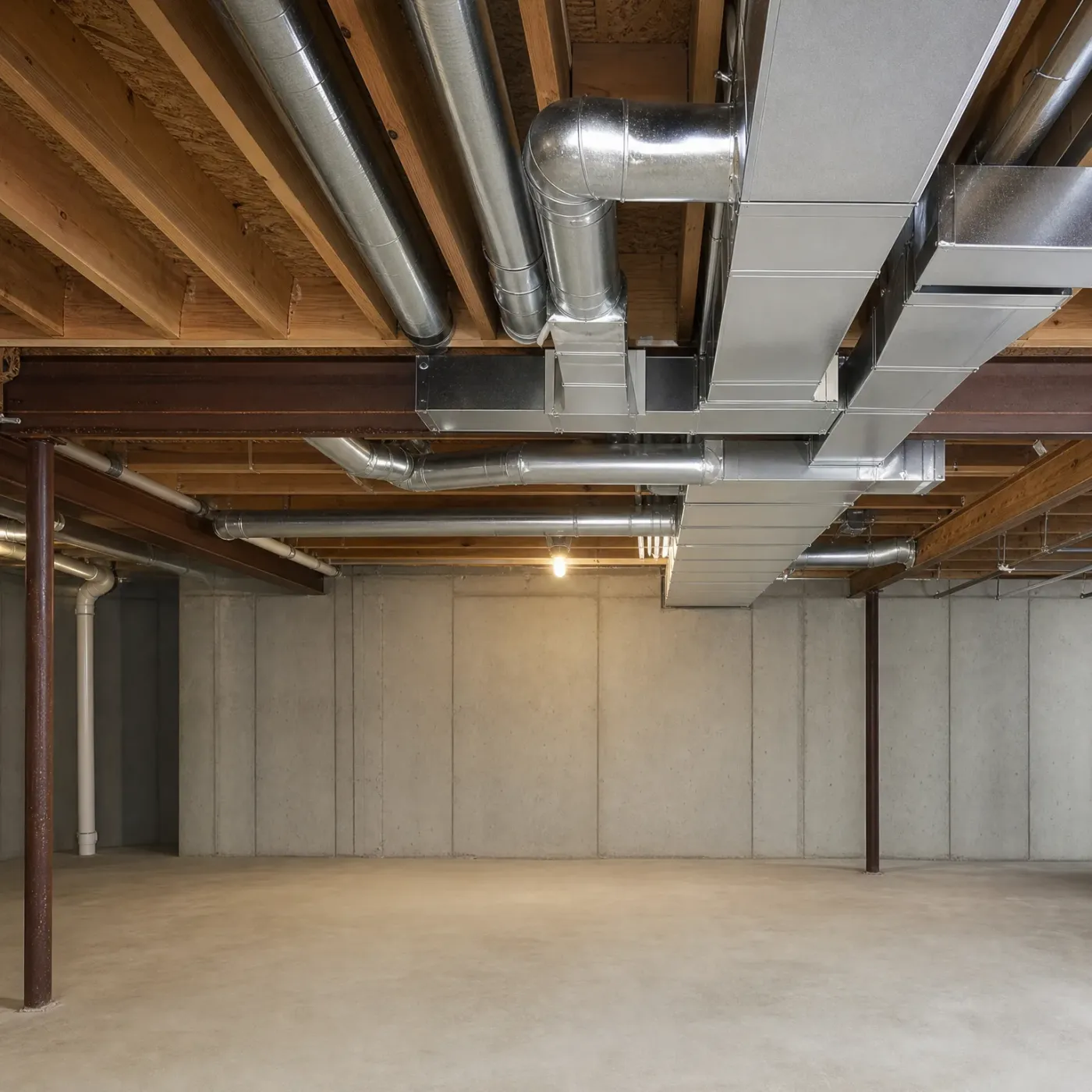
An empty unfinished basement with concrete floor and walls, exposed wood joists, steel beams and support posts, galvanized ductwork and pipes, and a single bare bulb light.
After you get your ductwork cleaning

Power here costs 20.22 cents per kilowatt-hour

At 20.22 cents a kilowatt-hour, pushing air through ducts clogged with dust costs more than it should. A blower working to force air past buildup pulls more power to move the same amount of heat through the house. Clean runs mean the furnace isn't fighting itself to do its job.

EIA-861 2025

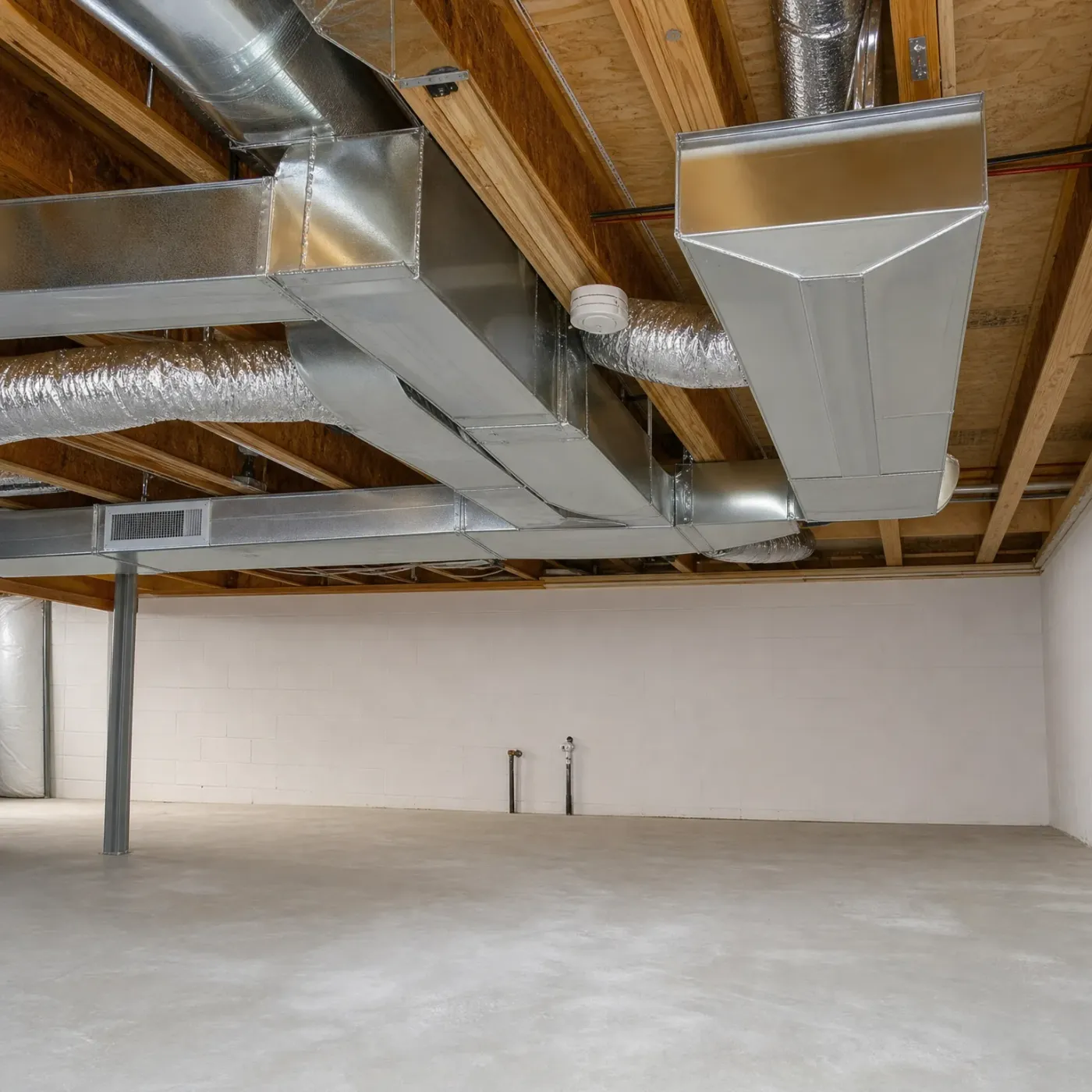
Empty basement with bare concrete floor, painted block walls, and an exposed wood-joist ceiling with sheet-metal and insulated flexible ductwork and a steel support column.

Ductwork working as it should

The trunk line and the flex runs sit open and visible, metal showing clean against the joists. Air has a clear path from the furnace to every room and back again. Nothing coats the duct walls thick enough to break loose and blow into the house.

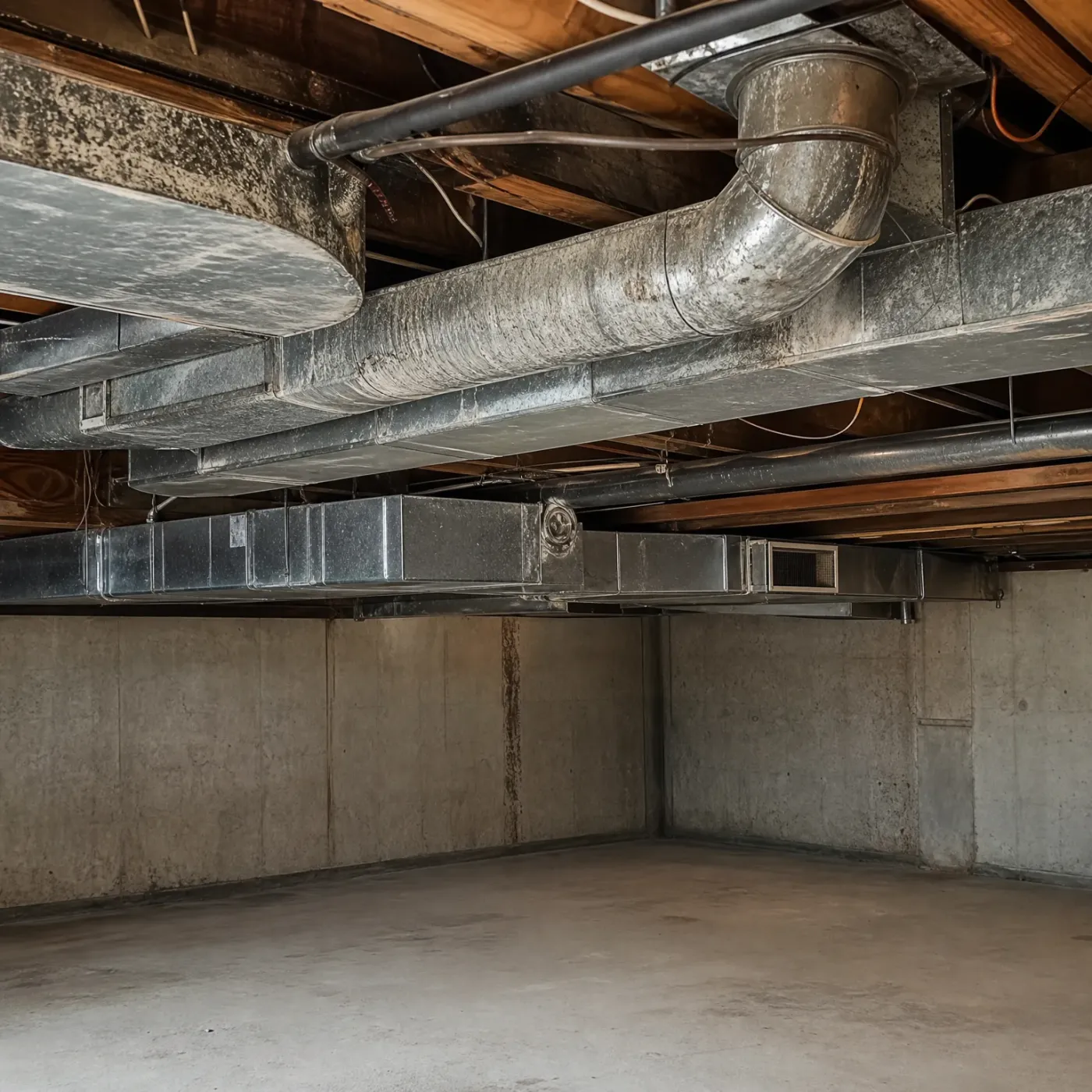
Galvanized rectangular and round sheet-metal ductwork running beneath a wood-joist ceiling in a basement with concrete walls and floor, with pipes and wiring alongside.

Ductwork that's fallen behind

The same trunk and branch duct, but every surface is gray with buildup, the spiral seams barely visible under it. Air still moves through, carrying some of that dust into the rooms with it each time the furnace or AC kicks on.

A dark ring on the vent covers, dust that's back a day after you wipe it down, someone sneezing more at home than anywhere else. Any one of those is reason enough to get the ducts looked at, and in a city where half the houses date to 1947 or earlier and the furnace runs seven months a year, it's a common enough thing to check. You don't have to pin down the cause yourself. Instead of spending an afternoon searching contractors, calling a few, and explaining the gray ring and the sneezing all over again to each one, you send it once and it's handed to someone who does this work in Baltimore. A tech can look at your registers and your duct runs and tell you whether it's buildup inside the system or something else. Either way, you'll know what you're dealing with instead of guessing at it every time you dust the shelves.

A single-story house with horizontal siding and large windows lit from within at dusk, beside a lawn, low path lights and a dark gravel driveway, with pine trees and a distant waterway under an orange and blue sky.

Ductwork Cleaning

One request and it's handed off

Duct and vent cleaningDucts or ventsBaltimore city, MD
Step 1 of 2

What ZIP code is the job in?

  • A ceramic vase holding leafy green branches and a shallow wooden bowl sit on a wooden window ledge beside a sunlit window, with a cream upholstered chair and knit throw in the foreground.
    • Your request goes to a Baltimore pro who takes ductwork jobs.
    • Get matched with someone who does this kind of work in Baltimore.
  • Sunlit living room corner with a beige upholstered sofa, a round wooden side table holding a ceramic vase of olive branches, linen curtains at a window, a floor vent in the baseboard, and a woven jute rug on hardwood flooring.
    • Once you send the form, finding a pro is off your list.
    • After you send the request, you're done searching.
  • A wooden side table with a single drawer holds a shallow carved wood bowl and a white ceramic vase of green eucalyptus stems, beside a window and an upholstered chair draped with a cream knit throw.
    • Describe your ductwork job once, to one pro.
    • Fill out one short form instead of calling around.
  • Corner of a house with horizontal siding, a white-framed window and stone veneer base, beside a covered entry with wooden steps, a potted plant, mulched beds of green shrubs and a flagstone path.
    • The pro who gets in touch is licensed in Maryland and works in Baltimore.
    • A licensed pro who works in Baltimore gets your request.