
Is duct cleaning worth it in Baltimore, MD
Get a local proYou're trying to figure out if cleaning your ducts actually does anything, or if it's money spent on nothing. Fair question. Baltimore summers are sticky enough that your system runs hard for months, and gas heat through the winter pushes air through the same ducts the other half of the year. Whether cleaning is worth it for your house depends on things a search result can't see: how your ducts are set up, what's actually built up in them, what your system looks like now. A contractor who comes out and looks at your ducts can tell you straight whether cleaning will make a difference for you, or whether your money is better spent somewhere else. Say the word and you'll be matched with someone who covers your part of Baltimore and knows the kind of duct systems homes here have. They'll reach out to you directly. No digging through listings, no cold calls to make yourself. That part's off your plate once you send the form.
For most Baltimore homes, duct cleaning is not something you need on a schedule. It's worth doing when there's a real reason: a renovation that left drywall dust in the system, signs of rodents or mold in the ducts, or registers that blow out visible dust when the system kicks on. Ducts carry air, they don't generate dirt on their own, so if nobody's been digging in your walls or attic lately, the inside of that ductwork probably looks about the same as it did last year. Where it does matter here is the furnace filter. With gas heat running hard all winter and the AC running hard all summer, that filter is doing the real work of keeping dust out of the system, and a neglected one forces the blower to work harder than it should. If you're seeing dust, smelling something musty, or you just had work done on the house, cleaning is worth looking into. Otherwise, your money is better spent on the filter.
How much duct work is your house actually asking for?
Half the homes here were built by 1947
Half the homes in Baltimore were built in 1947 or earlier. Older ductwork has had more time to collect dust, and more chances to have been patched or added onto.
Heat runs October through April
Heat runs October through April here, about seven months. That's seven months of air moving through the same ducts, carrying whatever is already in them.
Cooling runs June through September
Cooling runs June through September. Add it to the heating months and there are only a couple of months a year your ducts aren't moving air at all.
ACS 2020-2024 · NOAA nClimDiv 1991-2020
What a duct cleaning actually involves
- Dust in your ducts sits in the trunk lines and the branch runs, not inside the furnace or air handler itself.
- A real cleaning uses a vacuum collection unit hooked to the system while a technician agitates the duct walls to knock debris loose.
- Every supply register and return grille gets opened and brushed out, not just the two or three you can reach from a chair.
- The filter is what actually cleans the air you breathe; the ducts just move it, so a dirty duct doesn't mean dirty air.
- Mold growing inside ductwork needs moisture to start, so finding it usually means there's a leak or condensation problem feeding it.
- Rodent droppings or nesting material in a duct run means an opening somewhere in the system that a cleaning alone won't seal.
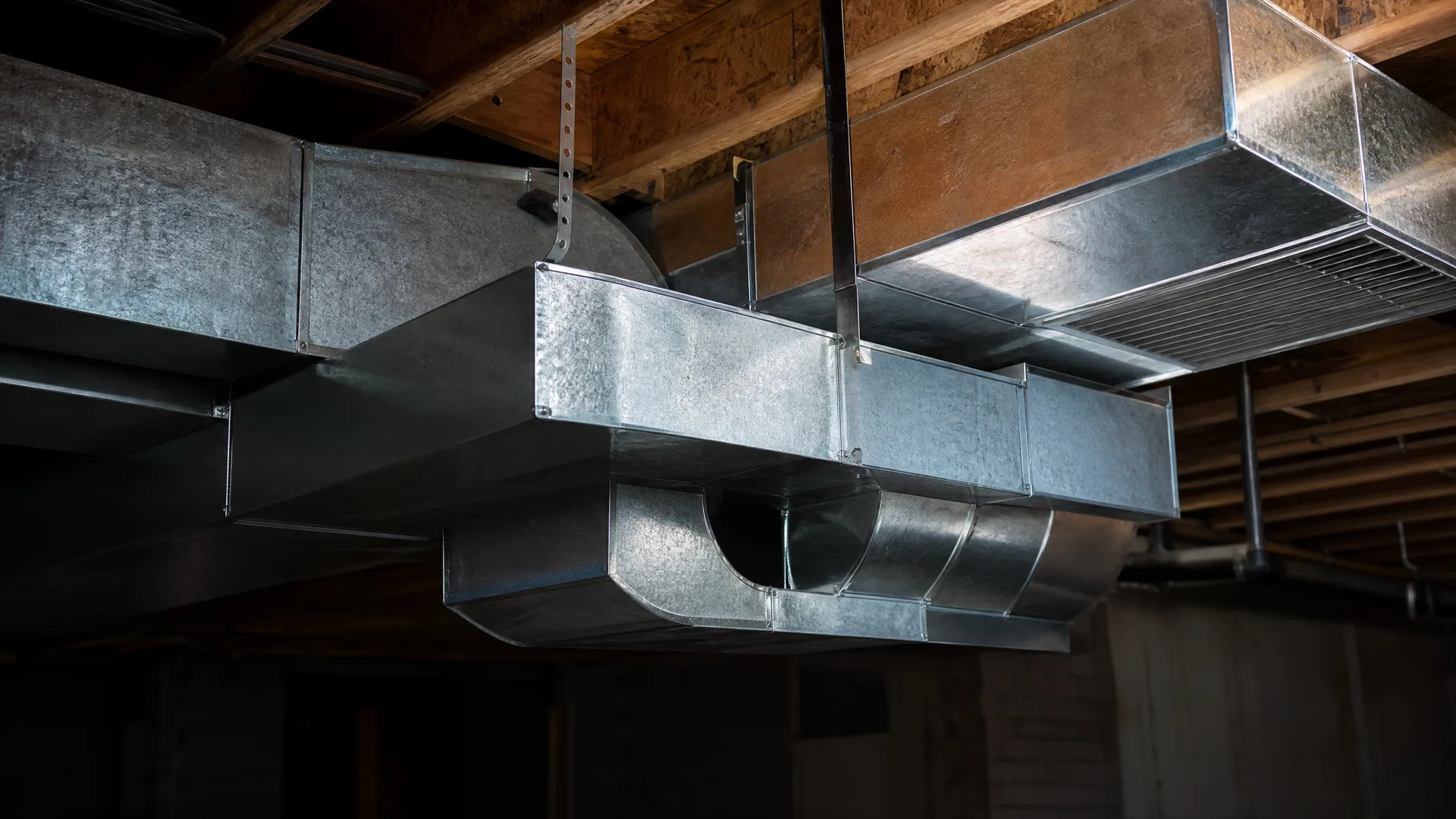
The dust that builds up in a duct system collects in the trunk line running off the furnace or air handler and in the branch runs that feed each room. It doesn't gather inside the equipment itself. When a technician cleans a system properly, they connect a vacuum collection unit to the ductwork first, so it's pulling negative pressure through the whole run. Then they go after the duct walls with brushes or air whips to knock the dust loose so the vacuum can carry it out rather than just stirring it up and letting it resettle further down the line. Every supply register and return grille in the house gets pulled, brushed, and vacuumed out, not just the handful you can reach without moving furniture. If a crew skips registers or never hooks up collection equipment, they're moving dust around, not removing it.
Worth knowing: the ductwork isn't what cleans your air in the first place. That job belongs to the filter. Ducts just move air from the equipment to the room and back. So a duct system with some dust in it isn't necessarily making the air you breathe dirty, and a clean duct system doesn't replace a filter that needs changing.
Two things found during an inspection matter more than ordinary dust. Mold inside ductwork needs standing moisture to grow, so its presence usually points to a leak or condensation problem somewhere in the system that needs fixing on its own. Rodent droppings or nesting material mean there's a gap or opening letting them in, and no amount of cleaning closes that gap.


What's actually coming out of your vents
Put your hand near a supply register when the furnace kicks on. If you feel a puff of dust, or see it settle on the sill nearby, that's coming from the ducts, not the furnace itself. A musty smell when the system starts, especially after the ducts have sat closed up over the summer, is worth noticing too. So is a gray film that keeps coming back on surfaces near the vents a day or two after you've wiped them down. None of this means the ducts need cleaning on a schedule. But if someone in the house has allergies or asthma, dust and debris moving through the system every time it runs is going to reach them before it settles anywhere else.




Find a duct system cleaning pro in Baltimore

Send the form and finding a duct cleaner is handled.
There's no charge for the request.

Why debris sits where it sits
Air moves through a duct run in one direction, pushed by the blower. Dust and debris settle where the airflow slows down, usually in the long horizontal trunk line, not in the short runs right at the register. That's why a clean-looking vent cover doesn't tell you much. The trunk line can hold years of buildup while the last few feet of ductwork near the room stay fairly clear.

What a cleaning can't fix
Duct cleaning clears what's inside the ducts. It doesn't fix a duct that's crushed, disconnected, or leaking air into a crawlspace or attic. If a room runs hotter or colder than the rest of the house, that's usually a sizing or a sealing problem, and cleaning the ducts won't change it. A contractor checking for a cleaning should be able to tell you whether that's what's actually going on.
Power here costs 20.22 cents per kilowatt-hour
At 20.22 cents a kilowatt-hour, a blower pushing air through clogged or dusty ducts is working harder than it should for every hour it runs. Clean duct walls let your furnace and AC move air with less resistance, so you're not paying to force air through a dirty path.
EIA-861 2025
When cleaning is worth paying for
If a renovation left drywall dust behind, if you've found rodents or droppings near a duct junction, or if registers blow out visible dust every time the furnace kicks on, cleaning solves a real problem. The same goes for a musty smell on startup that doesn't go away after the filter's been changed. In these cases the debris is sitting in the trunk line or branch runs, and a vacuum collection unit with agitation is the only way to get it out. You're not guessing here. You have a specific sign, and the service addresses it directly. A contractor who looks at your ducts can confirm what's actually in there before any work starts.
When it's money spent on nothing
If your ducts aren't shedding dust at the registers, there's no smell, and nothing's been disturbed by recent work in the house, cleaning won't change how your furnace or AC performs. There's no buildup inside the furnace or air handler to clear out, since that's not where dust collects. A system moving air normally, with no signs at the vents, is doing what it's supposed to do. Paying to clean ducts that aren't causing a problem doesn't lower your bill or extend the life of your equipment. The better use of that money, if your filter's old or your system hasn't been looked at in a while, is a straightforward check instead.



So is it worth it
If your ducts are quiet, no dust at the registers, no musty smell, no history of rodents or a dusty renovation, cleaning isn't doing anything for you. Save the money. If any of those signs are real at your house, cleaning fixes an actual problem, not a hypothetical one. That's the whole answer, and it doesn't change because your house is older or your furnace runs most of the year.
What's harder to tell from your own house is which category you're in. A dusty register could mean loose debris in the trunk line, or it could mean a filter that's overdue, and those call for different fixes. A contractor matched to your home can look at your actual ductwork, tell you what they find, and reach out to go over it with you. You're not left guessing at it alone, and you're not stuck making a call on a system you can't see into.

The right pro for this job