


How often to clean air ducts in Maryland

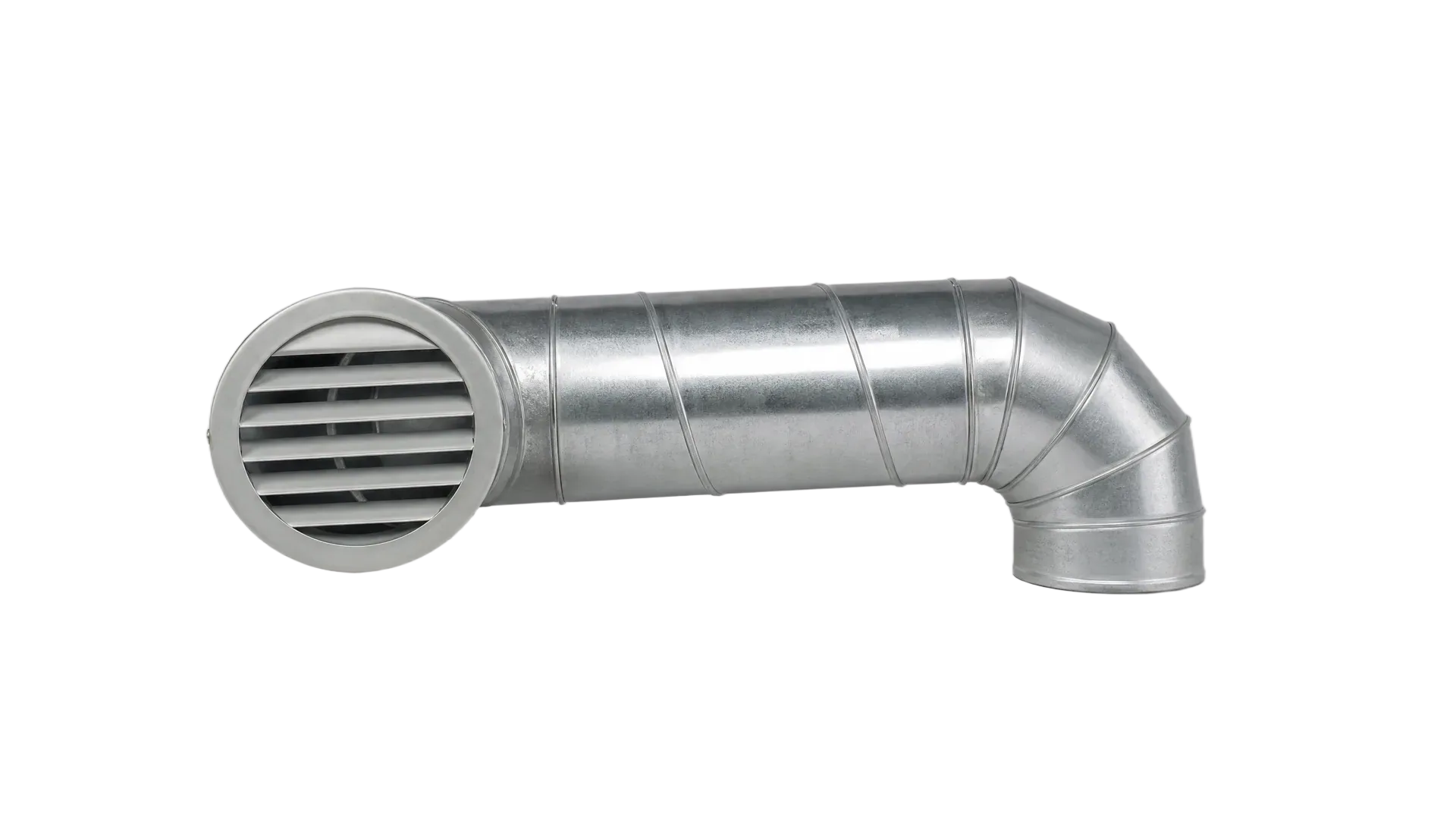
A galvanized steel round duct section with a 90-degree elbow at one end and a louvered vent grille at the other, photographed against a plain gray background.
Find my pro

How often should I get my air ducts cleaned in Maryland?

Maryland summers get sticky, and most homes here lean on electric heat all winter, so the duct system is working one way or another most of the year. You keep up with the house, and you want to know if duct cleaning belongs on that list the way a furnace filter or a gutter cleaning does, and how often to actually schedule it.

Every 3 to 5 years, unless something specific points to sooner

Ducts don't collect dirt on a fixed schedule. They fill up based on what's going through them and what's feeding into them, so 3 to 5 years is a reasonable stretch for most houses rather than a rule. Maryland's humid summers push the air conditioner hard, and that moving air carries dust and whatever is in the house into the ductwork over time. If anyone has allergies, if there's been a renovation, or if you can see dust blowing out of the vents, that moves the timeline up. A system that runs electric heat all winter and the AC hard all summer is moving air through those ducts for most of the year, which is more reason to actually check rather than guess.

Unfinished basement interior with exposed wooden floor joists, galvanized rectangular and round sheet-metal ducts, a gray furnace unit at left, and a large blank light-colored wall at right.

What travels through your ducts

Humid air moving through ductwork all summer carries moisture that settles on the inside of the metal. Add dust pulled in from the return and you get a surface where mold and debris can build up over time. Electric furnaces push the same air through those same ducts all winter. Nothing about the system changes between seasons except the temperature, so whatever is sitting in the ducts gets circulated into every room year round.

Galvanized sheet metal ductwork with elbows and a vent grille running beneath an exposed wood joist and OSB ceiling, next to a blank white wall.

What a cleaning actually involves

A contractor doing this job runs a camera through the main trunk lines and the branch runs to each vent, then uses brushes and a vacuum strong enough to pull debris out through an access point cut into the ductwork. Registers and the return grille come off and get cleaned separately. It's a different job from swapping a filter, which only catches what passes through it going forward and does nothing for what is already coating the inside of the duct walls.

Set a schedule or wait for signs

Clean on a schedule

  • You get on a contractor's calendar before the humid months build up a season's worth of moisture inside the ducts.
  • Routine cleaning catches buildup early, so there's less dust sitting on coils and registers when the system runs hardest.
  • You know ahead of time when it's happening instead of waiting until something seems off.
  • Scheduling now means you skip the scramble of calling around during the months when everyone wants service at once.
  • A regular interval gives you something to check your system against, rather than guessing at how it's doing.

Clean when signs show up

  • You wait for dust around the vents, a musty smell when the air kicks on, or rooms that feel stuffier than others.
  • This means living with whatever is building up inside the ducts until it becomes noticeable.
  • Once you notice a problem, you're often starting the search for a contractor from scratch, calling around and explaining the issue more than once.
  • Signs can show up well after moisture or debris has had time to settle, so you're reacting rather than staying ahead of it.
  • If the signs show up during the sticky months, you may be waiting on a contractor at the same time a lot of other homeowners are too.
Unfinished basement with galvanized sheet-metal rectangular and round ductwork running along a wood-joist ceiling, two steel support columns, a small window, and a furnace unit against the far right wall.

Ductwork running clean

This is what a duct system looks like when it's kept up. Air moves through the metal without a coat of dust lining the inside, so the furnace and the AC aren't working against buildup. Registers put out the air you're paying for, not air that's been dragged through months of grime first.


An unfinished basement with bare concrete walls and floor, showing exposed wooden floor joists, pipes, wiring, and metal HVAC ducts with a vent grille overhead.

Ductwork left alone

Dust sits along the seams and in the low spots where the ducts turn. Humid air all summer gives it something to cling to, and over time it packs in around the joists instead of moving through. Nothing about the system changes on the outside. It's only inside the metal where it's piling up.

Basement ceiling with galvanized sheet metal rectangular ducts and round pipes running between wooden joists above a bare concrete wall and floor.
Before you get your ductwork cleaning
Unfinished basement with bare concrete walls and floor, showing exposed wood floor joists overhead with sheet-metal rectangular ductwork, insulated flexible ducts, and pipes.
After you get your ductwork cleaning
  1. A contractor inspects each run with a camera to find buildup.

  2. Vents and registers get sealed off so dust can't escape.

  3. A negative pressure machine pulls air through the whole system.

  4. Agitation tools knock dust loose from inside the metal runs.

A gray-haired man in a dark coat dusted with snow stands in a warmly lit home entryway, with a lamp, sofa, window and white staircase banister behind him.
An older man with gray hair and a beard, wearing a dark coat dusted with snow and a blue plaid scarf, stands smiling in a dimly lit entryway with a window, framed picture, table lamp and staircase behind him.
A gray-haired, bearded man in a dark winter coat with snow on the shoulders stands in a doorway of a home interior with a lit lamp, framed pictures, a potted plant and a staircase behind him, and an evergreen wreath at the left edge.
A gray-haired man in a dark coat with snow on the shoulders and collar stands smiling in a dimly lit entryway with a paneled front door, lamps, and a framed picture in an adjoining room.

A local pro for your ductwork cleaning

Finding someone to look at your ducts usually means a string of calls, voicemails, and the same description of your system repeated to every company that picks up. Then you wait on quotes that don't line up because nobody looked at the same thing. That's the part this page takes off your plate. You answer a few questions about your home and a contractor who covers your part of Maryland follows up with you directly. With the humidity here feeding whatever builds up inside the metal all summer, and electric heat pushing air through those same ducts all winter, the system doesn't get much of a break. Getting someone out to check it and clean it on a schedule that fits your house matters more than figuring out which company to call first. You've got the answer on how often. The next step is getting a contractor looking at your actual ducts instead of guessing from a search result.

A dim living room corner with a ceiling air vent, a curtained window showing blossoming trees, a table lamp and dark ceramic vessels on a wooden dresser, a potted plant, and a sofa in the foreground.

It's a Saturday morning in April, and the sun coming through the living room window is doing you no favors. It catches the ceiling vent grille at an angle and lights up a gray collar of dust ringing the slats. You look down and the side table under it has the same film on it, the kind you wiped away a week ago. The window's cracked open because it's finally warm enough, and the air handler kicks on somewhere below. A few minutes later you run a finger along the table again. Same dust. You hadn't planned on dealing with this today.

Unfinished basement with galvanized sheet-metal ductwork and pipes beneath wood joists, a gray furnace unit at left, insulated plastic-covered walls over a concrete foundation, and a bare concrete floor.
The ducts here carry clean air past exposed joists and a block foundation, no dust ring around the furnace or the metal runs.
Empty concrete-walled basement room with galvanized rectangular and round HVAC ducts and pipes running along the exposed wood-joist ceiling.
Here the same metal is doing the same job, but years of buildup inside those runs are cutting into airflow before you ever see a dust ring.

Power costs 19.53 cents per kilowatt-hour statewide

At 19.53 cents per kilowatt-hour, running the blower longer than it needs to shows up on your bill fast. Dust-coated ducts make the system push harder to move the same air, so keeping them clean is one way to keep that electric heat from costing you more than it has to.

EIA-861 2025 statewide residential average

Maryland's humid summers and the long stretch of electric heat in winter both pass through the same ductwork, and clean runs keep that system from working against itself. Most homes here do well with a cleaning every few years, sooner if you spot dust rings at the registers or notice the air moving weaker than it should. That's the plain answer. What's harder is getting from knowing you need it done to someone actually showing up to do it, without the back and forth of calling company after company, explaining your system each time, and sorting through quotes that don't even cover the same work. You've already put in the effort to learn what your ducts need. The part left is matching with a contractor who knows your kind of system and reaching out to go over what you're dealing with, so you're not the one chasing it down.

A single-story stone-clad house with low-voltage path lights along a gravel bed and lawn at dusk, with a tree line and orange sky on the horizon.

Ductwork Cleaning

Get the right pro for your ductwork

Duct and vent cleaningDucts or ventsMaryland
Step 1 of 2

What ZIP code is the job in?

  • A pale ceramic vase holding dried hydrangea blooms sits on a wooden windowsill in sunlight, with green foliage blurred beyond the window glass.
    • Describe your ductwork job, and a local pro who handles it gets in touch.
    • Say what's going on with your ductwork, and a pro who works on them reaches out.
  • Sunlit window seat with a cushioned bench and three textured throw pillows beside a dark wooden round side table holding a small stone bowl and a potted green plant.
    • Once you send the form, finding a pro is off your list.
    • After you send the request, you're done searching.
  • A potted olive-like tree in a wide beige ceramic planter sits on a pale stone ledge beside a black-framed window with blurred greenery outside.
    • Skip calling around for someone who cleans ducts.
    • Answer a few questions about the duct cleaning and skip the search.
  • A wooden bench by a black-framed window holds a beige striped pillow, a fringed knit throw, and a pale ceramic vase with olive branches, with green foliage and a white house visible outside.
    • Your request stays with one local pro.
    • Your duct cleaning request goes to one local pro.