
Duct Cleaning in Cumberland, MD
Tell us about your home, and a licensed contractor who covers Allegany County will get in touch.
Tell us about the job
It takes about a minute.

Eight months of heating pushes a lot of air through your ducts
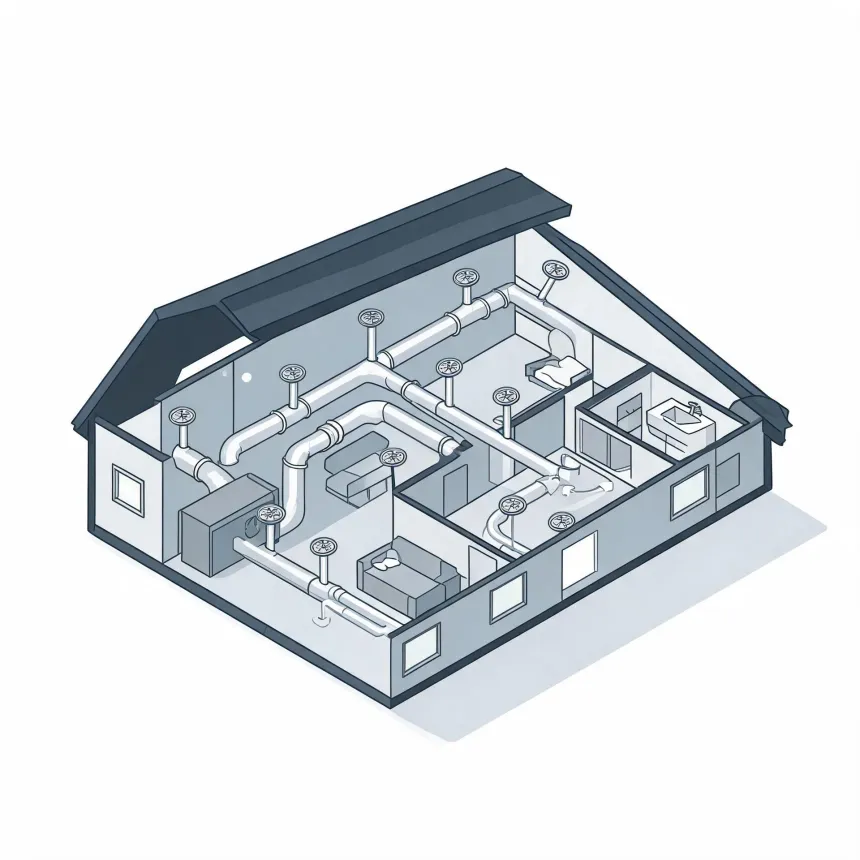
Your furnace runs October through May here, eight months a year. Every one of those months it is pulling household air through the same ducts, and whatever settles in that ductwork rides along with it. Dust, pet hair, and the fine debris that collects in a house all get pulled into the return and pushed back out through the vents, over and over, for most of the year.
Cumberland has also seen 56 winter storms and 106 damaging wind events in the last ten years, and 11% of Maryland households lost power for at least a day in 2024. When the power drops and the furnace stops, air in the ducts sits still instead of moving. When it comes back on, that furnace has to push through whatever built up while it was off.
- 8 months
- October through May, your furnace pushes air through your ducts
- 3 months
- June through August, your air conditioner does the same
NOAA nClimDiv, 1991–2020 normals
- How often should air ducts be cleaned?
- There is no fixed schedule that fits every house. Homes with pets, a smoker, or someone with allergies tend to need it sooner because more gets pulled into the return air. If you see dust building up around the vent covers or blowing out when the furnace kicks on, that is a sign to have them checked rather than waiting.
- Is air duct cleaning worth it?
- It depends on what is actually going on inside the ducts. If there is visible dust, debris, or signs of pests, cleaning makes sense and can cut down on what circulates through the house. If the ducts look fine and no one in the house has allergy or breathing trouble, it may not do much. A contractor can look inside the ductwork with a camera and tell you whether there is enough buildup to justify it.
- What does air duct cleaning involve?
- A contractor connects a powerful vacuum to the duct system and uses brushes or air tools to knock loose dust and debris from inside the ducts, then pulls it out through the vacuum. Registers and vent covers get cleaned as part of the job, and the return ducts get the same treatment as the supply side. On a forced air system this includes checking the furnace or air handler for buildup too, since it connects directly to the same ductwork.