
Duct Cleaning in Hagerstown, MD
Tell us about your home, and a licensed contractor who covers Washington County will get in touch.
Tell us about the job
It takes about a minute.
Step 1 of 3: Equipment

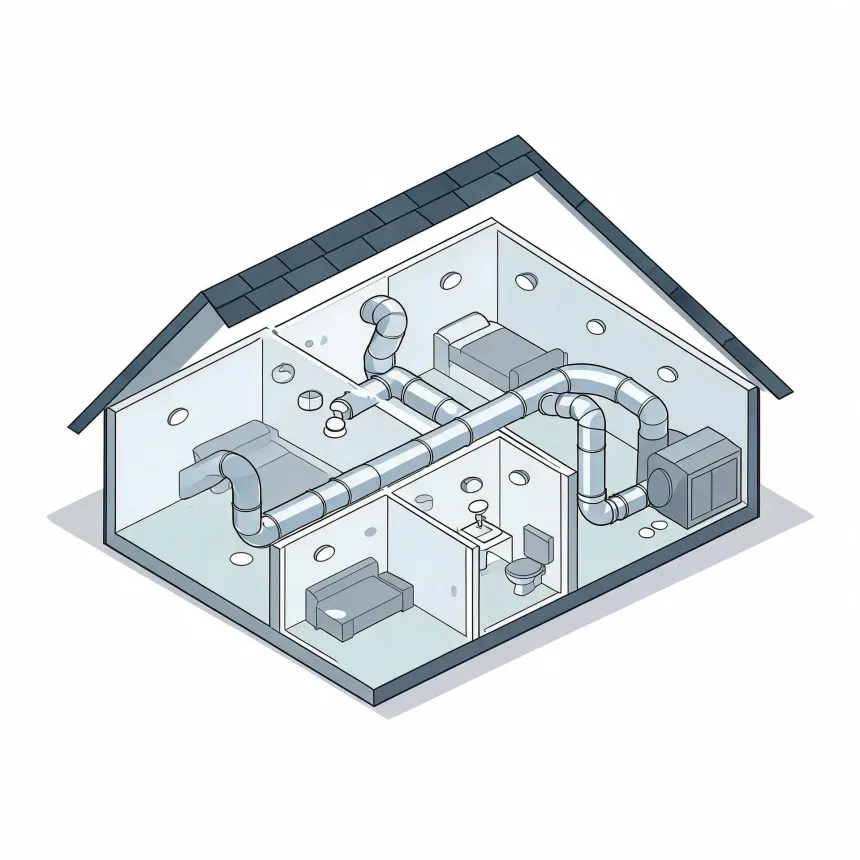
Seven months of heating pushes a lot of air through those ducts
Your furnace runs October through April here, close to seven months a year. Every time it fires, air moves through the ducts and carries dust and whatever else has settled inside since the last cycle. On nights that average 25°F, it is cycling on and off often, and that is seven months of dust getting stirred up and pushed back into the rooms you live in.
That buildup settles in the corners and joints where the airflow is weakest, the places a return grille or a filter never reaches. Over that many months of runtime, it collects.
- 7 months
- October through April, your furnace pushes air through your ducts
- 3 months
- June through August, your air conditioner does the same
Jan
Feb
Mar
Apr
May
Jun
Jul
Aug
Sep
Oct
Nov
Dec
NOAA nClimDiv, 1991–2020 normals
- How often should air ducts be cleaned?
- There's no fixed schedule that fits every home. It depends on what's going into the ducts, so a house with pets, a smoker, or recent renovation work needs it sooner than one without. If a room won't heat evenly or dust settles back within a day or two of cleaning, that's a sign to have them looked at.
- Is air duct cleaning worth it?
- For most homes, yes, especially if no one has looked at the ducts since the house was built or the system was replaced. Dust, pet hair, and debris build up along the duct walls over years and get pushed into every room each time the furnace or AC runs. Homes here run the furnace October through April, seven months a year, so anything sitting in the ducts is moving through the air for most of the year.
- What does air duct cleaning involve?
- A contractor connects a vacuum system to the ductwork and uses brushes or air tools to knock loose the dust and debris built up on the inside walls, then pulls it all out through the vacuum. This covers the supply and return ducts, the grilles and registers, and often the coil and blower compartment near the furnace. A contractor can walk through what your specific system needs before starting.