



Maryland HVAC Match

How often to clean a dryer vent in Bowie, MD

After this form, you can stop searching for a dryer vent pro.

Hand off the search

Clean your dryer vent once a year. If you run the dryer most days for a household of four or more, do it every six to eight months instead. Lint builds up inside the vent pipe every time you dry a load, and it does not break down. It just collects, and the duct gets narrower until air cannot push through it the way it should. In Bowie, where winters are cold, that matters more than it sounds. A dryer fighting a clogged vent takes longer to dry each load, runs hotter, and pushes more of that cost onto a power bill that is already high in this part of Maryland. The bigger risk is the lint itself. It is one of the more common causes of house fires, and a vent that has not been cleaned in a couple of years is carrying a lot of it. If drying times have crept up, or the outside vent flap barely opens when the dryer runs, the vent is telling you it is due.

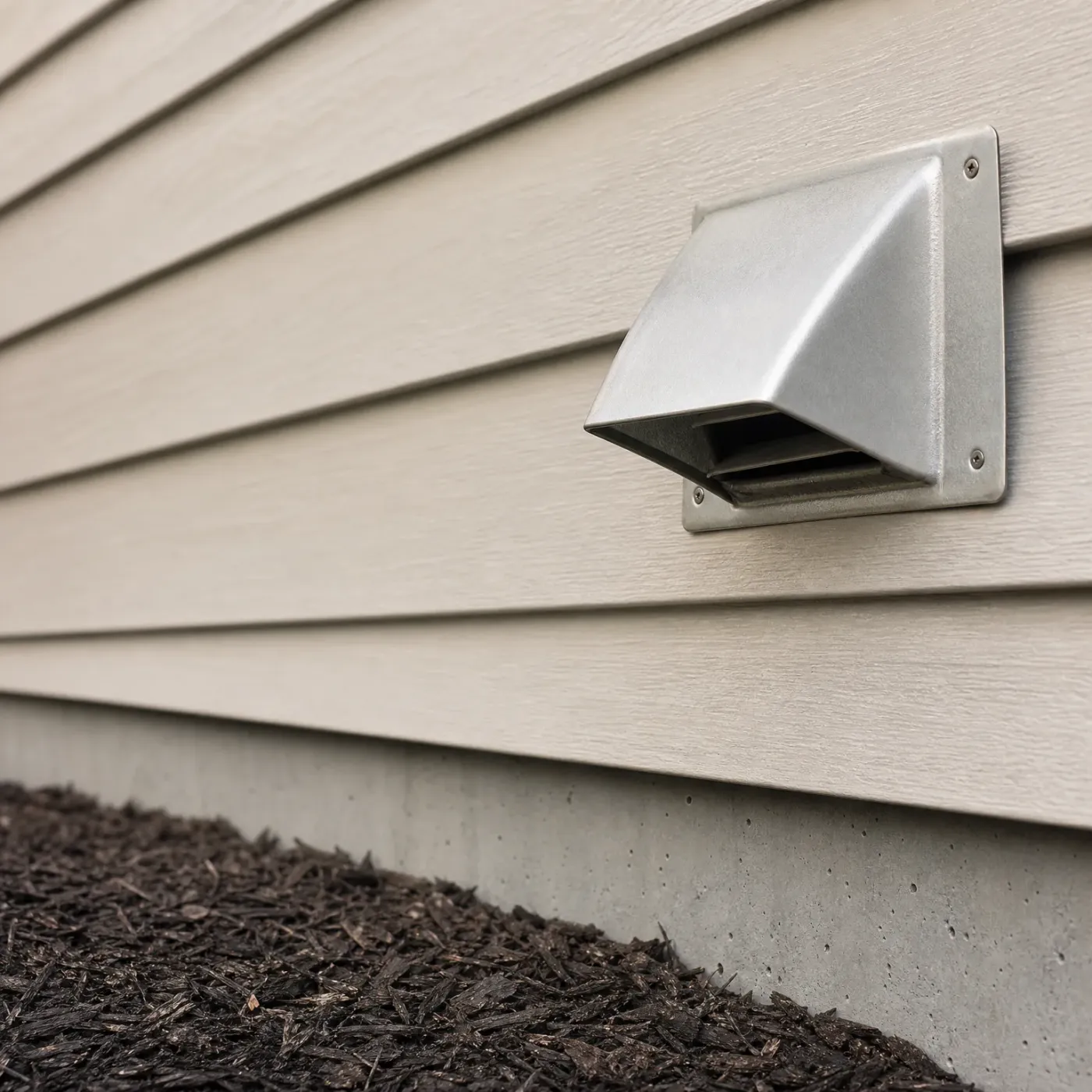
A metal hooded exterior vent with a screened opening mounted on gray horizontal lap siding, with a plain white wall at right.

Why the lint never clears itself

A dryer vent is a straight or near straight pipe built to push hot moist air outside. Lint rides along with that air, and some of it clings to the inside of the pipe instead of blowing clear out the hood. Every load adds a little more. A gas dryer sends combustion byproducts out through that same path, so a pipe losing airflow is pushing out less than it should, load after load.

A white plastic hooded dryer vent cover screwed to light gray horizontal lap siding at an exterior wall corner.

What a blocked vent costs you

When lint narrows the pipe, the dryer has to run longer to dry the same load, and it pulls more power doing it. With electricity priced the way it is in Prince George's County, that extra run time shows up on the bill. A dryer working against a clogged vent also runs hotter, which wears on the heating element and the thermostat that controls it.

Is your dryer taking longer than it used to?

You load the same towels and jeans you always have, and the cycle that used to take forty minutes now runs twice through before anything feels dry. The top of the dryer is warm to the touch, or the laundry room itself feels warmer and more humid than the rest of the house. You open the lint trap after every load and it's packed, sometimes with a layer underneath the screen you can't quite pull free. Outside, the vent hood flap barely lifts when the dryer runs, or doesn't move at all. A blocked vent keeps heat and moisture trapped behind the drum, and that strain is what wears out a heating element or a thermal fuse well before it should fail.

A white hooded exterior vent cover with a louvered underside, screwed to beige horizontal lap siding above a lighter stucco lower wall.

The hood opens and closes with the air

That hooded flap should swing open when the dryer runs and fall shut when it stops. Air moves out in a steady push, not a weak puff. No lint catches on the screws or the sill below it. This is what a clear vent looks like from the outside.


A beige plastic dryer vent hood mounted on horizontal vinyl siding, with clumps of gray lint protruding from the open flap.

The hood is choked with lint

When lint packs the louver like this, the flap cannot seat shut and the dryer cannot push air past it. Humid air backs up into the vent pipe instead of leaving the house. Left alone, this is how a vent fire starts.

Clear Vent vs. Blocked Vent

Clear vent

  • Air pushes out in a steady stream and the hood flap swings open the moment the dryer starts.
  • A load of towels finishes in one cycle, not two, and the dryer shuts off on schedule.
  • The top panel and the laundry room stay close to room temperature through the whole cycle.
  • Lint still builds up inside the pipe with every load, even though nothing feels wrong yet.
  • Once a year is enough to keep a household's vent clear if the dryer runs a normal amount.
  • A household of four running the dryer most days needs that cleaning every six to eight months instead.

Blocked vent

  • The hood flap barely lifts, or doesn't move at all, because there isn't enough air behind it to push it open.
  • A cycle that used to take forty minutes now takes twice that, and the clothes still come out damp.
  • The top of the dryer runs hot to the touch, and heat that should have vented outside is staying in the drum.
  • Lint that can't make it out the hood settles in the pipe a little more with every load that runs.
  • A gas dryer pushing exhaust against a clogged vent is working against itself every time it fires.
  • The problem started as a few feet of lint in a straight pipe and grew from there, one load at a time.
  1. Lint collects along the pipe walls load after load

  2. Airflow narrows and the dryer vents hot air slower

  3. The hood flap barely lifts as pressure drops off

  4. A tech runs a brush the full length of the pipe

A metal hooded dryer vent with a louvered opening mounted on beige horizontal lap siding above a concrete foundation wall.
The cap sits flush and the flap swings free, with clean metal showing at every screw.
A white hooded dryer vent mounted on horizontal lap siding, with a thick mass of gray lint clogging the opening beneath the hood.
Gray lint packs the opening and props the flap wide, so the dryer is pushing air through a gap, not a clear hood.

What does your household mean for your dryer vent?

  • 2.7 people per household on average

    The typical home in Prince George's County has 2.70 people in it, per Census figures. A household that size usually means a load or two of laundry most days, which is what pushes a lot of homes here toward cleaning every six to eight months instead of once a year.

  • Half the homes here were built by 1977

    Half the homes in Prince George's County were built in 1977 or earlier, per the Census. A vent run that old has had decades to pick up kinks and sagging spots where lint catches, so check when your ductwork went in if you're not sure.

  • Power here costs 20.91 cents per kilowatt-hour

    Power here runs 20.91 cents per kilowatt-hour, among the highest rates in the country. A dryer fighting a clogged vent pulls more of that expensive power every single load to do the same job.

ACS 2020-2024 · EIA-861 2025

A woman in a cream knit sweater reclines on a sofa with her eyes closed and a slight smile, a closed dark book resting on a blanket in the foreground and a lit lamp and small potted plant behind her.
A smiling bearded man in a dark green sweater sits at a dinner table with a glass of red wine, a bowl of salad and a lit candle in the foreground, in a dimly lit room with a framed picture, lamp and potted plants behind him.
A metal hooded exterior dryer vent with louvered opening mounted on beige lap siding above a concrete foundation bordered by dark mulch.

Done looking for a dryer vent pro

The pro who gets in touch is licensed in Maryland and works in Prince George's County.

One request and the search for a pro is handled.

Reach a local pro

It costs nothing to send, and you don't have to hire anyone.

Does the vent length or the number of bends change how often it needs cleaning?

Maybe your dryer vent runs straight out the back wall to the outside, or maybe it has to snake up through a wall and over a joist bay before it reaches a hood on the roof or the side of the house. You have heard that longer runs or more turns cause problems, and you want to know if that changes how often yours needs attention.

Yes. More bends or a longer run means more cleaning.

A straight pipe a few feet long lets lint ride most of the way out on its own. Add a few 90 degree turns, or run the pipe twenty or thirty feet through the house before it reaches the hood, and lint has more surfaces to catch on along the way. Every elbow is a spot where airflow slows down and lint drops out of the moving air instead of carrying through. If your setup has several bends, or the dryer sits far from an exterior wall, check it closer to the six month mark instead of waiting a full year. A tech who clears vents in homes around Bowie can tell you, once they see the run, which end of that range yours falls on.

A white plastic dryer vent hood mounted on beige horizontal vinyl siding, with lint clogging its lower opening and a concrete foundation below.
Before you get your dryer vent cleaning
A white louvered dryer vent hood mounted with four screws on beige horizontal lap siding above a gray stucco foundation and concrete walkway.
After you get your dryer vent cleaning

Cleaning it on schedule

A vent cleaned once a year, or every six to eight months if the dryer runs most days for a full household, stays open the way it was built to. Air moves out fast, the hood flap swings freely, and a load of towels finishes in one cycle. The dryer's parts don't have to work against trapped lint, so they run at the temperature they're supposed to. You don't think about the vent at all, because there's nothing happening inside it that calls for attention.

Letting it go past due

Skip the cleaning and lint keeps collecting on the pipe walls with no way out. Drying times stretch, sometimes to two cycles for the same load. The top of the dryer runs hotter, the laundry room picks up warmth it shouldn't, and the hood flap sags open under the weight of lint instead of swinging shut. Gas or electric, the dryer is working harder for a worse result, and that shows up on the power bill. Left long enough, a packed vent is a fire risk, not just an inconvenience.

2.7 people per household on average

At 2.7 people, most homes here are running the dryer close to every day, sometimes twice. That pace fills the vent pipe with lint faster than a smaller household would, which is why waiting a full year between cleanings can leave you drying towels twice before they're done.

ACS 2020-2024

Where That Leaves Your Vent

  • Once a year clears most homes in Bowie and the rest of Prince George's County.
  • Run the dryer most days for four or more people and six to eight months fits better.
  • Lint packs the pipe walls on a fixed schedule, not on a signal from the dryer.
  • A slow cycle, a hot top panel or a hood flap that barely lifts all point to the same buildup.
  • A clear vent pushes air out fast and finishes a load of towels in one cycle.
  • Bends and vent length change how fast lint collects, so some runs need attention sooner.

A dryer vent in Bowie or anywhere else in Prince George's County doesn't send a signal when it's getting full. Lint collects at the same pace load after load, whether or not the dryer shows it. That's why the schedule matters more than waiting for a sign. Once a year covers most households. If you're running the dryer nearly every day for four people or more, the pipe fills faster, and six to eight months keeps pace with it better than twelve does. The clues the dryer gives, like a cycle that runs long, a top panel that's warm, a hood flap that barely moves, show up after the buildup is already slowing things down. They're worth watching for, but they're not a substitute for the schedule itself. A vent that's been cleaned on time looks and acts a certain way. Air pushes out hard enough to swing the hood flap open the whole time the dryer runs. A load of towels comes out dry in one cycle. The laundry room doesn't pick up extra heat from the machine. How your vent is routed plays into this too. A short, straight run to an outside wall collects lint slower than one with several bends or a long path to a roof vent. If yours takes the long way, lean toward the shorter end of the schedule rather than the longer one. The point either way is the same. Clean it on a schedule that matches how the house actually uses the dryer, not on a guess.

A smiling bearded man in a dark green henley shirt sits on a blue-gray couch in a living room, with a bowl of popcorn in the foreground and a houseplant and window behind him.
A smiling man in a dark sweatshirt reclines on a gray sofa in a living room, with a wooden bowl of popcorn on a table in the foreground and a dining area, shelving, and pendant lamp behind him.
A smiling man in a navy long-sleeve shirt reclines on a sofa in a living room, with a bowl of popcorn on a wooden coffee table and framed pictures on the wall behind him.
A smiling man in a dark green long-sleeved shirt sits on a gray sofa in a living room, with a bowl of popcorn in the foreground and windows and a potted plant behind him.

Dryer Vent Cleaning

It's off your list after this

A licensed pro who works in Prince George's County gets your request.

A smartphone with a blank green screen stands upright against a plain light gray background.
Duct and vent cleaningPrince George's County, MD
Step 1 of 3

What kind of equipment?