



Dryer taking too long to dry in Gaithersburg, MD

Get matched with a Montgomery County pro who cleans dryer vents.

Request a pro

Why does my dryer take forever to dry clothes?

A few loads used to take forty minutes and now it is two cycles, or the clothes come out warm but still damp. Before assuming the dryer itself is failing, it helps to know that one of the most common causes has nothing to do with the heating element or the motor. It sits in the vent line running from the dryer to the outside wall, and in a lot of Gaithersburg homes, that line has never been cleaned.

A clogged vent is the most likely reason

Every load of laundry pushes lint down the vent, and over time it builds up along the duct walls and narrows the path air has to travel. The dryer still heats, but the damp air it needs to push outside has nowhere to go, so it recirculates and the clothes stay wet longer than they should. In homes around Montgomery County, vent runs often pass through tight joists or make a turn before reaching the outside wall, and lint collects fastest at those bends. The longer the run or the more turns it makes, the sooner it clogs. A vent that takes two cycles to dry a load that used to take one is usually a vent that needs clearing, not a dryer that needs replacing.

An older man with gray hair and a beard stands in a dimly lit entryway wearing a dark hooded coat dusted with snow, with a lit table lamp, framed picture, and front door with glass panels behind him.
An older man with gray hair and a beard, wearing a dark snow-dusted jacket and scarf, stands smiling in a dimly lit entry hall with a lamp, wooden front door and staircase behind him.
A gray-haired bearded man in a dark coat with snow flecks on the shoulders stands just inside a dimly lit home entryway, with a lamp, framed pictures, sofa and candle-style lights in the background.
An older man with gray hair and a beard, wearing a dark coat and scarf dusted with snow, stands in a warmly lit home entryway with an arched doorway, lamps, and a living room visible behind him.

Why is my dryer struggling more than it used to?

  • 2.72 people per household on average

    A household here runs 2.72 people on average, which means more loads through the same vent line each week. A clogged vent shows up faster under that kind of use.

  • Half the homes here were built by 1980

    Half the homes in Montgomery County were built in 1980 or earlier. A vent run that old has had decades to collect lint in bends and joints a newer line wouldn't have.

  • Power here costs 21.03 cents per kilowatt-hour

    Power here runs 21.03 cents per kilowatt-hour. A dryer fighting a blocked vent pulls that rate for twice the cycles to get clothes dry.

ACS 2020-2024 · EIA-861 2025

A vent you can check yourself

Go outside and find the dryer vent hood, usually on an exterior wall close to where the dryer sits. Run a full cycle and hold your hand near the opening. You should feel a strong, steady push of air the whole time. If what comes out is weak, or it starts strong and fades, or the flap barely moves, the vent run is restricted somewhere between the wall and the hood. Look at the hood itself too. Lint can build up on the flap and the screen behind it, especially if the hood sits low or close to shrubs. A hood packed with lint will choke the airflow even if the duct behind it is clear.

When the problem is somewhere else

If the airflow at the hood feels strong and the dryer still runs long, the vent may not be the issue. Check the lint trap screen itself, not just what you pull off by hand. A film of fabric softener residue can clog the mesh so air barely passes through it, even when it looks empty. Also check how long the duct run is and how many turns it makes between the dryer and the outside wall. A long run with several bends restricts airflow no matter how clean it is. If the vent hood is on the ground level and close to the lawn, grass clippings and leaves can gather there seasonally even after a cleaning.

2.72 people per household on average

With close to three people in most households here, the dryer is running loads most days of the week. That steady use packs lint into the vent faster, and a line that's tight already has less room to spare before it slows the whole cycle down.

ACS 2020-2024

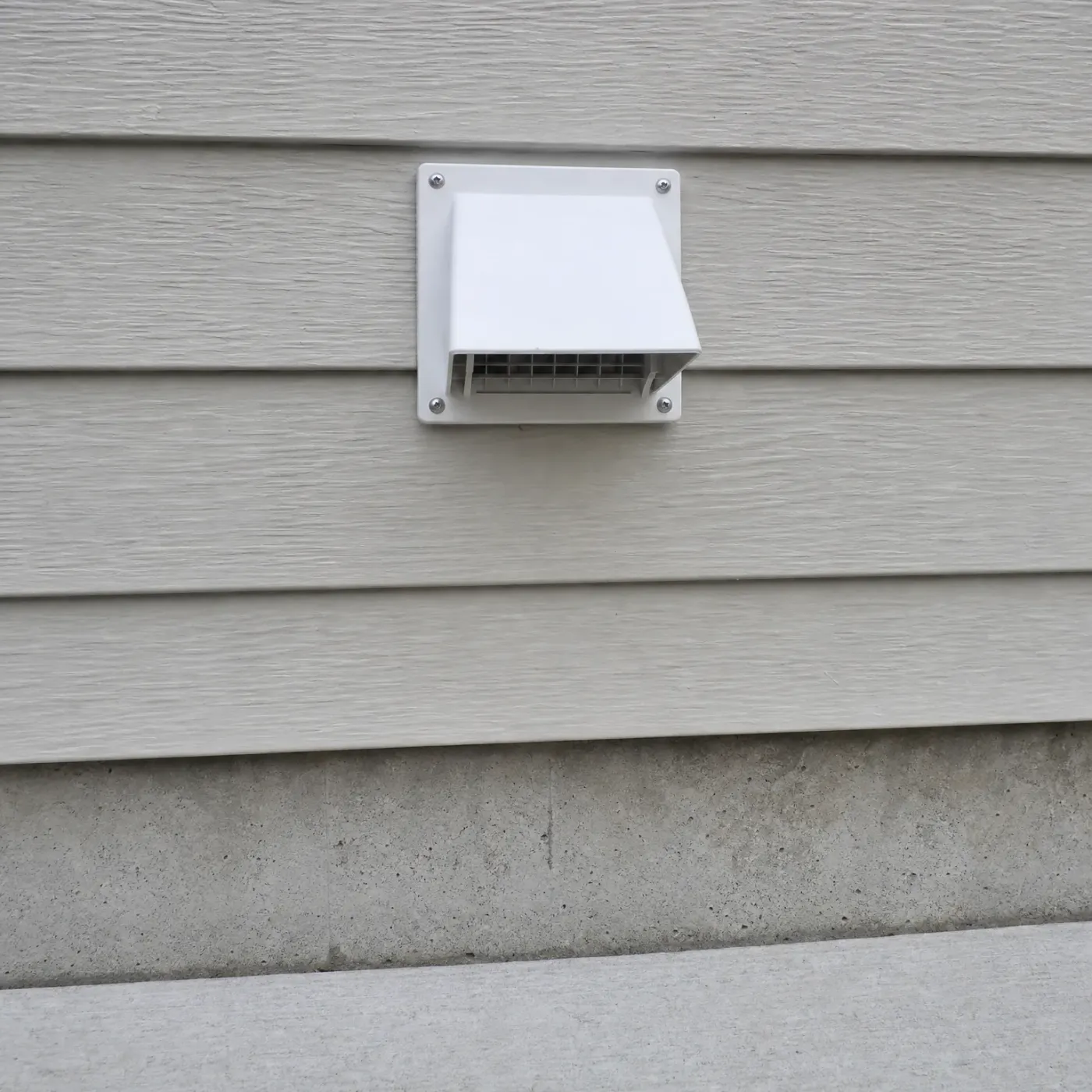
A white hooded dryer vent with a louvered opening mounted on light gray horizontal lap siding above a concrete foundation.

Clear vent

This is what a clear vent looks like from outside. The hood sits flush against the siding, the louvers hang open, and air pushes them out whenever the dryer runs. Nothing is caked around the opening. A vent working like this lets a full load dry in one cycle.
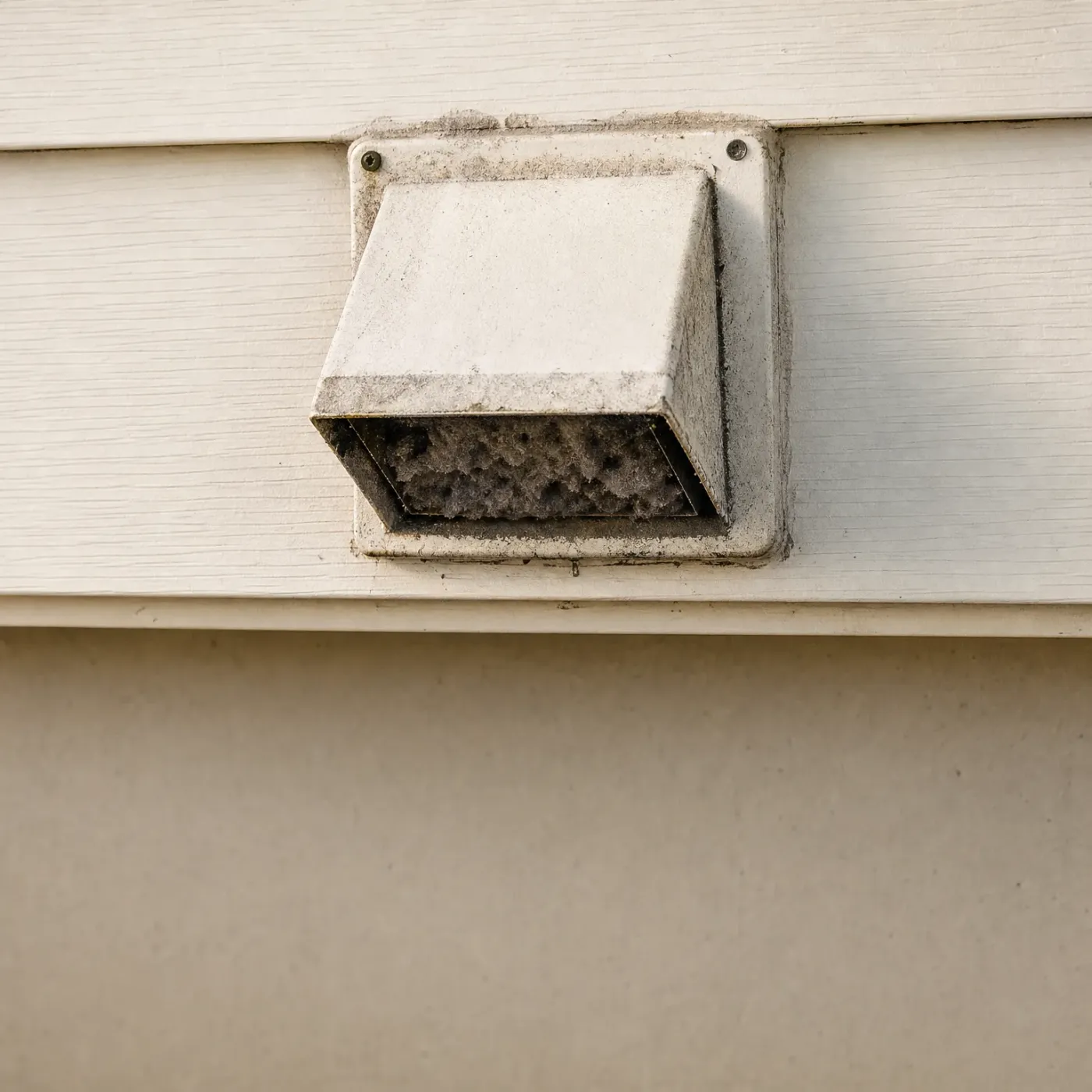
A white plastic hood-style dryer vent mounted on beige horizontal siding, with its opening clogged by thick gray lint.

Clogged vent

This is what lint buildup looks like once it reaches the outside. The opening is packed, and the louvers cannot swing open the way they should. Dust and grime collect on the cap and the siding around it. Air has nowhere to go, so the dryer runs longer and the clothes still come out damp.

Clean It Yourself or Call a Pro

Clean the vent yourself

  • A vent brush kit reaches most of the straight run from the dryer to the wall, and you control how far it goes.
  • You can check your own work right away by running a cycle and feeling for strong airflow at the hood.
  • It costs only the price of the kit, which you keep for the next time.
  • A vent with tight bends or a long run to the outside wall will only get partly cleaned this way.
  • If the clog sits past where the brush reaches, lint stays packed in the line and drying times stay long.

Hire a vent cleaning service

  • A contractor brings equipment that reaches the full length of the vent, including runs with several bends.
  • The whole line gets cleared in one visit, not just the section a homeowner can reach by hand.
  • A contractor checks the hood and the connection at the dryer too, not just the middle of the run.
  • This costs more than a brush kit, since it covers the labor and equipment to do the full line.
  • For a vent that's long or runs through the attic or a second floor, this is often the only way to clear it completely.
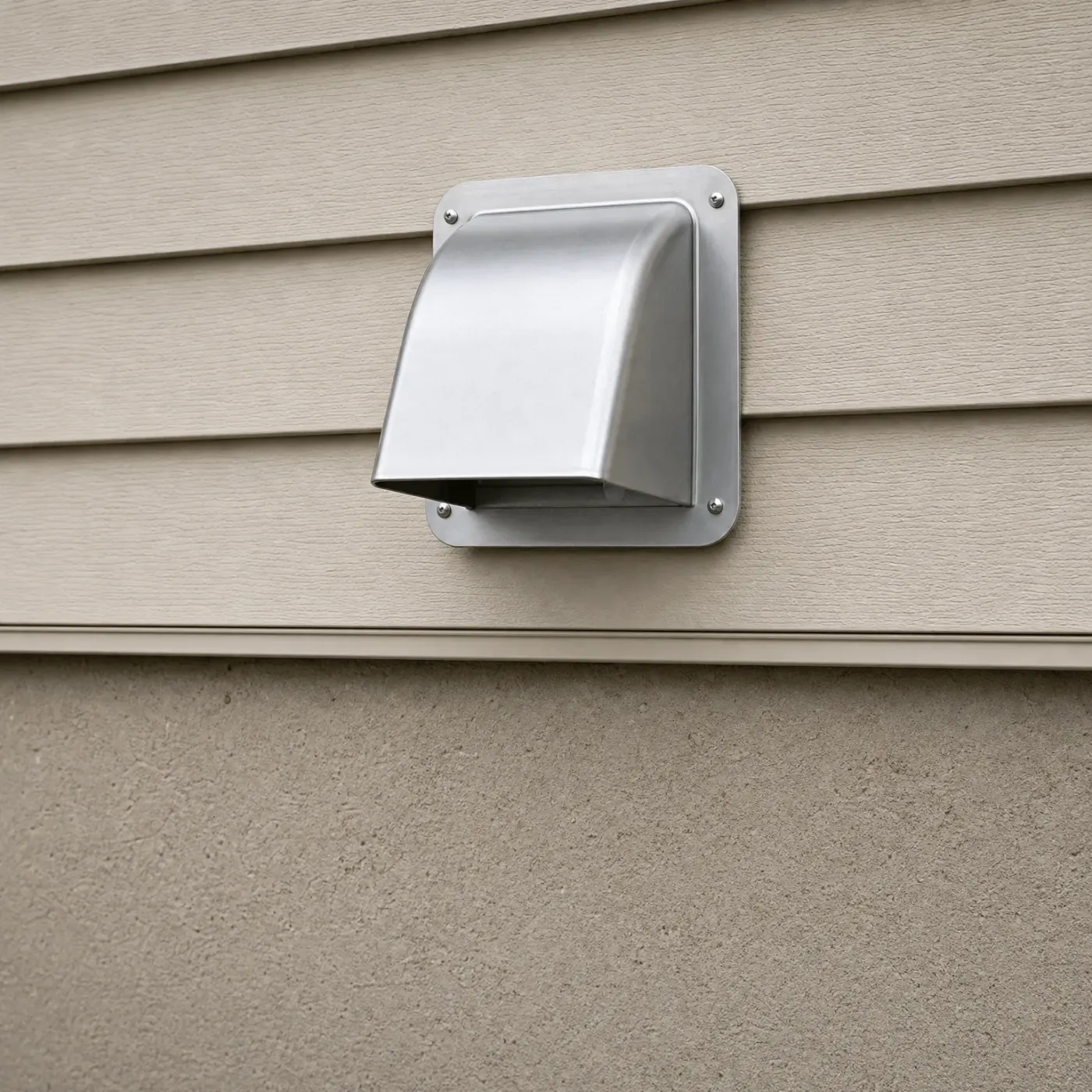
A metal hooded dryer vent cover mounted on beige horizontal lap siding above a textured concrete foundation wall.
A vent hood like this lets air push the louvers open all the way, so a full load dries in one cycle.
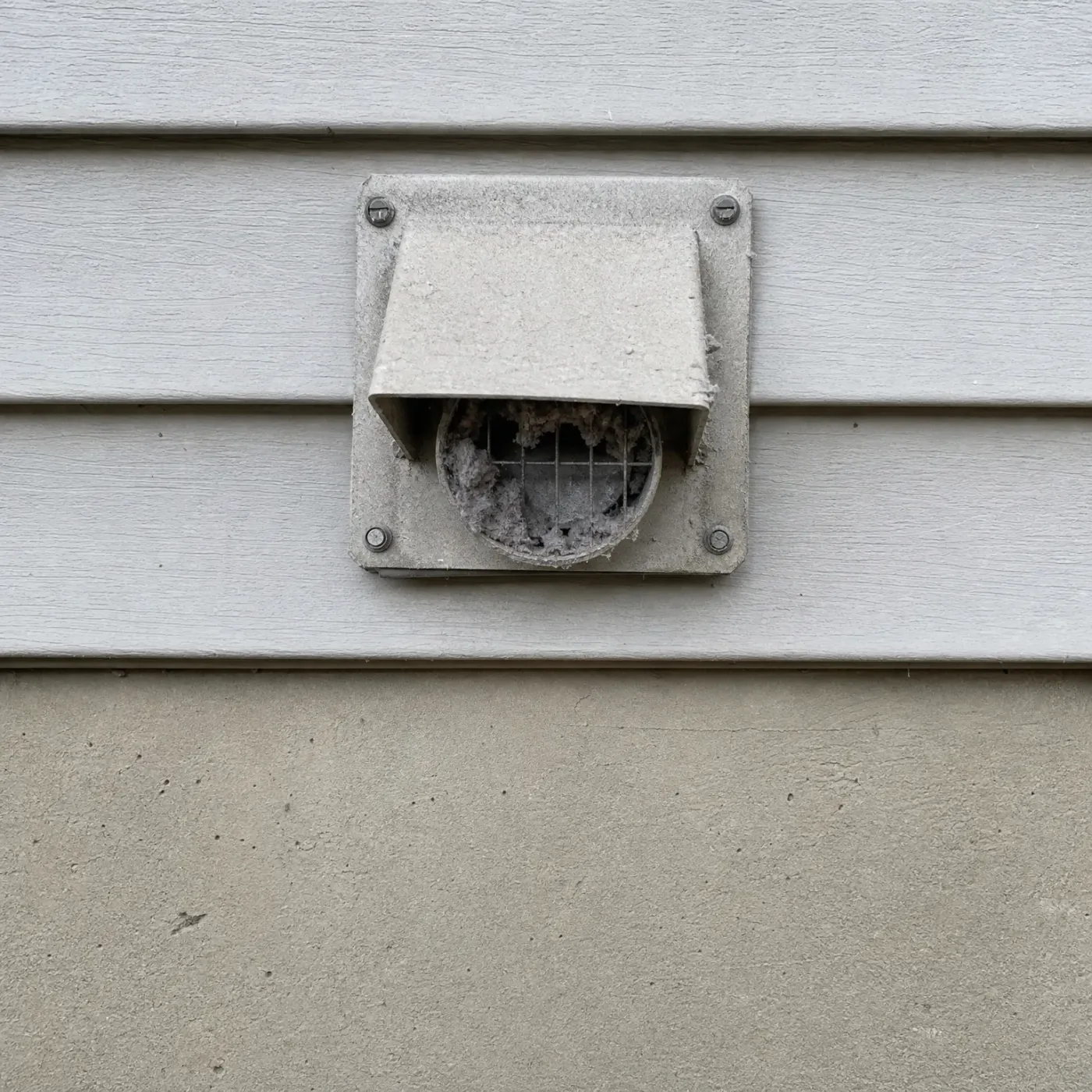
A metal dryer vent hood screwed to light gray lap siding, with lint clogging the round opening and a lower concrete wall below.
Lint packed into the screen like this blocks the air, and that's why the same load now takes two cycles to dry.
  1. Hot, damp air leaves the drum through the exhaust duct.

  2. Lint rides along in that airflow toward the outside vent.

  3. Lint catches on duct seams, screws, or any bend in the line.

  4. The narrowed path slows airflow and traps more moisture inside.

A metal dryer vent hood mounted on light gray horizontal lap siding, with its opening clogged by gray lint, above a concrete foundation wall.
Before you get your dryer vent cleaning
A white hooded dryer vent cover screwed into beige lap siding above a concrete foundation wall, with a bed of rounded gravel at the base.
After you get your dryer vent cleaning

Get matched with a dryer vent pro in Montgomery County

Send the request and finding a pro stops being your problem.

You're not committing to anything by asking.

What a Slow Dryer Costs You

  • A load that used to take forty minutes and now runs two cycles is burning extra electricity on every wash day.
  • A dryer working harder than it should runs hotter, and that heat has nowhere to go but back into the drum and the room around it.
  • Clothes that come out warm but still damp often get thrown back in instead of hung up, adding wear to fabric and elastic over time.
  • Lint that cannot clear the vent has to go somewhere, and a slow-drying load is often a sign it is building up behind the wall.
  • A blocked vent traps moisture inside the dryer housing, which gives mildew a place to start around the drum seal and lint trap.
  • The longer a vent stays packed, the harder the dryer motor and heating element work to push air through it, load after load.

Power in Montgomery County is already expensive, so a dryer that needs two cycles instead of one is a bill you notice. That extra cycle is not free runtime either. The motor and heating element are pushing against a line that will not clear, which means more heat is building up with nowhere to go. Some of that heat ends up back in the drum, some of it ends up in the room, and the dryer itself wears faster under that load. You will see it in the laundry before you see it on a bill. Towels and sheets coming out warm but not dry get tossed back in for a second run, and that second run is harder on elastic and on fabric than the first one was. The part you cannot see is behind the wall. Lint that cannot ride the airflow out through the vent hood settles in the duct instead, and the same moisture that is keeping your clothes damp is sitting in that ductwork too. Damp lint packed against metal is exactly what mildew needs to start, usually around the drum seal or the lint trap first. None of this fixes itself. A vent that is half blocked today is more blocked next month, and the dryer works a little harder every load in between. The vent brush can tell you how far the problem reaches, but it will not clear a run buried behind drywall.

A woman with dark shoulder-length hair sits wrapped in a gray fleece blanket on a sofa with an open book on her lap, beside a lit lamp and a dark window.
An older woman with short gray hair in a cream cable-knit turtleneck sweater smiles while looking to the side in a wooden kitchen, with a round loaf of bread on a board in the foreground and a lit candle by a dark window.

What's actually happening when you pull out warm, damp clothes

You open the dryer expecting a finished load and the clothes are still warm and heavy instead of dry. The buzzer goes off but you add another thirty minutes anyway. You might notice the laundry room feels warmer than it used to, or the dryer itself is hot to the touch on the outside. Towels and jeans take longer than shirts and sheets, which is normal, but if everything is coming out damp now, that's a change worth paying attention to. Left alone, a dryer working this hard stays hot longer after each cycle, and the extra heat and moisture have to go somewhere. Some of it ends up back in the room instead of out the vent.

A white plastic hooded dryer vent cover mounted with screws on beige horizontal lap siding, next to a plain pale wall surface.

Running the vent brush yourself

A vent brush kit works the straight section of duct from the dryer back to the wall. You feed the rods in, twist as you go, and pull lint out in clumps. It handles buildup you can reach in a line with no turns. If the run has a bend partway or a long stretch to an upstairs exterior wall, the brush stops doing much good past that point, and lint sitting beyond it keeps the dryer working the way it has been.

A metal louvered exterior vent hood screwed to a beige horizontal lap siding wall, with a blank light-colored surface filling the left half of the frame.

Having the full line cleaned

A contractor brings equipment built to clear the whole duct, not just the stretch nearest the dryer or the hood outside. That matters most in homes where the vent run is long or has more than one turn, which is common once a dryer sits on a wall away from the outside of the house. Clearing the full line is what gets airflow back to where a load dries in one cycle again, start to finish.

A dryer that takes two cycles to do one load's work almost always comes down to airflow, and a blocked vent is the most common reason for it. The fix isn't a new dryer. It's getting the duct clear so air can move the way it's supposed to, from the drum out through the vent hood and outside. Once that path is open again, a load goes back to taking one cycle instead of two, and the dryer stops running hotter than it needs to. You don't have to figure out on your own whether the clog is something you can reach with a vent brush or further back in the line. Send the form and that part is off your plate. A contractor who handles this in Gaithersburg will look at the actual run of duct in your house and tell you what it needs.

A galvanized metal hooded dryer vent screwed to gray lap siding on an exterior wall.

Find a dryer vent cleaning pro in Montgomery County

Duct and vent cleaningMontgomery County, MD
Step 1 of 3

What kind of equipment?