
Signs of a clogged dryer vent in Dundalk, MD

Get a local pro

A dryer that takes two or three cycles to get clothes dry, a top that's hot to the touch, a laundry room that smells warm and a little stale. These are the things that send people in Dundalk looking for answers, and they usually point to the same place: the vent. Baltimore County summers are humid enough that a slow vent gets worse before it gets better, and a clogged line makes the dryer work harder every single load, all year. Figuring out whether it's lint in the duct, a crushed section behind the machine, or a flapper stuck shut outside takes someone who looks at these vents regularly, in homes like yours, and knows what tends to fail first. Answer a few questions about your dryer and your home, and you'll be matched with one licensed local contractor who takes on vent cleaning in the Dundalk area. They'll reach out directly, so you're dealing with one company, not fielding calls from five.

Why does my dryer take forever to dry clothes in Dundalk?

You load a normal size wash, run the dryer once, and the clothes come out damp around the seams and waistbands. You run it again. Maybe a third time. The dryer itself feels hot on top, and the laundry room has that warm, stale smell by the end of it. In Dundalk, where summers already run humid, a dryer that won't finish the job in one cycle usually isn't a fluke load, it's telling you something about where the air is supposed to go.

A clogged vent is holding the hot, damp air inside the dryer

Your dryer doesn't dry clothes with heat alone. It depends on that heat moving out through the vent and taking the moisture with it. When lint has built up along the vent run, the air has nowhere to go, so it backs up into the drum instead of leaving the house. The heating element keeps working, the drum keeps turning, but the moisture stays put, which is why you end up running the same load two or three times. A vent that's clogged also traps heat near the motor and the heating element, which is why the top of the dryer feels hot enough to notice. In a house in Baltimore County, where summer humidity already makes the air harder to pull moisture into, a blocked vent makes a slow dryer even slower.

A pile of beige and navy towels sits on top of a white top-loading laundry machine in a dim room with a dark wall, wood floor, and a wooden shelf holding baskets and a plant.

It's a little past seven on a Tuesday and you're pulling a load out of the dryer on your way to make lunches for tomorrow. The towels are still damp, heavier than they should be, warm but not dry. You push them back in and add ten minutes, figuring you caught it too early. When the buzzer goes off again you check one and it's the same. The pile sits on top of the dryer while you decide whether to wait another cycle or hang them over the chairs in the kitchen. The room feels warmer than the rest of the house, and it smells like hot dust.

Why does your dryer vent clog faster in Dundalk than you'd expect?

  • 2.5 people per household on average

    The average Baltimore County household has 2.50 people in it, which means more loads a week and more lint moving through the vent to catch somewhere along the way.

  • Half the homes here were built by 1973

    Half the homes in Baltimore County were built in 1973 or earlier. Vent runs in older houses tend to be longer or bent to fit the layout, and lint settles in the bends first.

  • Power here costs 20.22 cents per kilowatt-hour

    Electricity here runs 20.22 cents per kilowatt-hour, well above the national average. A dryer working harder to push air through a clogged vent shows up on that bill fast.

ACS 2020-2024 · EIA-861 2025

A vent that's slowing down

The dryer still finishes in one cycle, but it takes longer than it used to. The outside vent hood flaps weakly when the dryer's running, instead of pushing out a steady, strong stream of air. You might catch a faint burning smell in the first few minutes of a cycle. Lint around the lint trap door seems heavier than before, even though you clean the screen every load. None of this stops laundry day yet. It just means the vent is losing ground, and the restriction is building somewhere between the back of the dryer and the vent hood outside.


A vent that's already clogged

Clothes come out of the dryer damp no matter how long you run it, and the top panel gets hot enough that you notice it loading the next batch. The laundry room holds onto heat and a stale, warm smell long after the cycle ends. Towels and jeans, the heavier items, are the first to stop drying all the way. The outside vent hood barely moves air, if it moves at all. At this point the blockage isn't building, it's sitting there, and the dryer is working harder each time just to push air through it.

An older man with gray hair and a beard, wearing a dark coat flecked with snow, stands smiling in a dimly lit home hallway with lamps, a framed picture, and a wooden door.
A gray-haired, bearded man in a dark coat dusted with snow stands just inside an open door of a warmly lit home, looking off to the side.
An older bearded man in a dark snow-dusted coat and gray scarf stands just inside a dimly lit home entry, with a framed picture, lit table lamp, and an adjoining room with a fireplace behind him, and snow visible through the open door.
A gray-haired bearded man in a dark coat and scarf dusted with snow stands smiling in a dimly lit entryway with a white front door, a side table with a lit lamp, an oval mirror, and a patterned rug.
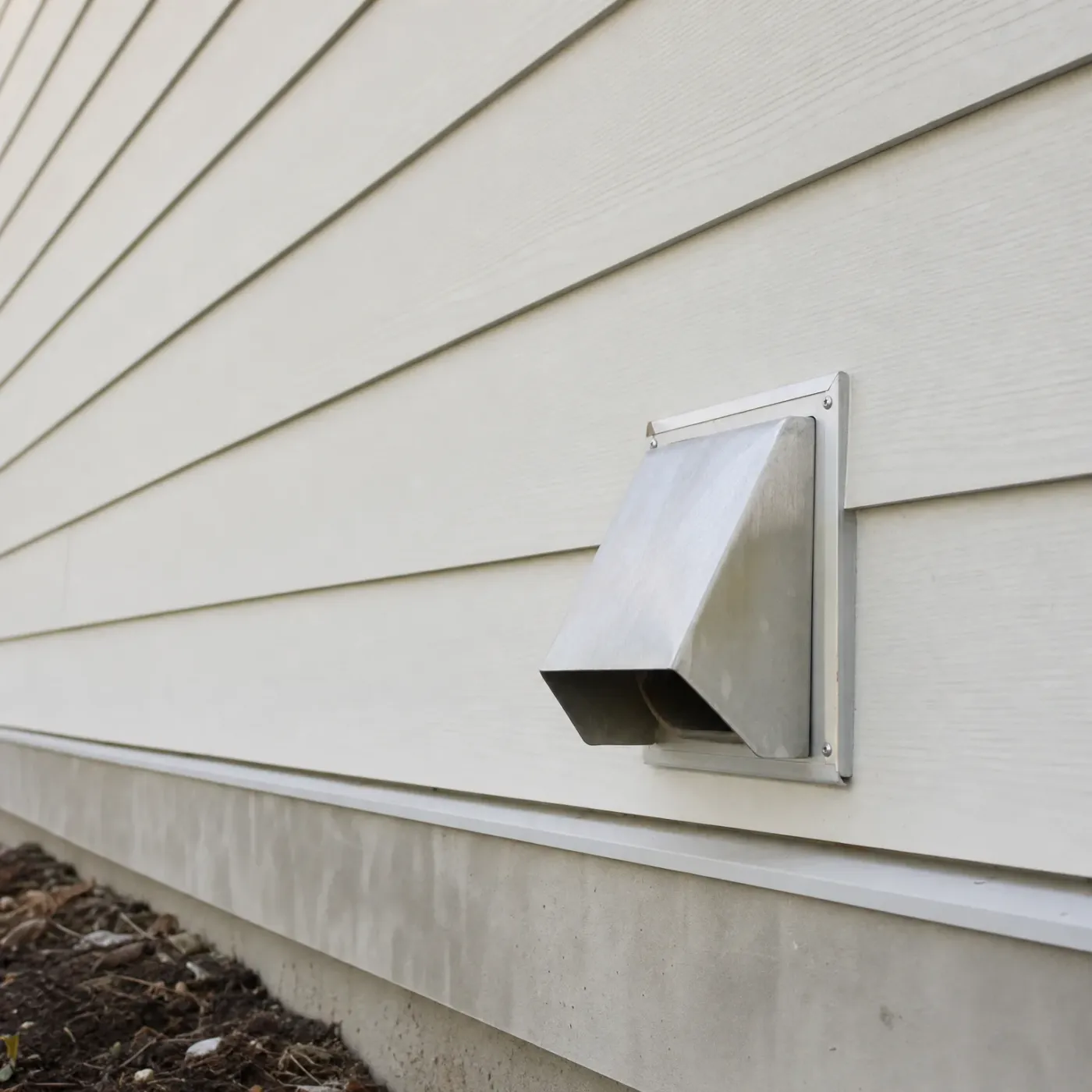
A metal hooded dryer vent mounted on cream-colored horizontal lap siding above a concrete foundation, with bare soil at the lower left.

Get matched with a dryer vent pro in Baltimore County

The pro who gets in touch is licensed in Maryland and works in Baltimore County.

Get matched with a Baltimore County pro who cleans dryer vents.

Match me with a pro

No charge to send it. You decide if you hire them.

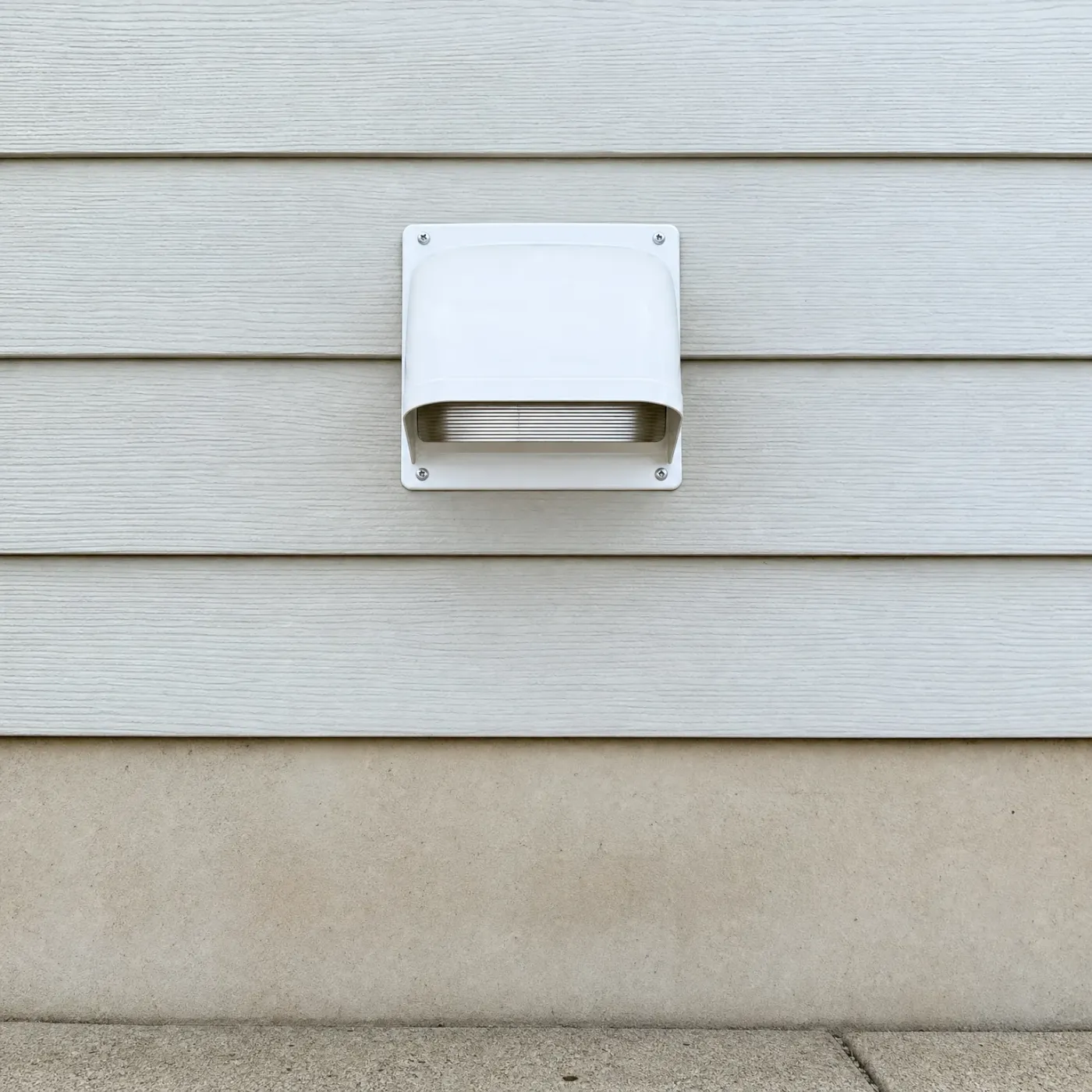
A white hooded dryer vent with a louvered opening mounted on light beige horizontal lap siding above a concrete foundation and sidewalk.
Air pushes the hood open wide and keeps it open the whole cycle, with lint caught behind the screen inside, not here.
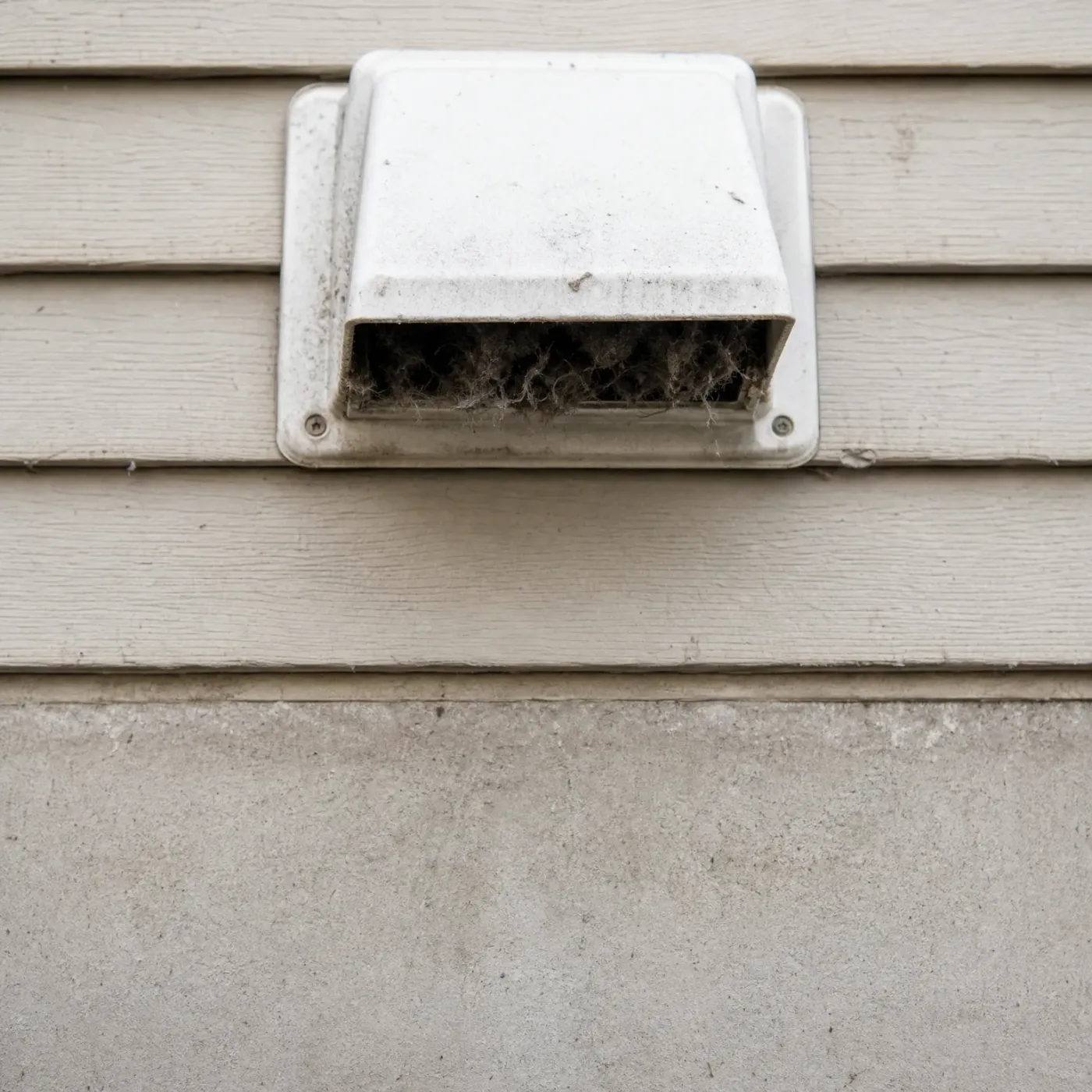
A white plastic dryer vent hood clogged with grey lint, mounted on beige horizontal lap siding above a concrete foundation wall.
Lint has packed the opening solid, and the dryer is pushing heat and moisture into the wall instead of outside.

A dryer heats the air, pushes it through wet clothes, then has to get that hot, moist air out through the vent. When the vent is clear, it moves out fast. When it's not, that air backs up into the drum, and the thermostat keeps calling for more heat because it reads the drum as cooler than it is. That's the hot top panel you feel after a cycle. The clog itself rarely forms in the straight sections of duct. It builds at the elbows, where the duct bends to get around a stud or down through the wall, because airflow slows every time it changes direction. Lint settles there first. The screen inside the dryer catches what passes close to it, but finer lint and the residue from dryer sheets ride past it and collect further down. On dryers made since the mid 1990s, there's a thermal fuse near the exhaust duct built for exactly this. When airflow drops low enough, it blows, and the dryer stops heating, sometimes well before anything looks visibly clogged.

What's Actually Happening Inside the Duct

  • A clogged vent traps hot, moist air inside the drum, so the thermostat reads high heat even though clothes stay damp.
  • Dryers built since the mid 1990s have a thermal fuse near the exhaust duct that blows when airflow drops, which stops the dryer from heating at all.
  • Lint builds up fastest at the elbows and bends in the duct, not in the straight runs, because airflow slows wherever it has to turn.
  • A blocked vent forces the drum to run hotter than it should, and that extra heat is what you feel on the top panel after a cycle.
  • The lint screen only catches what passes close to it, so fine lint and dryer sheet residue still ride the airflow and settle further down the line.
  • If the vent run is long or has several turns, lint can pack in spots you can't see or reach from either end.
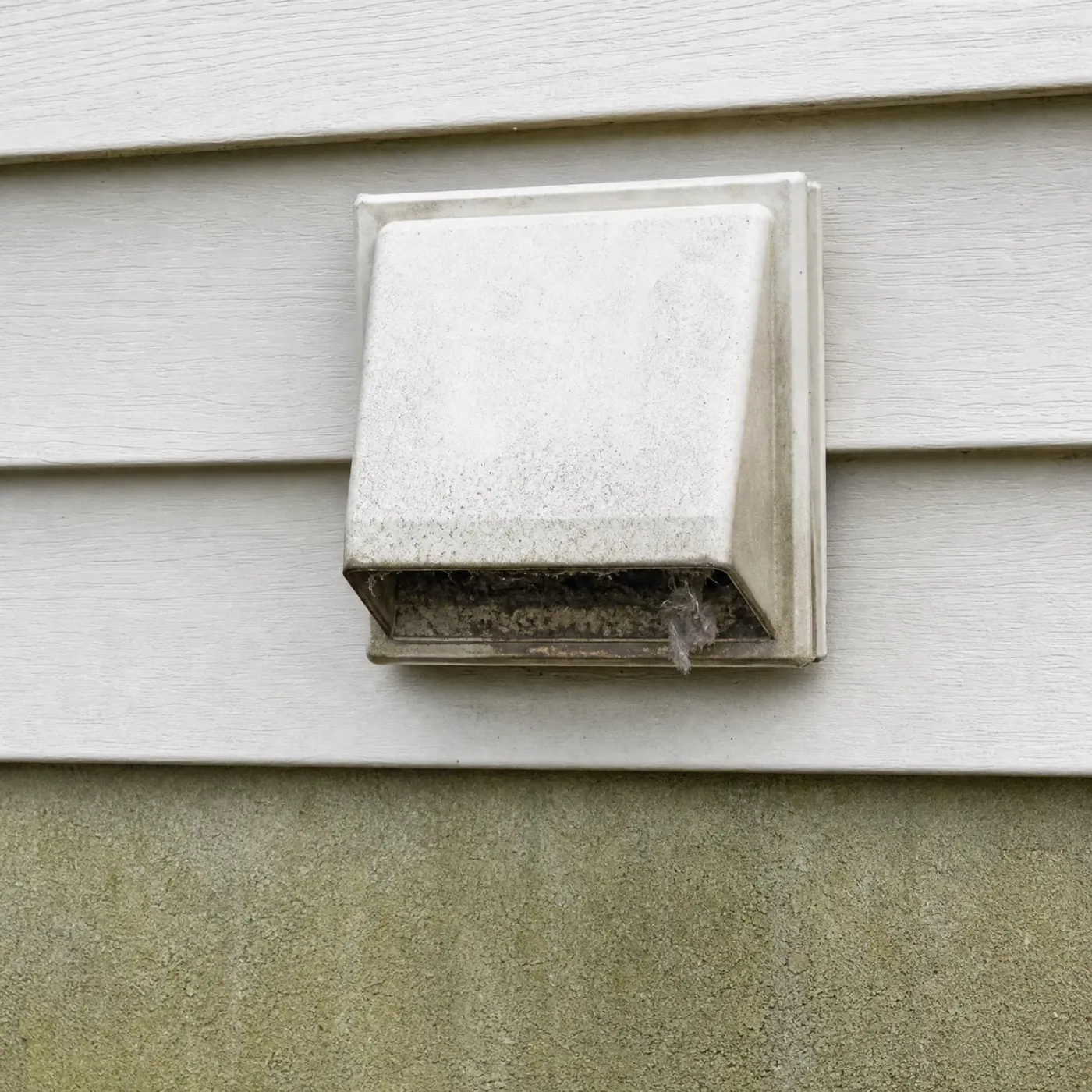
A white plastic dryer vent hood mounted on light-colored horizontal lap siding, with lint caught in its lower opening and a green-stained foundation wall below.
Before you get your dryer vent cleaning
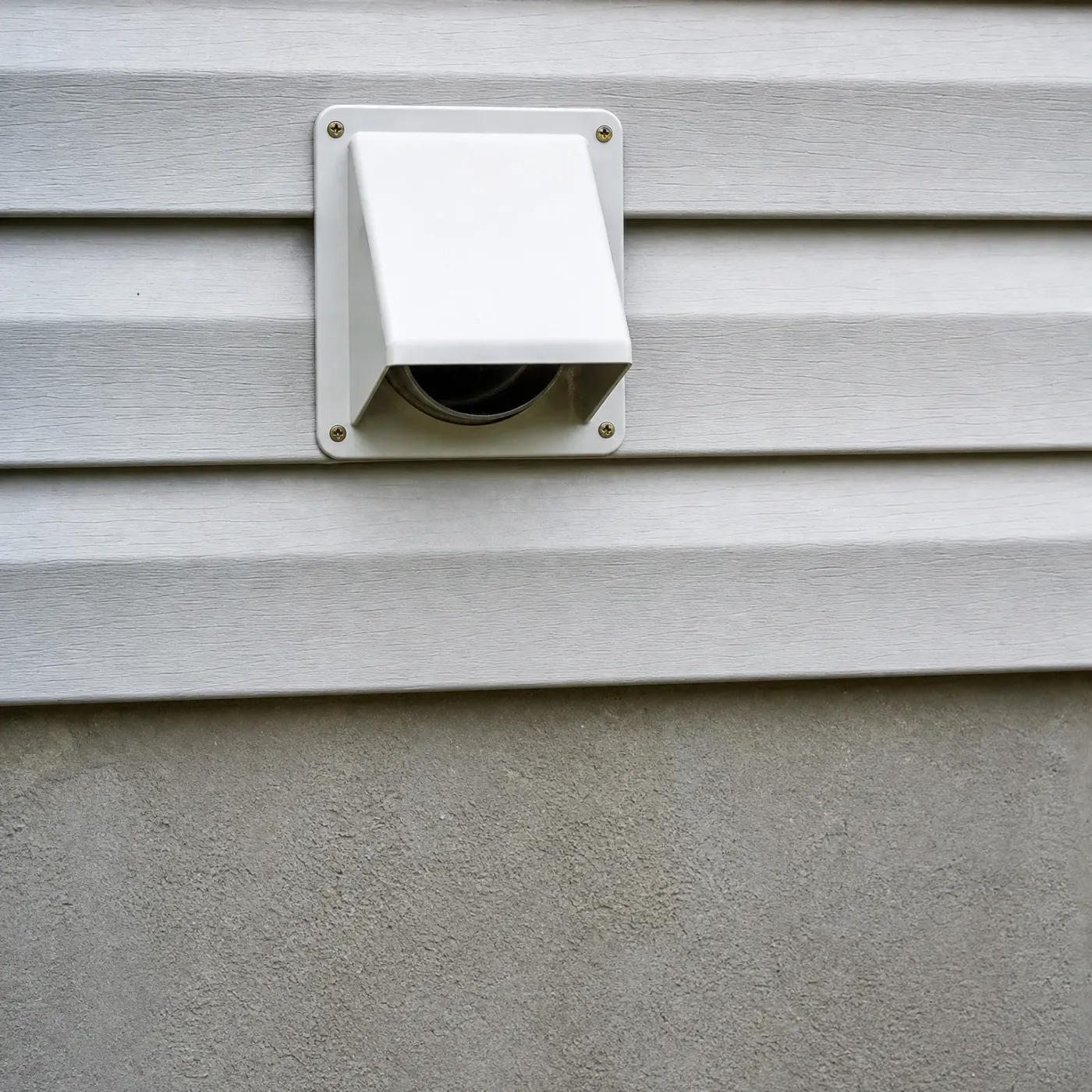
A white hooded dryer vent with a square mounting plate screwed onto light gray horizontal vinyl siding, above a gray stucco-textured lower wall.
After you get your dryer vent cleaning

Where lint actually builds up

  • The vent run from a dryer to the outside wall usually has at least one or two bends, and lint builds up fastest right at those turns.
  • A rigid metal vent clogs slower than flexible foil or plastic ducting, because the accordion ridges in flexible duct catch lint as air slows down.
  • Every foot of extra vent length past the standard run gives lint more surface to settle on before it reaches the outside hood.
  • The lint screen inside the dryer only catches a portion of what comes off a load, and the rest rides the airflow down the vent.
  • A vent cleaning job pulls lint from the full run, not just the last few feet near the outside hood, using a brush sized to the duct.
  • Dryer sheets leave a film on the lint screen over time that makes it harder for the screen to catch lint, pushing more of it into the vent.

The lint screen in the dryer door or top panel only catches some of what comes off a load. The rest travels with the air, down through the vent, and it doesn't settle evenly. It gathers where the air slows down, which is every bend the vent takes on its way to the outside wall. A straight shot from dryer to hood would clear itself out over time, but most setups have at least one turn, and some have two or three depending on where the dryer sits in the house. Each one is a spot where lint can start building a ledge.

The material of the vent matters too. Rigid metal duct has a smooth inside wall, so air moves through it at a steady speed and lint has less to catch on. Flexible foil or plastic ducting has ridges running its length, and those ridges slow the air down enough for lint to settle against them, long before the duct is anywhere near full. A longer vent run compounds this. Every extra foot past a standard run is more surface area for lint to land on before it ever reaches the hood outside.

Dryer sheets add to it in a different way. They leave a thin film on the lint screen that builds up wash after wash, and a coated screen catches less lint than a clean one. Whatever it misses goes straight into the vent. A cleaning job worth doing runs a brush through the entire length of the vent, not just the last stretch near the hood, since that's rarely where the real buildup sits.

2.5 people per household on average

With 2.5 people in the average Baltimore County household, that's laundry piling up most days of the week. More loads means more lint heading into the vent, and less time between runs for it to get checked.

ACS 2020-2024

A woman stands in the open front doorway of a single-story house with stone and wood siding while a man in a dark polo shirt and cap walks toward it along a concrete path.

A dryer that dries in one cycle, no second guessing

A dryer that still needs two or three cycles to finish a normal load, a top panel that's hot to the touch, a vent hood outside that barely moves when the dryer runs. Any one of those points to a vent that's blocked somewhere between the drum and the outside wall. Together, they mean it's past time to have it checked.

A local contractor who clears these vents regularly can tell you what's actually stuck in there and where, and get the dryer back to drying a load the way it's supposed to, in one cycle. You'll be matched with one contractor who works on this equipment in homes around Dundalk, not a list of companies competing for your call. They'll reach out to you directly once you request service.

A light-colored ceramic vase holding green leafy branches sits on a round wooden table, with a wooden-framed armchair draped in a cream throw, a tripod floor lamp, and sheer curtains blurred in the background.
A dark-clad house with large windows beside a gravel driveway lined with in-ground path lights, ornamental grasses and hydrangeas, with distant hills and an orange sunset sky.

Dryer Vent Cleaning

Find a dryer vent cleaning pro in Baltimore County

Duct and vent cleaningBaltimore County, MD
Step 1 of 3

What kind of equipment?

  • A beige upholstered armchair with a cushion and knit throw sits beside a double-hung window with a woven shade, next to a white fireplace mantel with a lit fire, a vase of greenery, and a round wooden table in the foreground.
    • Your request goes to a Baltimore County pro who takes dryer vent jobs.
    • Describe your dryer vent job, and a local pro who handles it gets in touch.
  • A shallow speckled beige ceramic bowl holding a leafy green branch sits on a wooden dresser beside a tall matte stoneware vase, with a window at left and a dark-framed picture at right.
    • Send it once and finding someone is no longer on you.
    • Send the form and finding a dryer vent cleaner is handled.
  • A ceramic table lamp with a pale tapered fabric shade sits on a rustic wooden table beside a wooden bowl, with a framed artwork on the beige wall and sunlight from a window at left.
    • Skip searching for someone who cleans dryer vents in Baltimore County.
    • One form replaces the calls you'd make to find a dryer vent pro.
  • A black box-shaped outdoor wall lantern with seeded glass panels and a lit filament bulb mounted on a light gray board-and-batten exterior wall, beside a dark-framed glass door, with green leafy shrubs in the foreground.
    • Your request goes to one pro, not a list of companies.
    • The pro who reaches out is licensed in Maryland.