


A vent that's doing its job
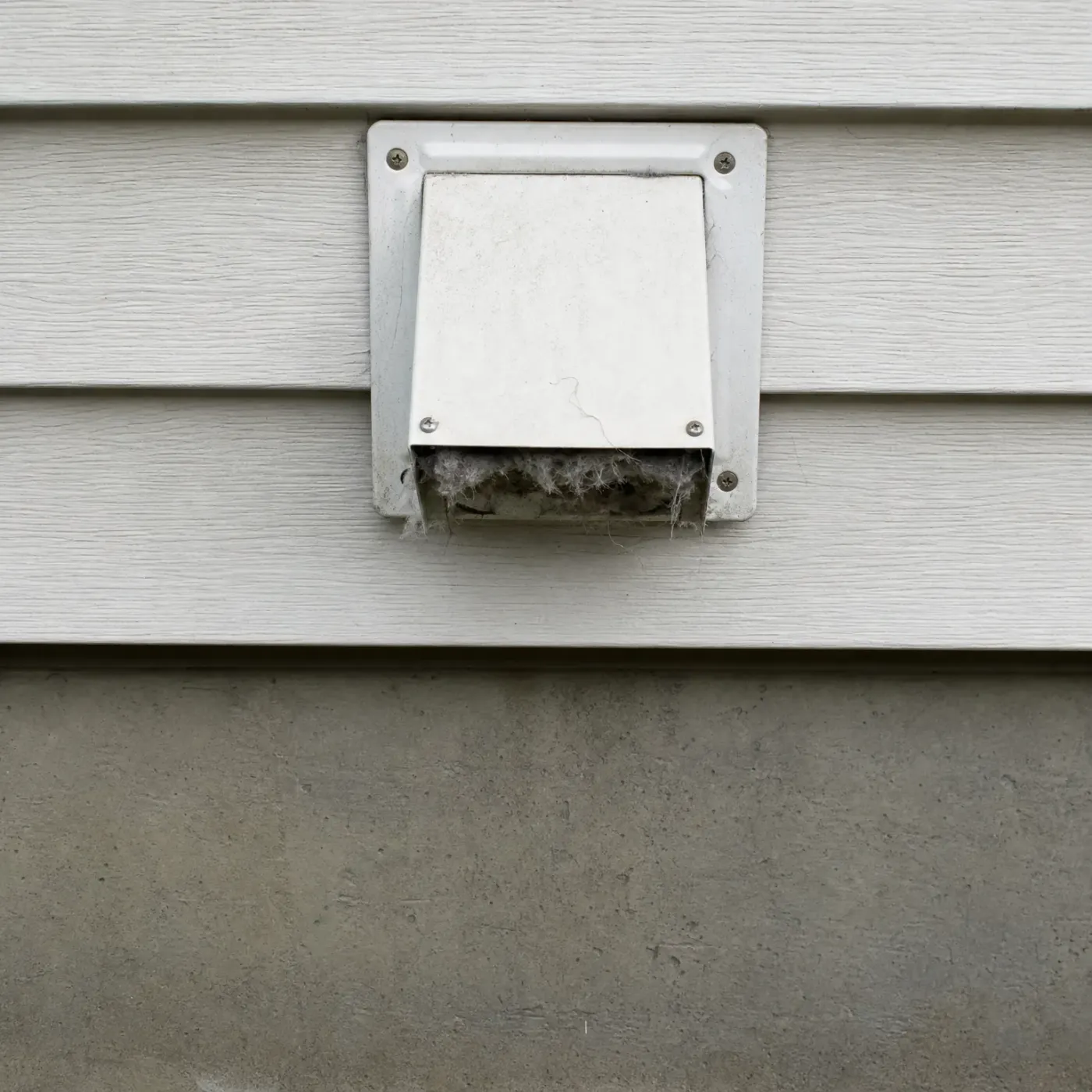
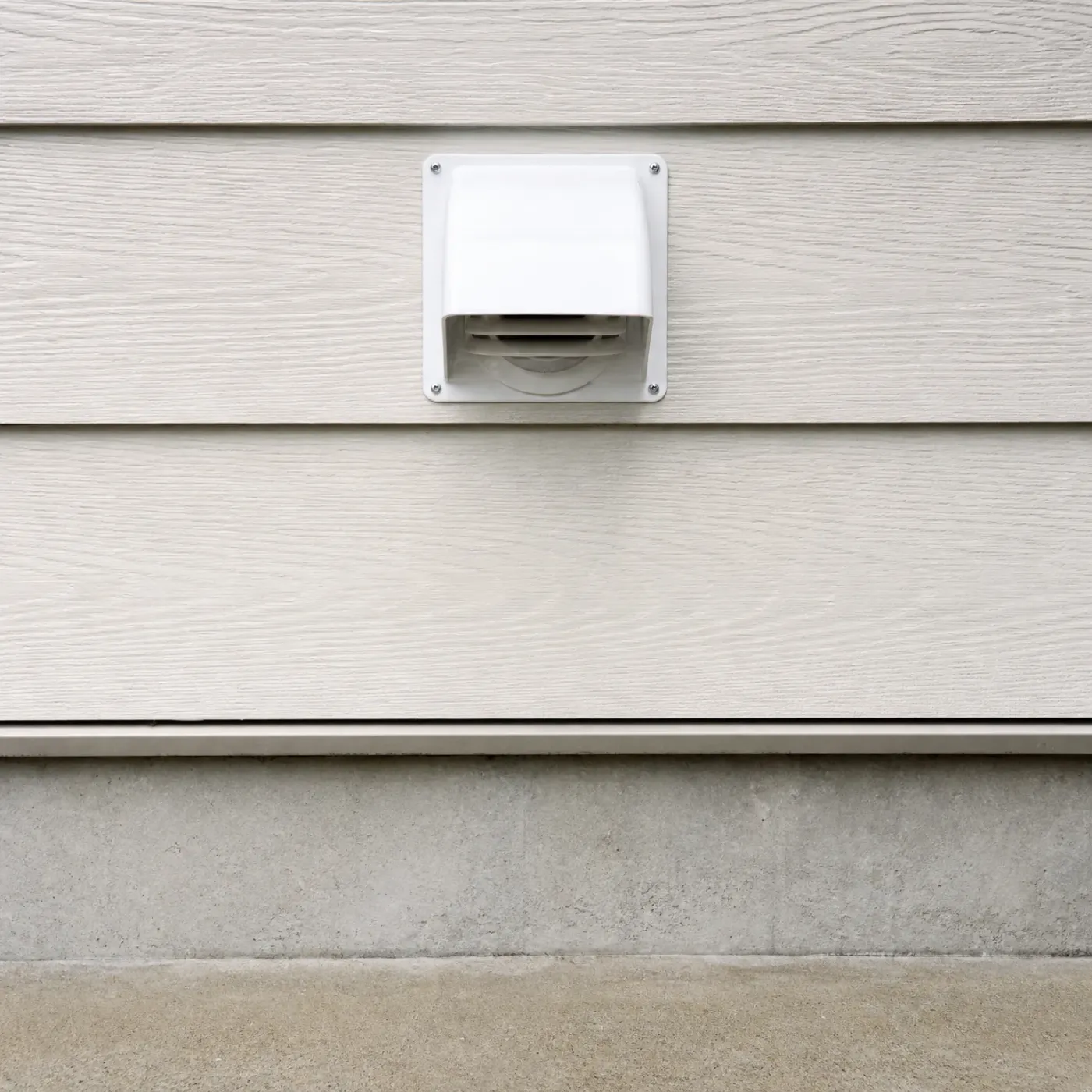
That white cap sits flush against the siding with the screws tight and the louvers clear. Air and lint pass straight through and out, so nothing collects where the heat from the dryer could reach it.
You keep seeing warnings about dryer vents and house fires and you want to know if that's really a risk for your house, or just something that happens to other people's older machines. You run the dryer a few times a week like everyone else and have never thought twice about the vent until now.
Lint is the fuel. Every load leaves some behind, and the vent is supposed to carry it outside along with the hot, damp air. When the vent is blocked, that heat has nowhere to go, so it builds up inside the duct and around the heating element. Lint ignites at a lower temperature than paper, and a clogged vent traps exactly the kind of heat that can reach it. This holds the same whether your dryer is gas or electric, and it does not depend on how old the machine is. A dryer that takes two or three runs to dry a load, or one that feels hot to the touch at the front, is telling you the vent is restricted and heat is building where it should not.
Lint builds up inside the vent duct with every load.
Airflow drops, so the dryer runs hotter to finish drying.
Heat and lint collect near the exhaust hood or damper.
Trapped lint can ignite from the heating element's heat.
2.16 people per household on average
The average Baltimore household has 2.16 people, which usually means more loads through the dryer each week and more lint moving into the vent to build up.
Half the homes here were built by 1947
Half the homes in Baltimore city were built in 1947 or earlier. A vent run that old has had decades to collect lint in bends and joints a newer duct wouldn't have.
Power here costs 20.22 cents per kilowatt-hour
Electricity in Baltimore city runs 20.22 cents per kilowatt-hour. A dryer fighting a clogged vent runs longer and hotter to dry each load, and that shows up on the bill.
ACS 2020-2024 · EIA-861 2025
A clogged vent shows up in small ways before it becomes a fire risk. Towels take two cycles instead of one. The dryer feels hot to the touch on top. The laundry room warms up while it runs. You might catch a burnt dust smell near the machine or the outside hood. If your house runs more loads through the dryer each week, lint moves into that duct faster, and a bend or a long run to the outside wall gives it more places to pack in before it ever reaches the hood. What's at risk isn't just a delayed load of laundry. Lint is fuel, and it's sitting right next to the heating element every time the dryer runs. A duct that's been clogged for a while and finally catches won't stay contained to the dryer. It burns into the wall cavity the vent runs through, and from there into the rest of the house. That's the difference between a dryer that needs cleaning and a house fire.






It's almost nine on a Tuesday and you're still in your work clothes, pulling the same load out for the second time. The towels are warm but not dry, heavy in your arms, and you drop them back on top of the dryer while you check the lint trap again, like that's going to change anything. The laundry room is warmer than the rest of the house, the way it gets when the dryer's been running a long time for one load. Somewhere behind the wall, air that should be going outside is backing up instead. You're tired, it's late, and the towels are just going to sit there until morning.
The pro who gets in touch is licensed in Maryland and works in Baltimore.
You only hire the pro if you want to.
A dryer's heating element can reach several hundred degrees, and lint ignites at a much lower temperature than that. When airflow is blocked, that heat has nowhere to go but back into the lint sitting in the duct.
That's why the exhaust hood and the first few feet of duct matter most. It's where heat, lint and a blocked exit all end up in the same place at the same time.
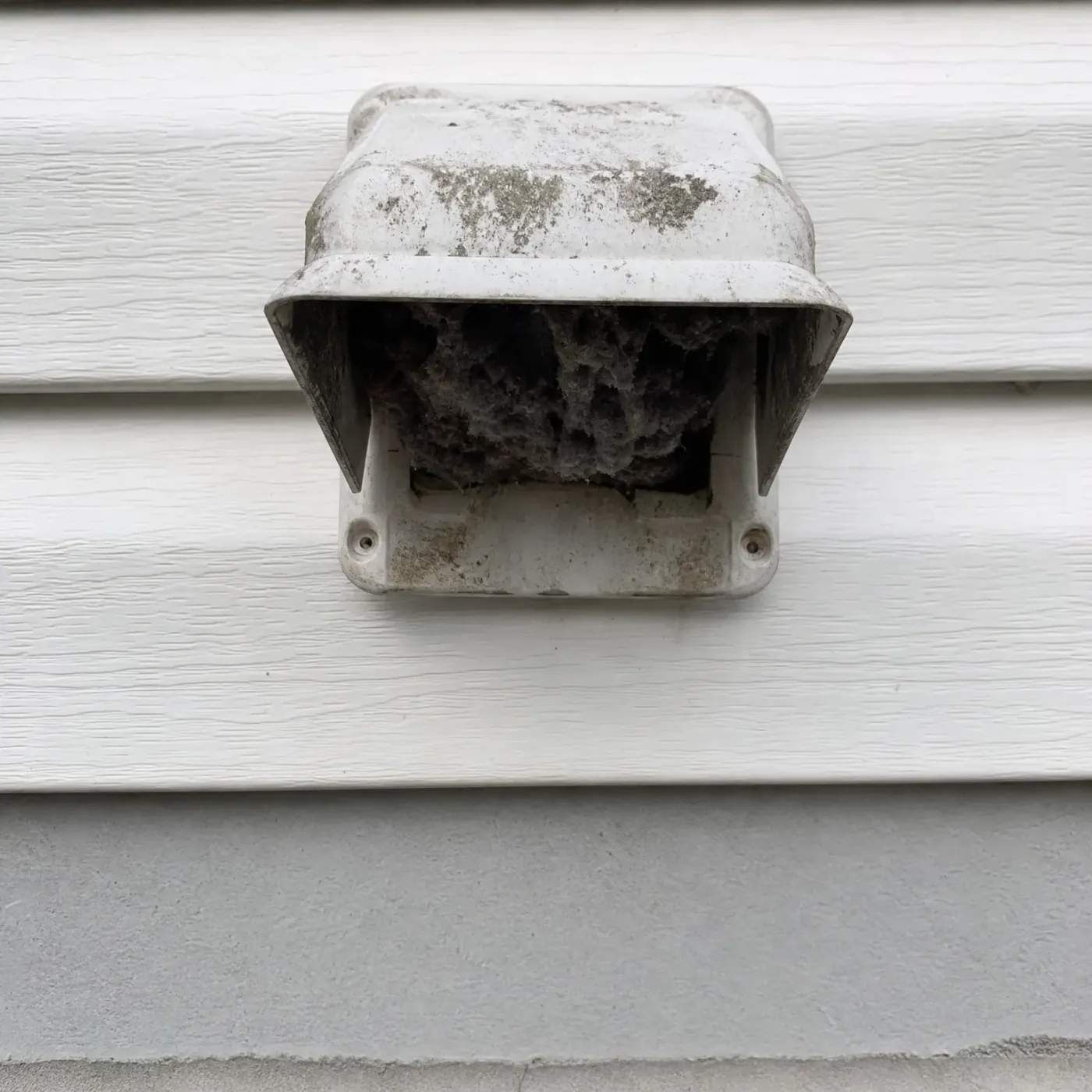
Your dryer doesn't vent straight outside. The air travels through a duct, sometimes four feet, sometimes twenty, before it reaches the exhaust hood on your wall. If that duct is the coiled plastic or foil kind, lint catches on the ridges as it goes. Rigid metal duct gives lint less to grab onto, which is why a lot of older installations are the ones worth checking first. Wherever the duct bends, at an elbow or a joint, the airflow slows down and drops whatever lint it was carrying. That's where buildup starts, not at the trap you clean out after each load. Once enough has collected, a full cycle runs hotter than it should, and the internal thermostat starts cycling on and off faster to compensate. There's a second thermostat built in as a backup, the high limit switch, but it only trips after the heating element has already run too hot once. A cleaning clears the whole duct run, elbows included, not just the few inches you can reach from the trap.



That white cap sits flush against the siding with the screws tight and the louvers clear. Air and lint pass straight through and out, so nothing collects where the heat from the dryer could reach it.
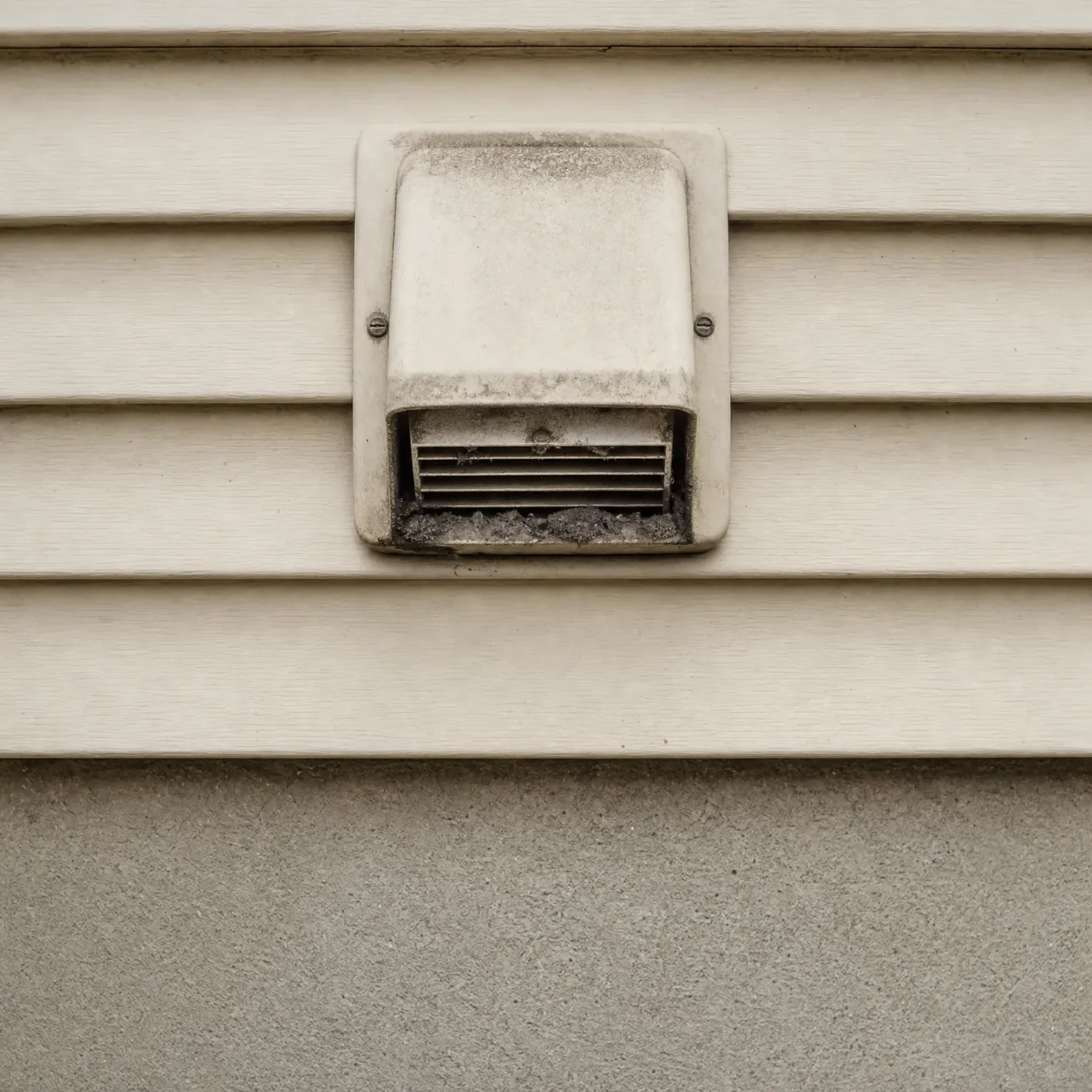
This cap is matted with lint around the opening and the louvers barely move. That buildup sits right where the hot exhaust comes through, and it's exactly what inspectors point to when they trace a dryer fire back to the vent.
With 2.16 people in the average Baltimore household, your dryer is likely running a load most days, not once a week. That's more lint pushed into the duct between cleanings, and less time for buildup to go unnoticed.
ACS 2020-2024
A clogged dryer vent is a fire risk in your house, the same as it is in any house running a dryer in Baltimore. It isn't about the age of your machine. It's lint building up in the duct, airflow dropping, and the heating element running hotter to push a load through that's taking longer to dry. That heat has to go somewhere, and if the hood flap can't close or the duct is packed, it's sitting right next to the thing most likely to ignite it.
The fix isn't complicated. Someone clears the duct, frees up the hood flap outside, and the dryer goes back to running at a normal temperature instead of straining through every load. What matters is who does that work. A contractor who's out clearing vents in Baltimore homes every week has seen which duct runs clog fastest and which hood styles tend to stick, because they're working on the same setups yours is built like.
When you request service here, you're matched with one licensed local contractor, not several companies calling you back at once. That means someone who already knows this area's houses looks at your vent, not a stranger working from a script. If your towels are taking two cycles or the laundry room's running hot, that's worth having someone look at, not something to wait out until it clears on its own.

Find a dryer vent cleaning pro in Baltimore