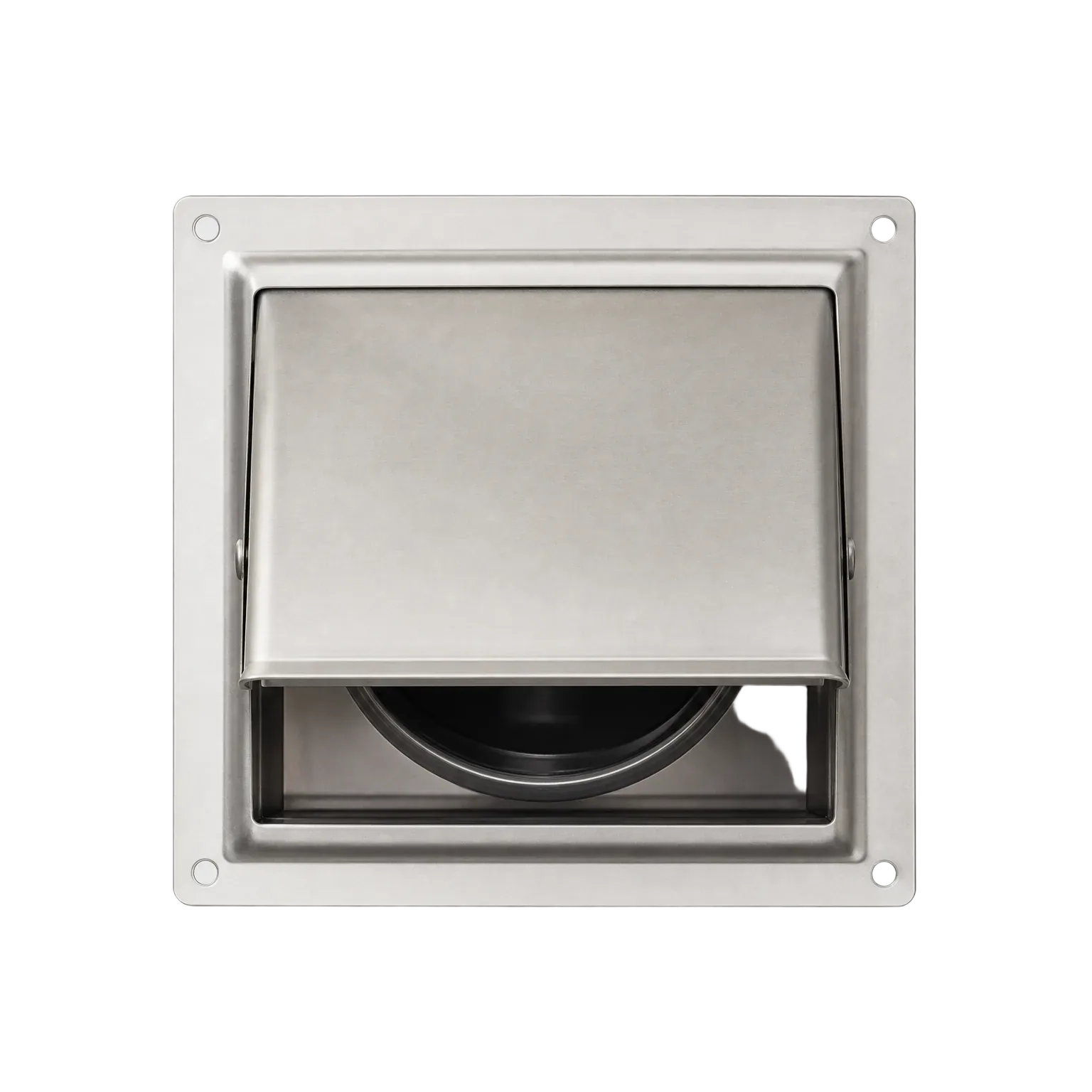
A vent that can still do its job
This is what a clear hood looks like, mounted flush against the siding with nothing blocking the flap. Air and lint have a straight path out, and the flap swings shut on its own once the dryer stops.
A bird in your dryer vent usually means a chimney swift or a sparrow found the hood flap and decided it was a good place to build. Spring is when it happens most, when birds are hunting for somewhere warm and sheltered to nest, and a vent hood with a stuck or missing flap is an open invitation. Once nesting material packs into the duct, air from your dryer cannot get outside anymore. You will notice clothes taking longer to dry, more lint smell in the laundry room, or the dryer shutting off on its own. The bigger problem is what that blockage does with the heat and lint your dryer pushes out. With nowhere to go, both build up inside the duct, and that is a real fire risk. A nest has to come out, and the vent needs a working flap afterward so this does not happen again next spring.
2.16 people per household on average
With 2.16 people in the average household here, that dryer is likely running loads every few days, and a blocked vent backs up heat and lint fast.
Half the homes here were built by 1947
Half the homes in Baltimore were built in 1947 or earlier, and a vent hood that old has likely been patched or replaced in ways that leave gaps birds can get into.
Power here costs 20.22 cents per kilowatt-hour
Power here runs 20.22 cents per kilowatt-hour, so a dryer working against a blocked vent to finish a load is pulling more from a meter that already costs more than most places.
ACS 2020-2024 · EIA-861 2025
A nest in the vent blocks the path lint needs to leave the house, and every load after that pushes more lint up against it with nowhere to go.
A dryer vent cleared of a nest lets heat and lint move straight outside again, the way the vent was built to work in the first place.




A chimney swift or sparrow building against the hood flap is working with twigs and grass, and that material packs down tight once eggs are laid. The flap's job is to keep the vent sealed against outside air and pests when the dryer isn't running, and a nest wedged against it holds the flap open instead. Lint is paper thin and catches fire at a lower temperature than almost anything else in the house, so a blocked vent isn't just an inconvenience. The first sign is usually longer dry times, since the exhaust fan has to push harder against whatever is packed near the hood. And none of it clears on its own. Once the birds move on, the nest stays put, and the vent carries that blockage into the next season and the one after that until someone goes in and removes it. What looks like a dryer running slow is often this, material built up at the one point in the system where the exhaust is supposed to exit clean.


Most of what tells you a bird got into your vent isn't the bird. It's the dryer acting wrong. A load that used to take forty minutes now takes two runs through, or the clothes come out hot and still damp at the edges. That's heat and moisture with nowhere to go, backing up through the duct because a nest is sitting in the way, usually right behind the hood flap where you'd never see it without a flashlight. Feathers and nesting material don't burn like lint does. They burn faster, and they sit mixed in with lint that's already packed tighter than it should be because the airflow pushing it outside has stopped moving it along. If your house is a rowhome with a short run from the dryer to the outside wall, there's even less space for that lint to pack around whatever's blocking it, so the clog builds faster than it would in a longer duct. The hood flap itself tells you something too. If it won't close flush against the siding anymore, that gap doesn't go away on its own. It's an opening, and the next bird hunting for a sheltered spot next spring will find it the same way this one did. None of this fixes itself by running more loads or waiting out the season. The nest stays until something removes it, and every load you run in the meantime is pushing heat and moisture into a duct that can't clear it.
Skip searching for someone who cleans dryer vents in Baltimore.
Your request goes to a Baltimore pro who takes dryer vent jobs.
No fee to send it, and nothing to sign.
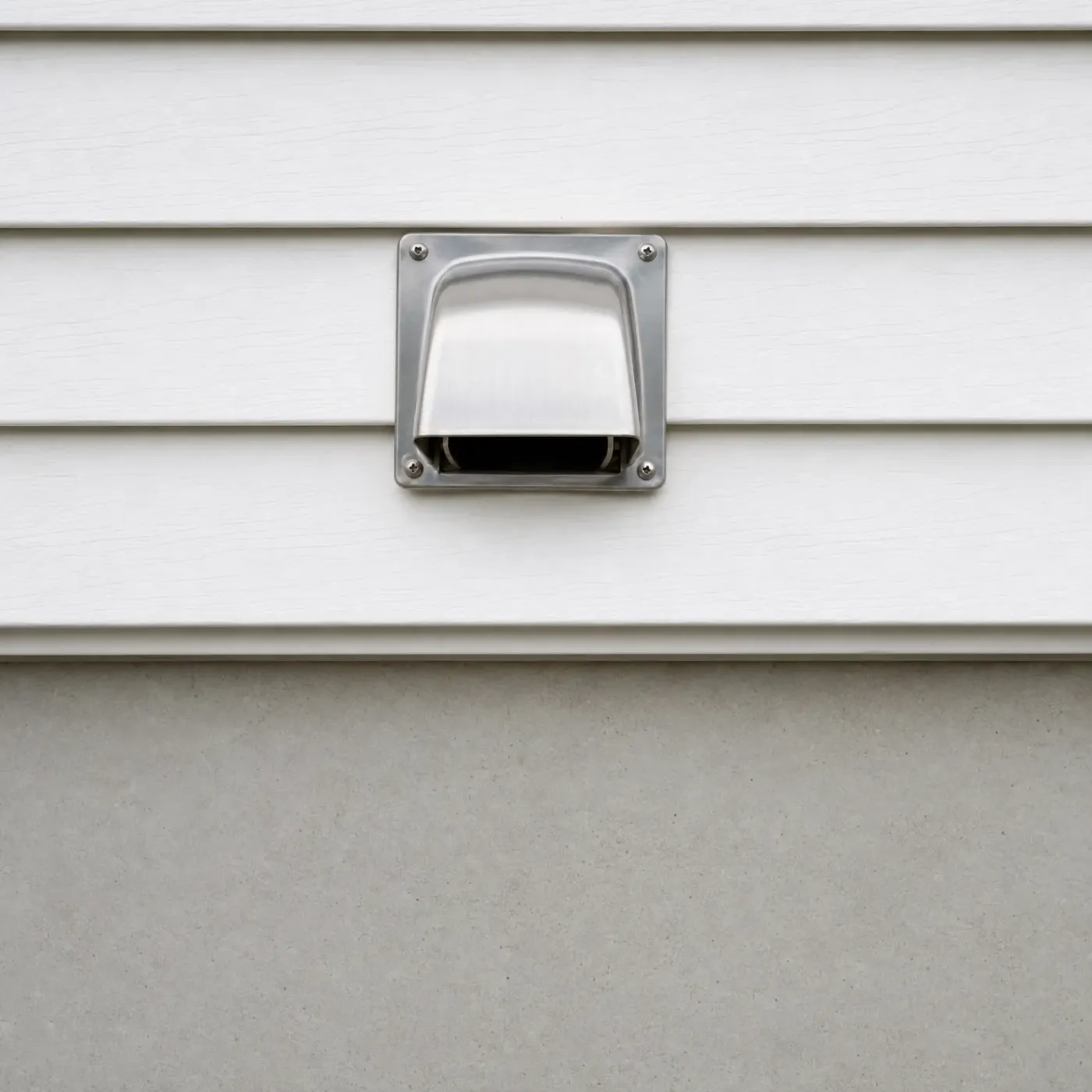
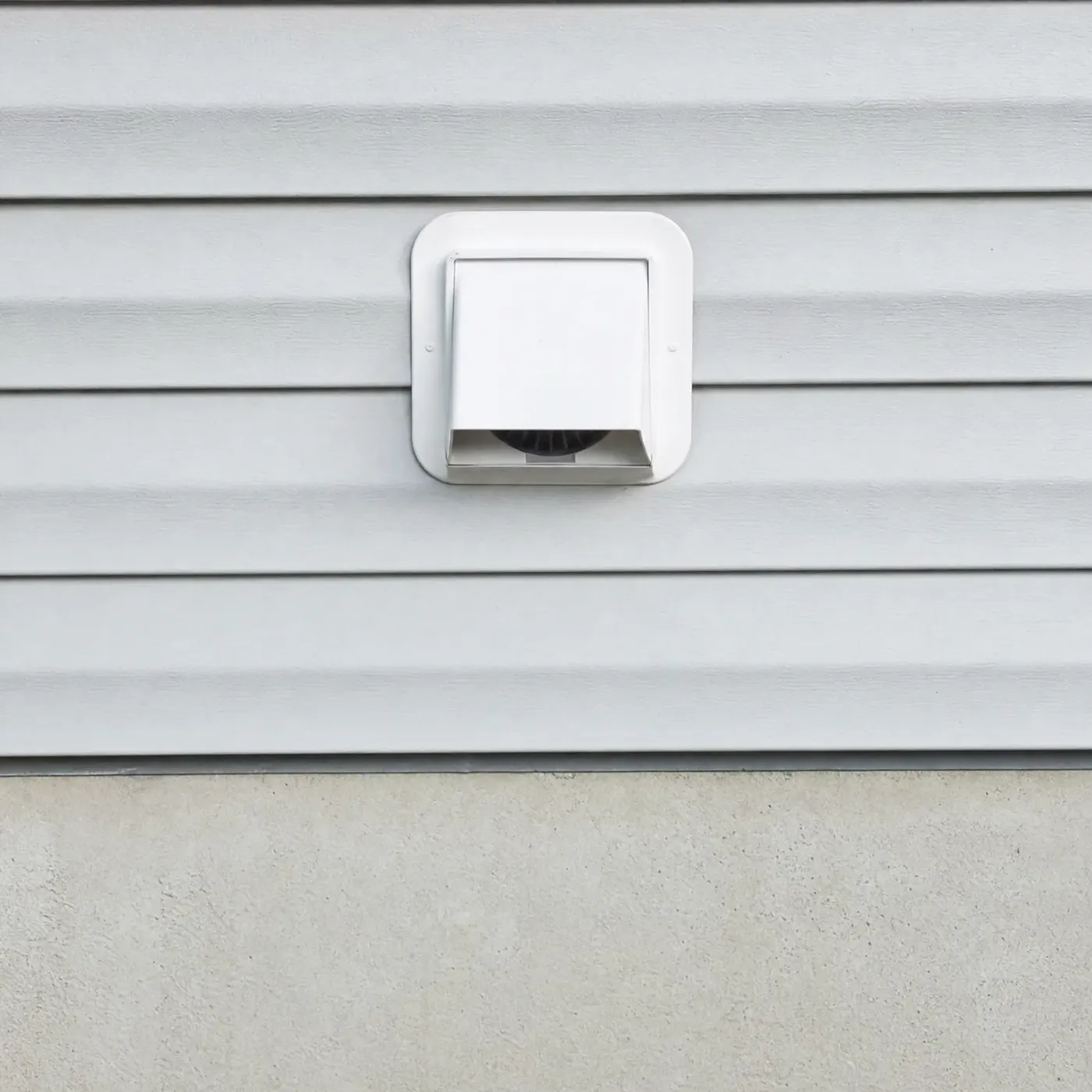
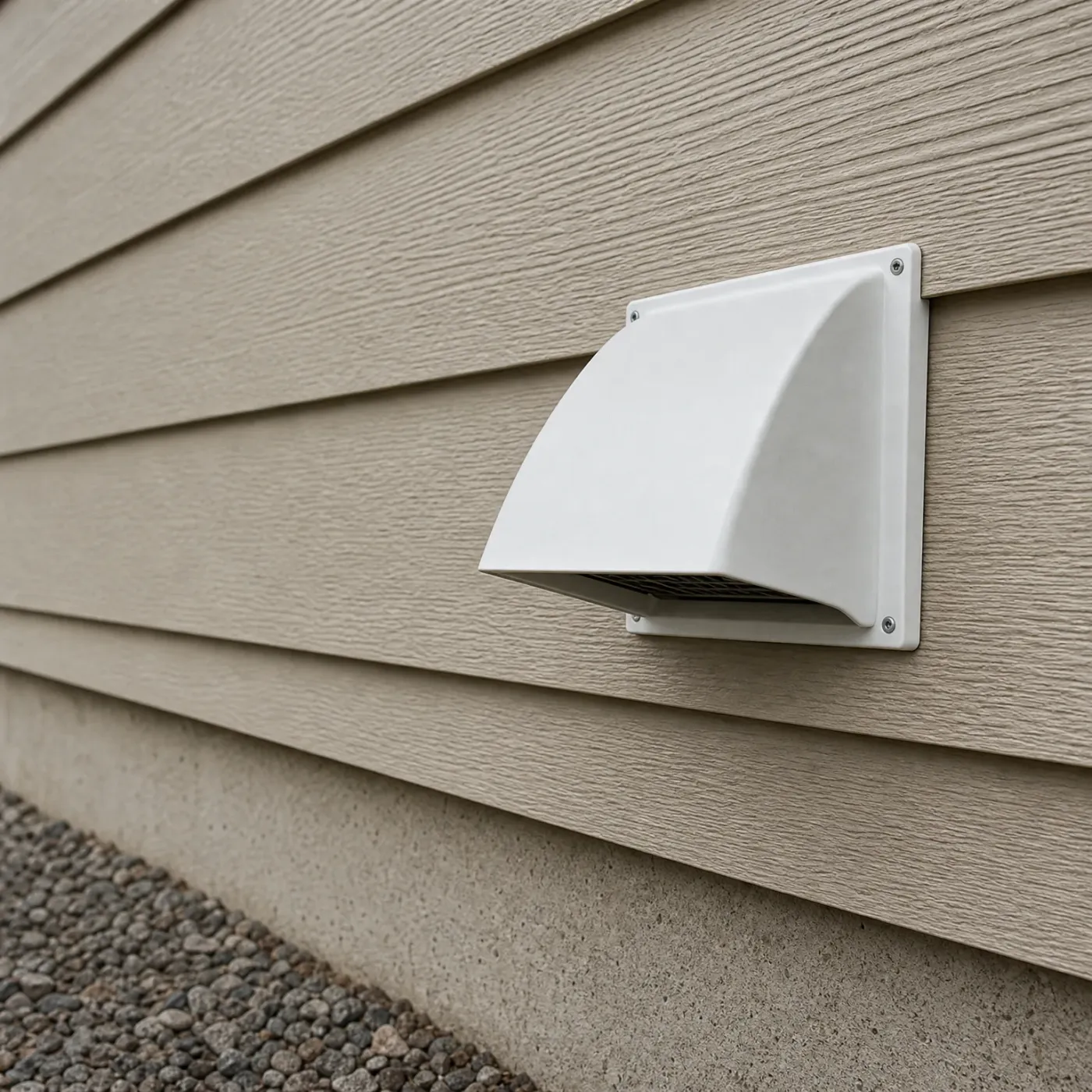
This is what a clear hood looks like, mounted flush against the siding with nothing blocking the flap. Air and lint have a straight path out, and the flap swings shut on its own once the dryer stops.
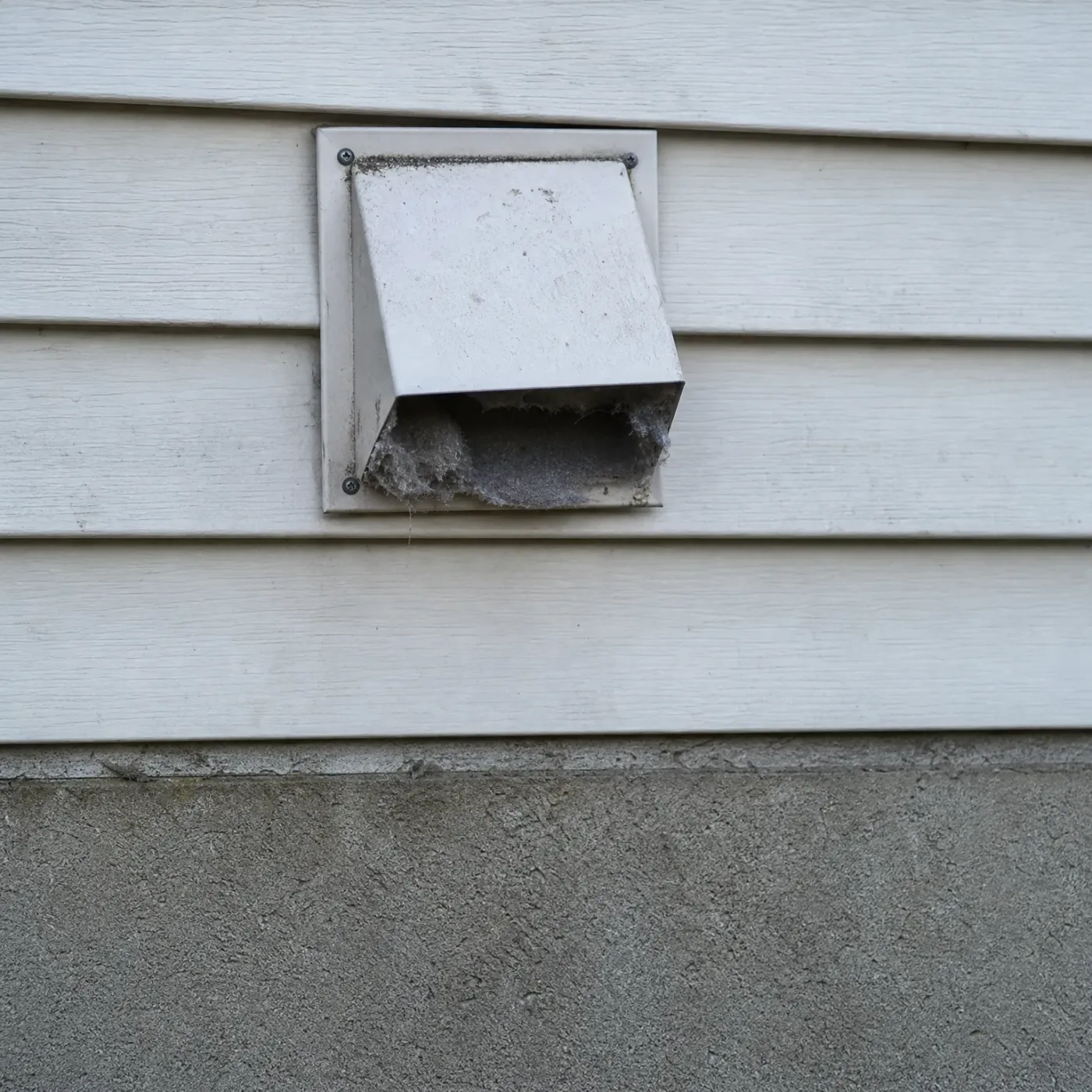
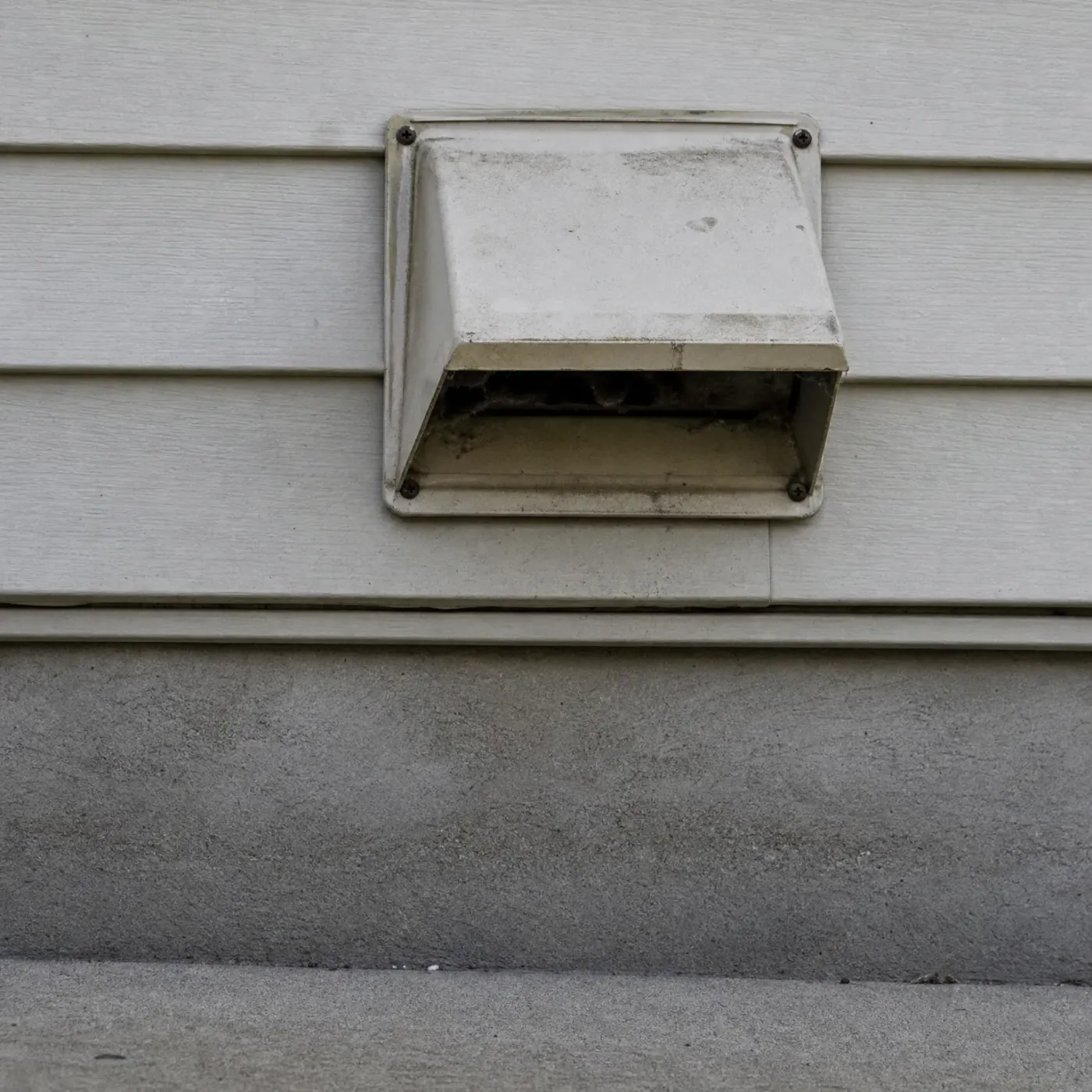
Lint has built up around the flap until it can't close, and that gap is exactly what drew a bird in to begin with. Every load adds more lint to a hood that already can't push it outside.
A thumping or scratching sound from the wall when the dryer runs is usually the first thing people notice. Some hear chirping, especially in spring when eggs have hatched. You might see twigs or grass caught in the hood flap outside, or the flap sitting open instead of closed when the dryer is off. Drying times stretch out, sometimes to two or three cycles for a single load, because the nest is blocking the air that used to carry heat and moisture straight outside. Left alone, the lint has nowhere to go but back into the duct, and that buildup next to a heat source is how dryer fires start.

This is what the hood should look like year round. The flap sits flush against the siding and swings open only when the dryer runs. Screws hold the plate tight to the wall, and the screen keeps birds and debris out while air moves freely behind it.

Lint has built up at the opening until it hangs loose from the flap itself. A hood this clogged can't push air out, and a nest behind it would only make the blockage worse. This is close to what a vent looks like once a bird has been in there a while.
At 2.16 people, most houses here run a load every couple of days, not just on weekends. That steady use is what makes a nest behind the hood flap show up fast, with lint backing up load after load instead of sitting unnoticed for weeks.
ACS 2020-2024

A dryer vent with a bird nest in it isn't a standard duct cleaning job, and not every outfit that advertises dryer vent work will deal with a nest, eggs, or a bird still inside. You'd normally need to call a few companies, describe the chirping and the wall thumping, ask if they handle wildlife in a vent line, and find out who can actually get out to your house this week.

Once you're matched with a contractor who handles this, that search ends. You explain what you're hearing and seeing once, not five times to five different answering services. The contractor who reaches out already knows it's a nest situation in a dryer vent, not a routine lint cleaning, and can tell you what they need from you before they arrive.

A bird in the vent is not something to wait out. The nest stays, the lint keeps backing up behind it, and the flap stays propped open until someone pulls the nest out and checks what's left behind it, eggs included if it's spring. That's not a job to piece together by calling around and hoping whoever answers will actually deal with a bird in the line.
Getting matched with a contractor who handles this specific problem means you explain it once, to someone set up to take it on, and they reach out to you instead of you working down a list of numbers. No more describing the chirping and the thumping to three different answering services and sorting through quotes to find out who actually wants the job. You'll know where things stand, and so will the vent.



Find a dryer vent cleaning pro in Baltimore
Skip searching for a dryer vent pro and answer a few questions instead.
