
Skip it for now
Your filter's on schedule and the furnace runs clean. A contractor can confirm there's nothing behind the walls worth paying to clear out.
Get matched with someone who does this kind of work in Montgomery County.
Find my proYou keep up with small maintenance before it turns into a bigger problem, so when you hear about duct cleaning you want to know if it actually does anything for a house like yours, or if it's a service that sounds good but doesn't change much. With Gaithersburg summers running muggy and winters cold, your system is working hard both ways, and you want to know if cleaning the ducts is worth paying for.
Duct cleaning is worth doing when there's a reason for it: visible dust coming from the vents, a musty smell when the air handler kicks on, or work that opened up the ductwork, like a renovation. It's not something that needs to happen on a set schedule just because a system is getting older. Most homes with gas furnaces here run that system from October through the coldest months, then switch to air conditioning for the muggy stretch, and dust and debris build up in the ducts either way over years of use. If nobody in the house has allergies acting up and there's no visible buildup at the vents, cleaning the ducts won't change your energy bill or your air quality by much. A contractor can look at the actual ductwork and tell you whether there's enough buildup to matter.
Dust, pet hair and construction debris settle in the slow spots of your duct runs, the bends and the sections near the vents. None of it gets pulled into the house in meaningful amounts during normal operation. The furnace filter is what's catching the particles moving through the air you breathe. A dirty duct looks bad if you see inside it, but it isn't the same problem as a dirty filter, and cleaning one doesn't substitute for changing the other.

Gas furnaces here run hard from around November through March, and that long a season means more air cycling through the same ductwork, more dust pulled along the way. If anyone in the house has allergies or asthma, what's sitting in the vents and near the registers can matter more to them than to someone else in the same house. That's a reason to look into cleaning, separate from whether it changes your gas bill or your furnace's output.

If your gas furnace runs clean and your filter gets changed on schedule, dirty ducts mostly cost you dust on the registers and more frequent dusting around the house. That's a nuisance, not a reason to spend money. Where it matters more is if someone in the house has allergies or asthma, or if you've noticed a musty smell when the AC kicks on, which can point to moisture sitting somewhere in the system rather than the ducts themselves.
Before you decide either way, it helps to have someone look at the actual runs in your house, not a general answer. A contractor who knows Montgomery County homes can tell you whether what's in your ducts is normal buildup or something that's actually affecting your air, and whether cleaning is the right call or something else is. That saves you the work of calling around and explaining your setup more than once to find out.

Half the homes here were built by 1980
Half the homes in Montgomery County were built in 1980 or earlier. An older duct system is more likely to have loose joints or sections that were never sealed well, which gives dust more places to collect.
Heat runs October through April
Heat runs about seven months a year here, October through April. That's seven months of air moving through the same ducts, pulling along whatever has settled in the bends and slow spots.
Cooling runs June through September
Cooling runs June through September. Add that to the heating months and the ducts in a typical house here are moving air most of the year, with only a short stretch of rest between seasons.
ACS 2020-2024 · NOAA nClimDiv 1991-2020
If a contractor opens your return and finds a layer of dust thick enough to see without looking closely, or finds rodent droppings, insulation that's come loose, or a section of duct that collapsed or disconnected behind a wall, cleaning is worth it. Those are conditions that affect what comes out of your vents, not just what sits inside the duct. A home that's been through a renovation, where drywall dust got pulled into the return before the vents were covered, is a real case for cleaning. So is a duct system that's had a pest problem. These aren't maintenance items on a schedule. They're specific conditions that either exist in your house or don't.
If nothing above applies and you're cleaning ducts because a year or two has passed since the last time, you're probably not getting much for it. Ducts that are sealed and in decent shape hold onto dust rather than release it, which is the reason they don't need cleaning on a fixed interval the way a filter does. Your filter is doing the job of keeping the air clean, and changing it on schedule matters more for both your air and your furnace than a duct cleaning would. The exception is if someone in the house has allergies or asthma severe enough that even the small amount of dust leaving the vents matters. For most houses, it doesn't rise to that.




Your filter's on schedule and the furnace runs clean. A contractor can confirm there's nothing behind the walls worth paying to clear out.
Visible dust, droppings, or a duct that's come apart behind a wall. A contractor can check what's really there and what it would take to fix.


Describe your ductwork job once, to one pro.
Get matched with a pro who works on ducts in Montgomery County.
It costs nothing to send, and you don't have to hire anyone.

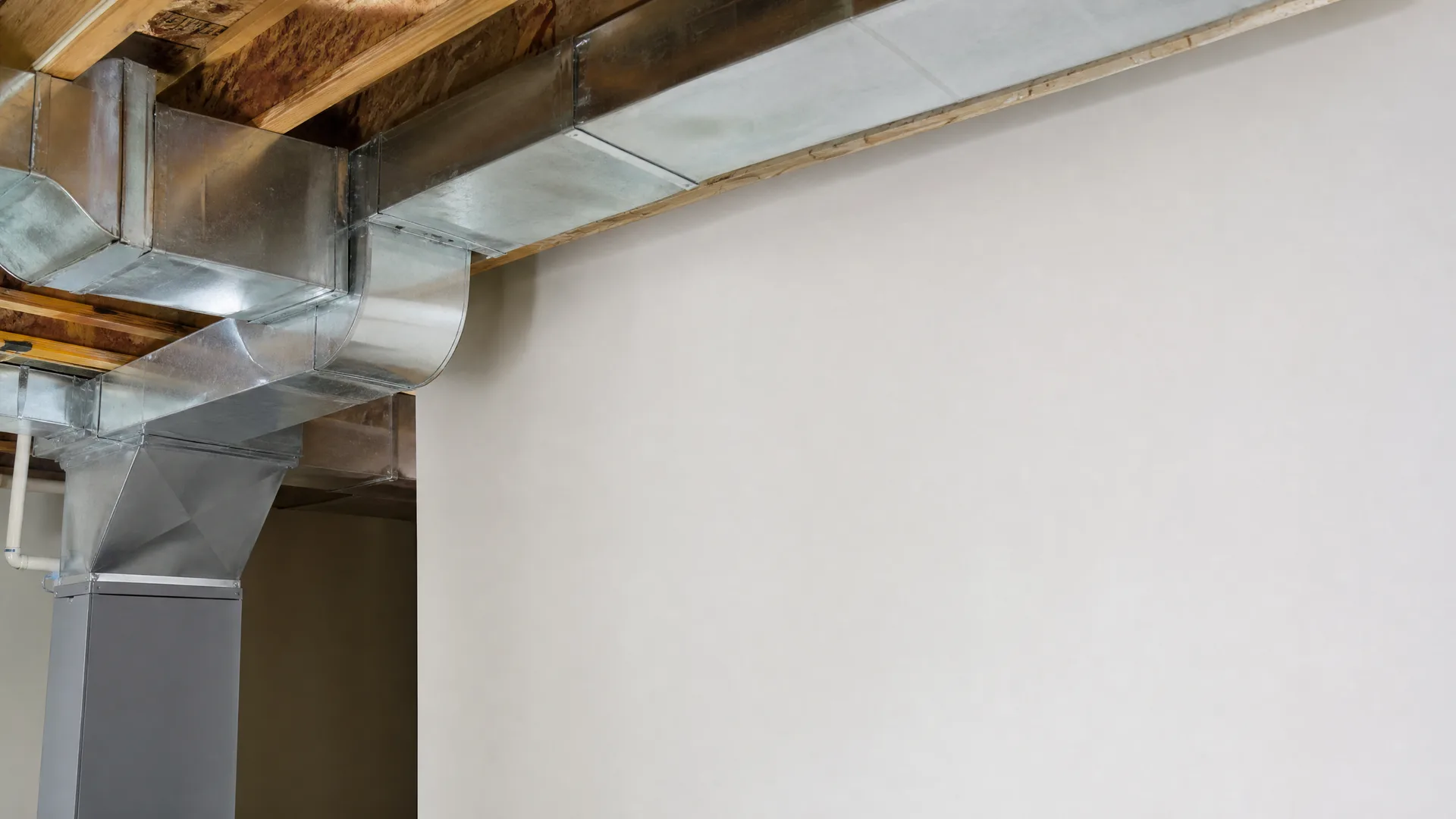
This is what a duct system looks like when there's nothing to worry about. The metal runs are intact, the joints are sealed, and the furnace ties into a system that was put together right. Dust collects in the slow spots, same as any duct run, but it stays put and moves nowhere near your living space.

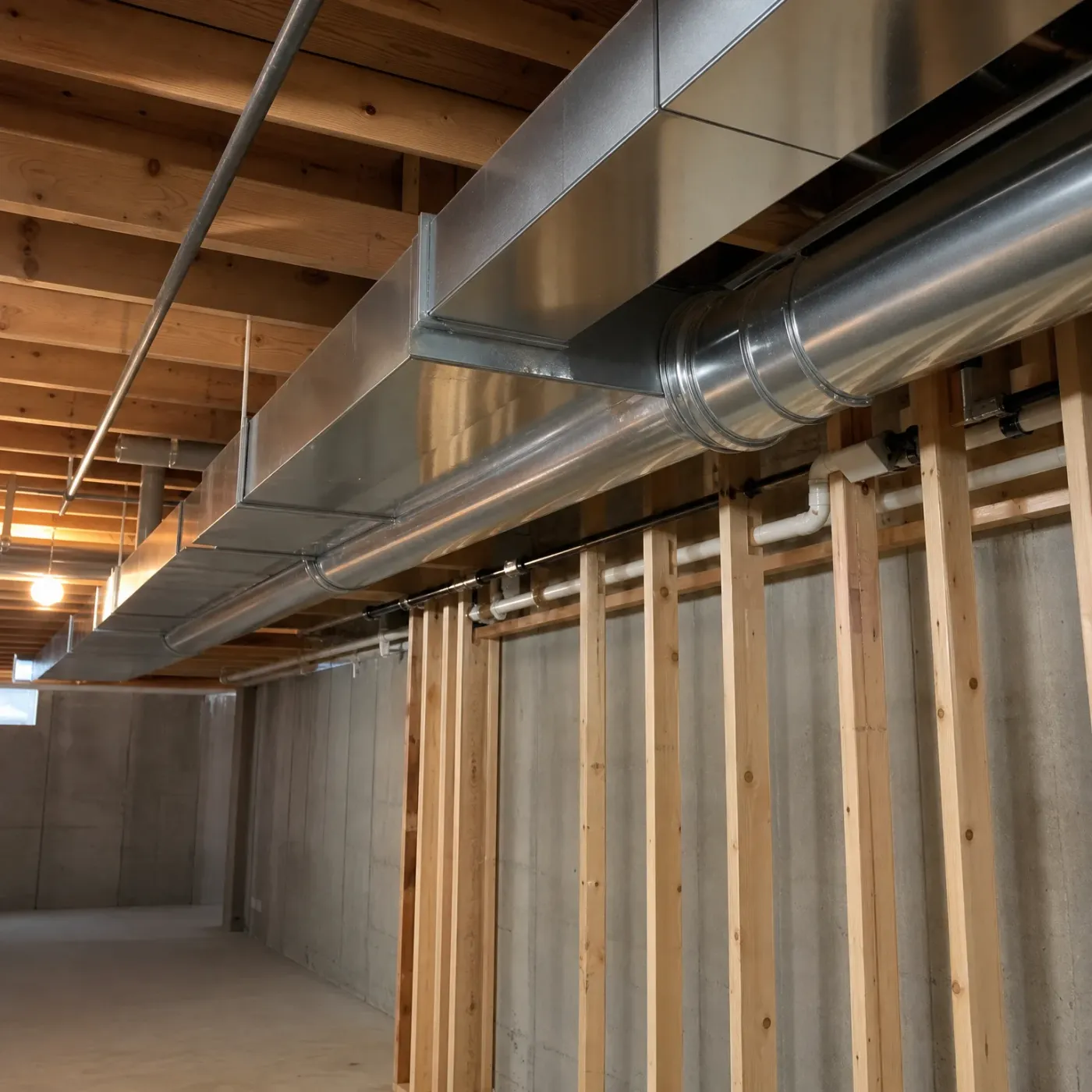
Water staining on the foundation wall like this is worth asking a contractor about. Moisture near your ducts can mean a section that's come loose or a joint that's failed, and that changes whether cleaning does anything for you. A contractor can tell you if what's behind the joists needs more than a vacuum.
You might have walked past a vent and seen a gray ring of dust around it, or noticed the registers need wiping down more often than they used to. Maybe someone in the house has been sneezing more since the furnace started running for the season, or a musty smell shows up for a minute when the system kicks on. None of that by itself means your ducts are a problem. It usually means dust is moving past the filter and settling where you can see it. If a vent cover comes off and the inside is caked instead of lightly coated, or you've found droppings near a return, that's worth having a contractor look at before it affects the air you're breathing all winter.


A contractor hooks a vacuum to your ductwork to pull air through it
Agitation tools knock dust loose from the duct walls as the vacuum runs
Each vent and return gets opened and brushed out one at a time
Collected dust and debris leave through the vacuum, not back into your house
At 21.03 cents per kilowatt-hour, running a vacuum and agitation equipment through your system isn't what drives your bill. The real cost in your house is the furnace blower working against ducts that are harder to push air through when they're clogged or leaking at the joints.
EIA-861 2025
So the answer still depends on what's actually behind your walls. In most Gaithersburg homes, dirty ducts are a dust problem, not a safety or efficiency problem, and a clean filter on a regular schedule handles most of what people worry about. Where it earns the money is when a contractor opens things up and finds what dust alone doesn't explain: rodents, loose insulation, a disconnected or collapsed section. That's not a cleaning job anymore, it's a repair job that happens to include cleaning. You don't have to guess which one you have. A contractor can look at your specific system and tell you whether you're dealing with normal buildup or something that needs fixing, and whether cleaning does anything for your house or just empties your wallet.


Get matched with a duct system pro in Montgomery County
Skip searching for someone who cleans ducts in Montgomery County.